Sunday, April 19, 2026
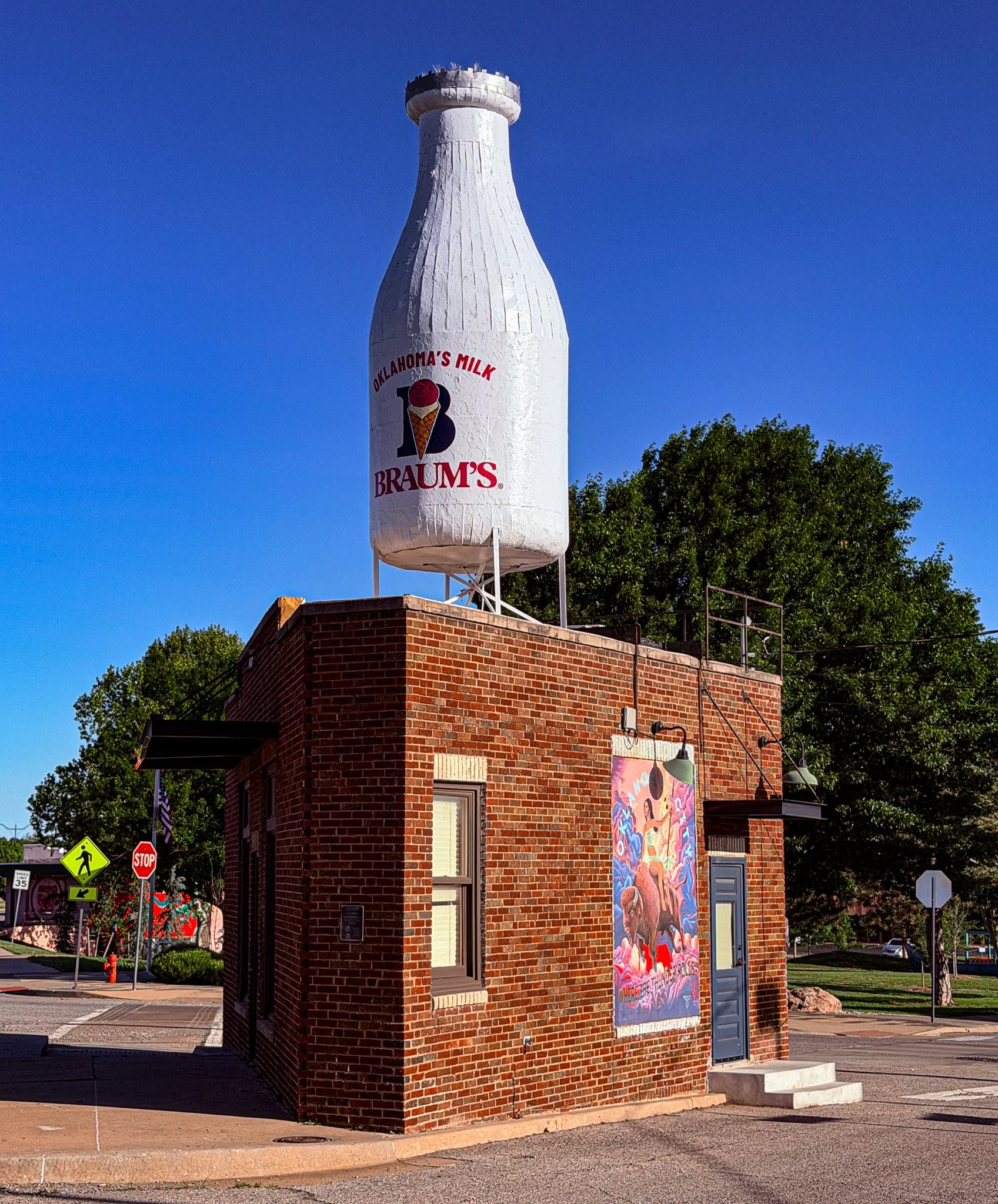
Driving through Oklahoma City on a Sunday was very relaxing with no traffic to deal with. We were able to stop and see the infamous Braum’s Milk Bottle building.
Click on Image for Map.
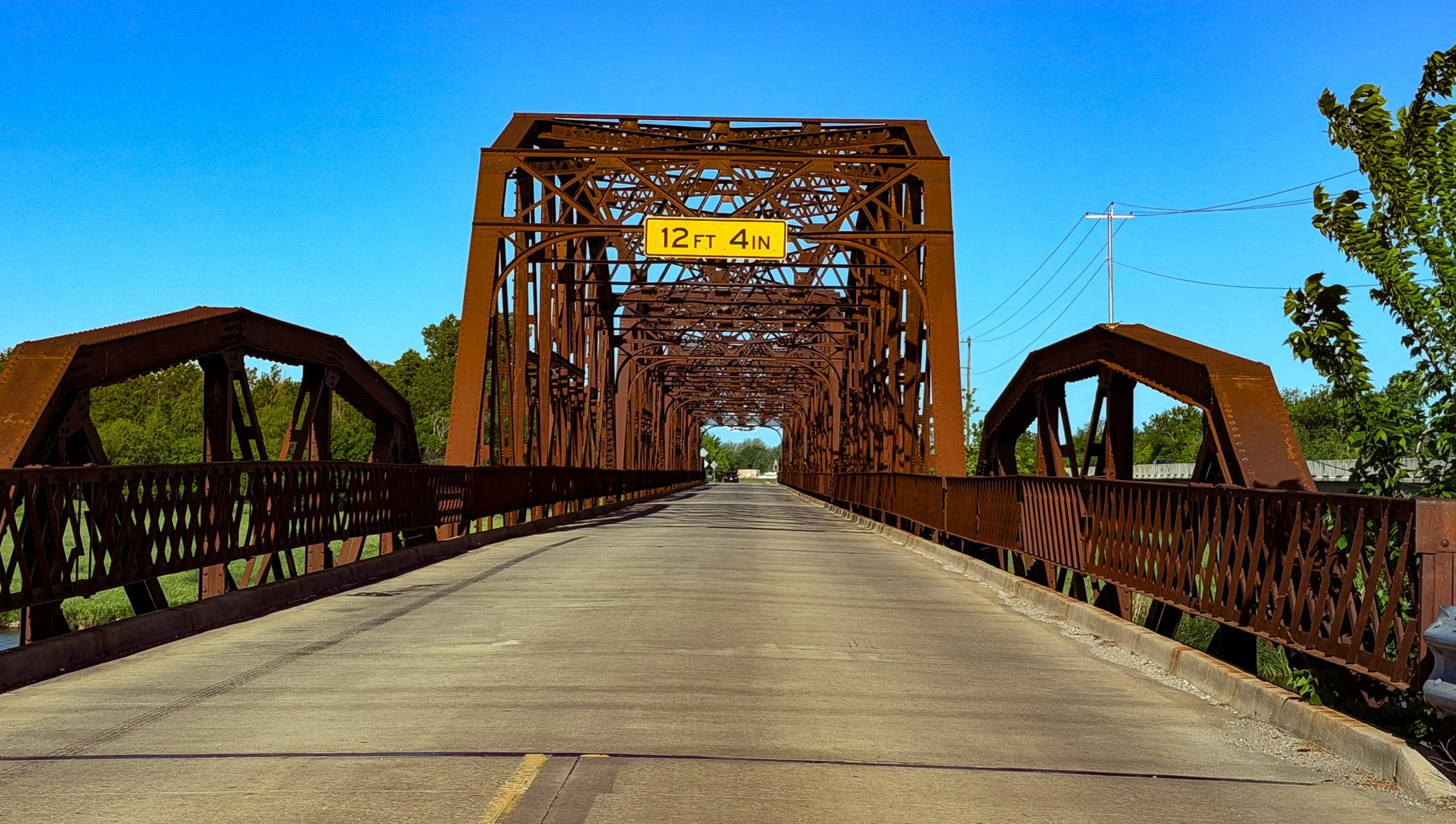
Leaving OKC on old Route 66 we crossed over the Lake Overholser Bridge.
From ChatGPT:
The Lake Overholser Bridge is a historic steel truss span built in 1925 along Route 66. Stretching 748 feet, it carried travelers across the lake during the highway’s early years. Bypassed in 1958, it remains a scenic landmark, restored and preserved as a reminder of Oklahoma’s “Mother Road” heritage.
Click on Image for Map.
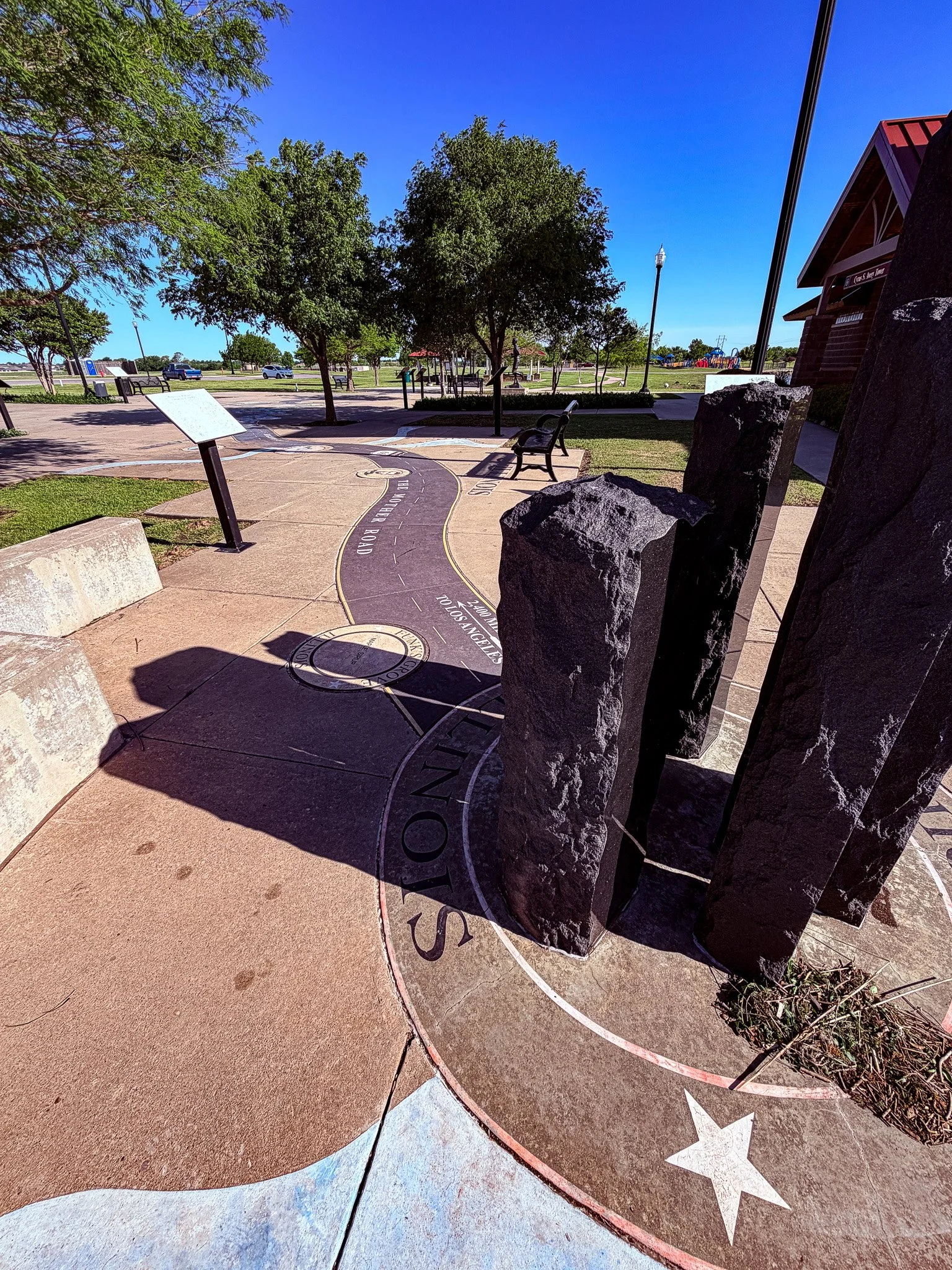
On the west side of Oklahoma City is the Route 66 Park. They have created a “map” of the route in the park walkway. Here is the start in Chicago with the skyline and Lake Michigan and the road meanders along the walkway with circles depicting some of the sites along the way. The first one listed in the foreground is Funks Grove Maple Sirup.
Click on Image for Map.
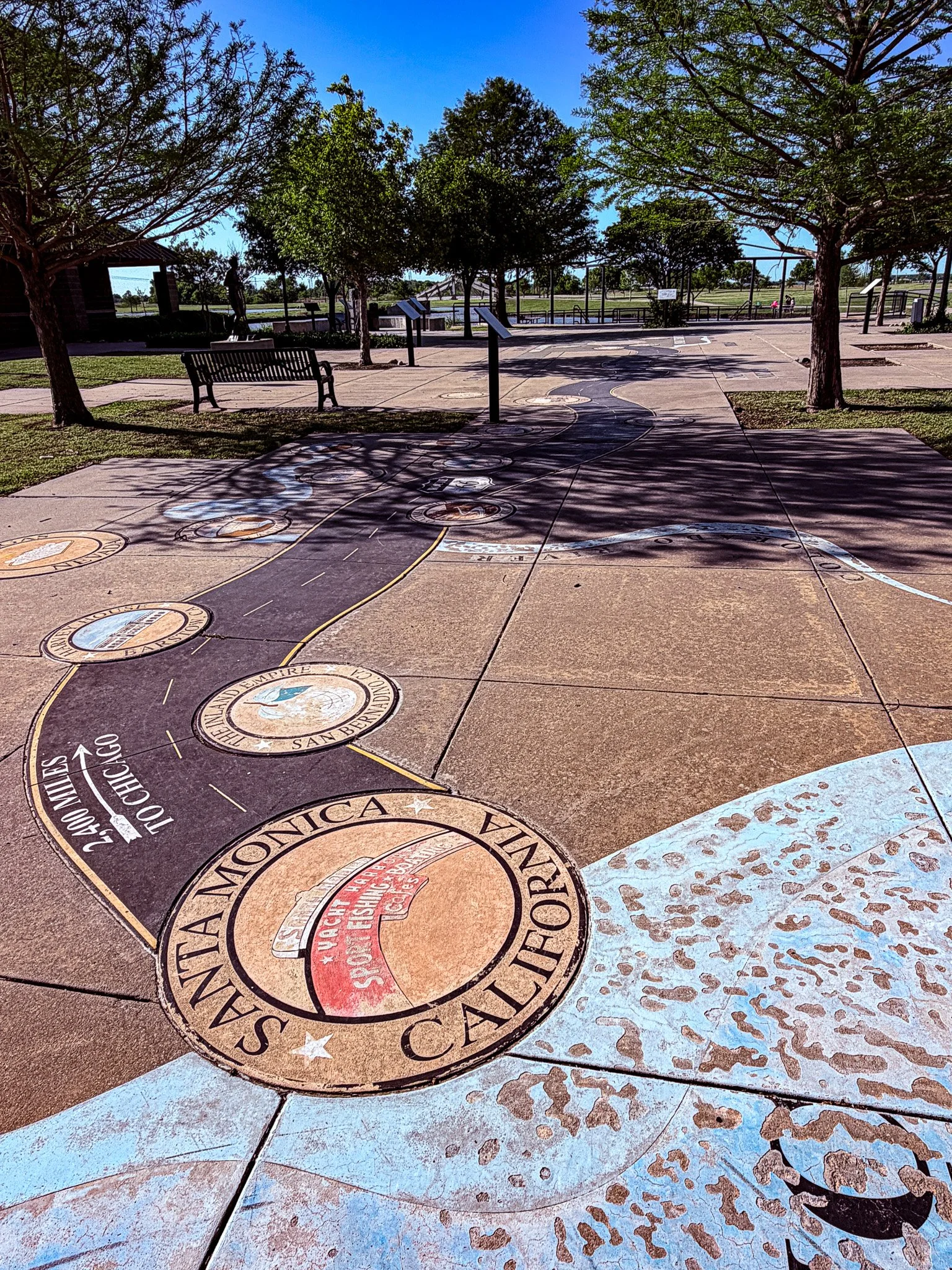
At the other end of the walkway is Santa Monica, CA and the Pacific Ocean.
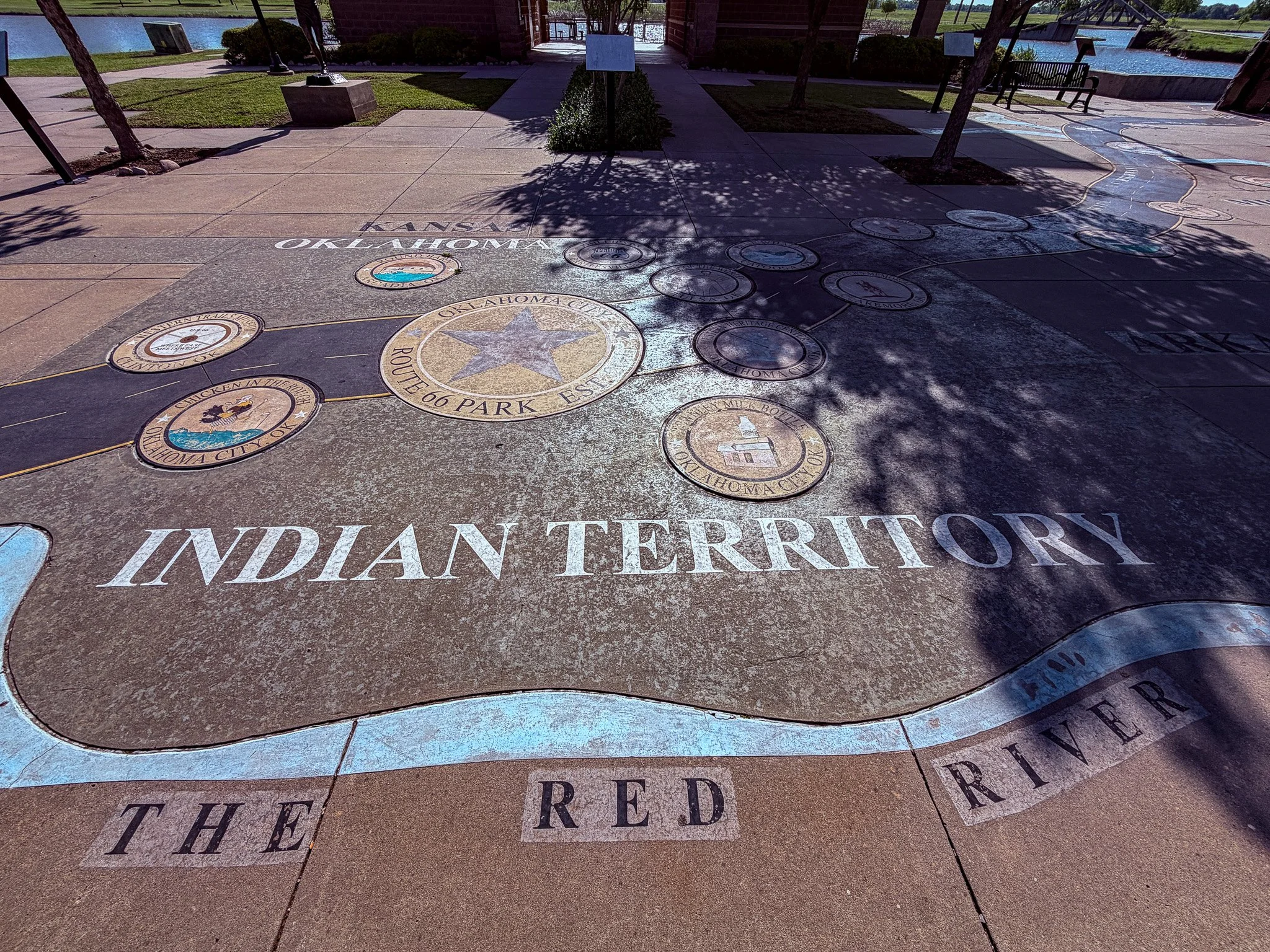
Here is the circle for the OKC Route 66 Park - almost exactly at the half way point.
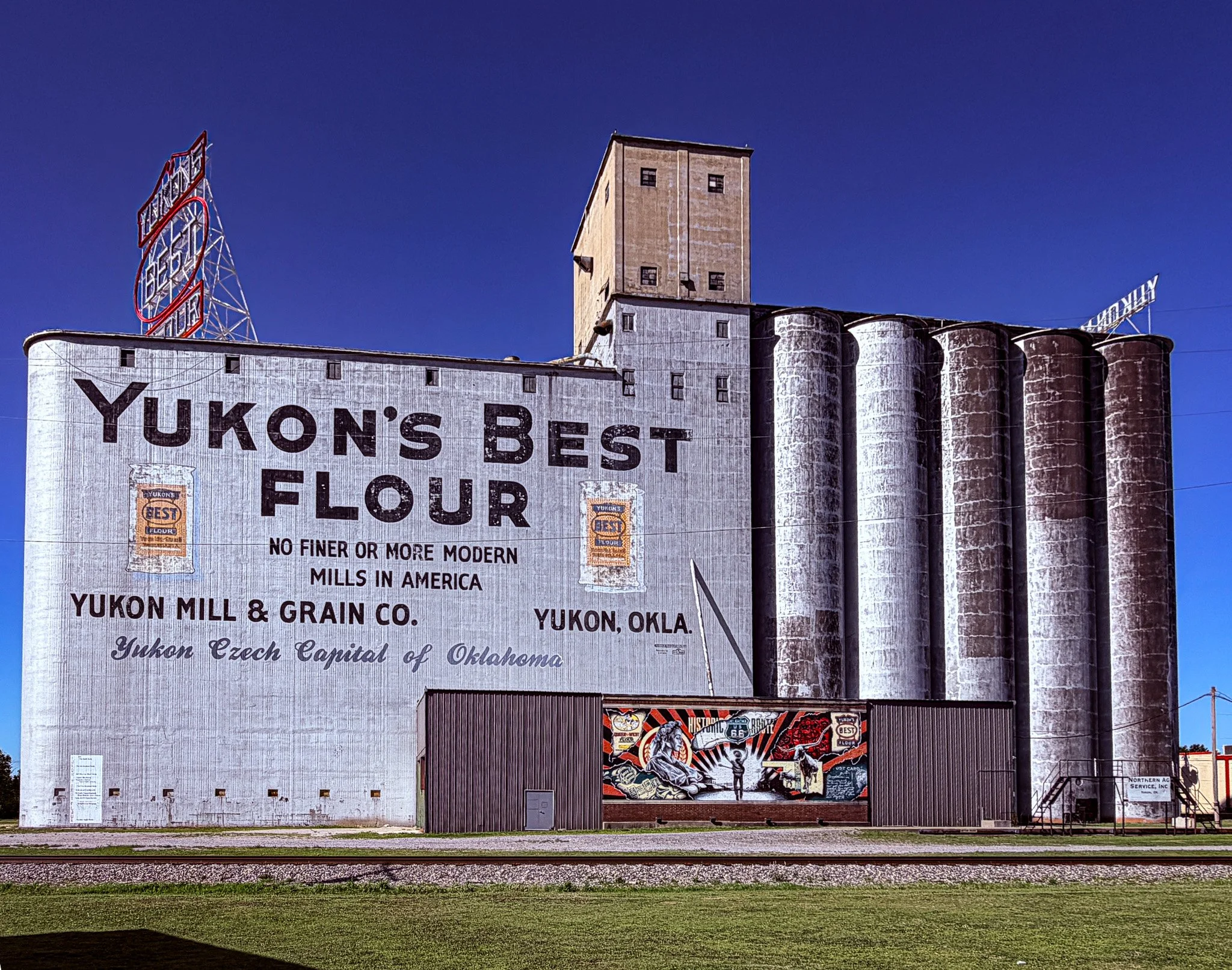
The Yukon’s Best Flour grain elevator.
Click on Image for Map.
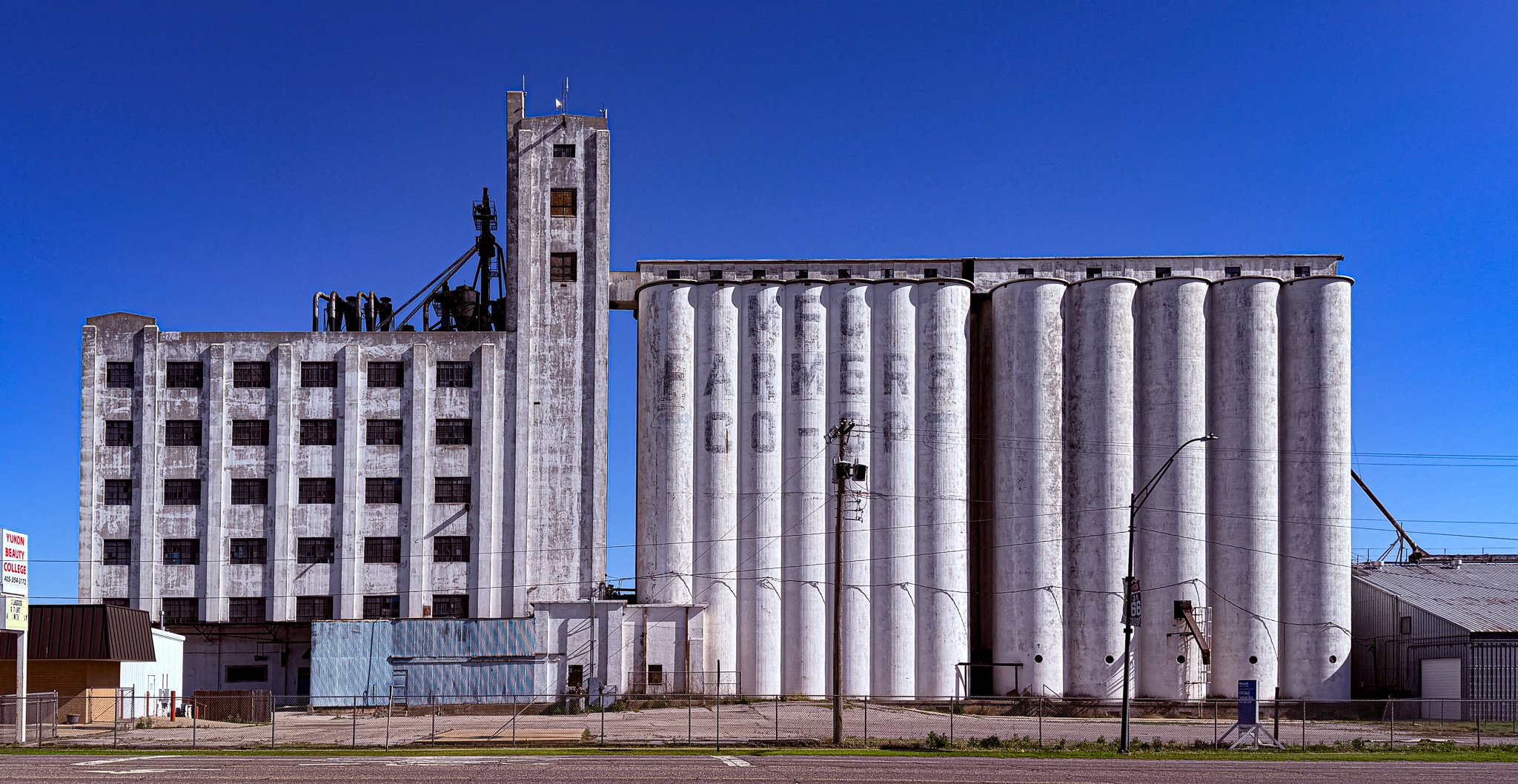
Another huge grain elevator directly across the street.
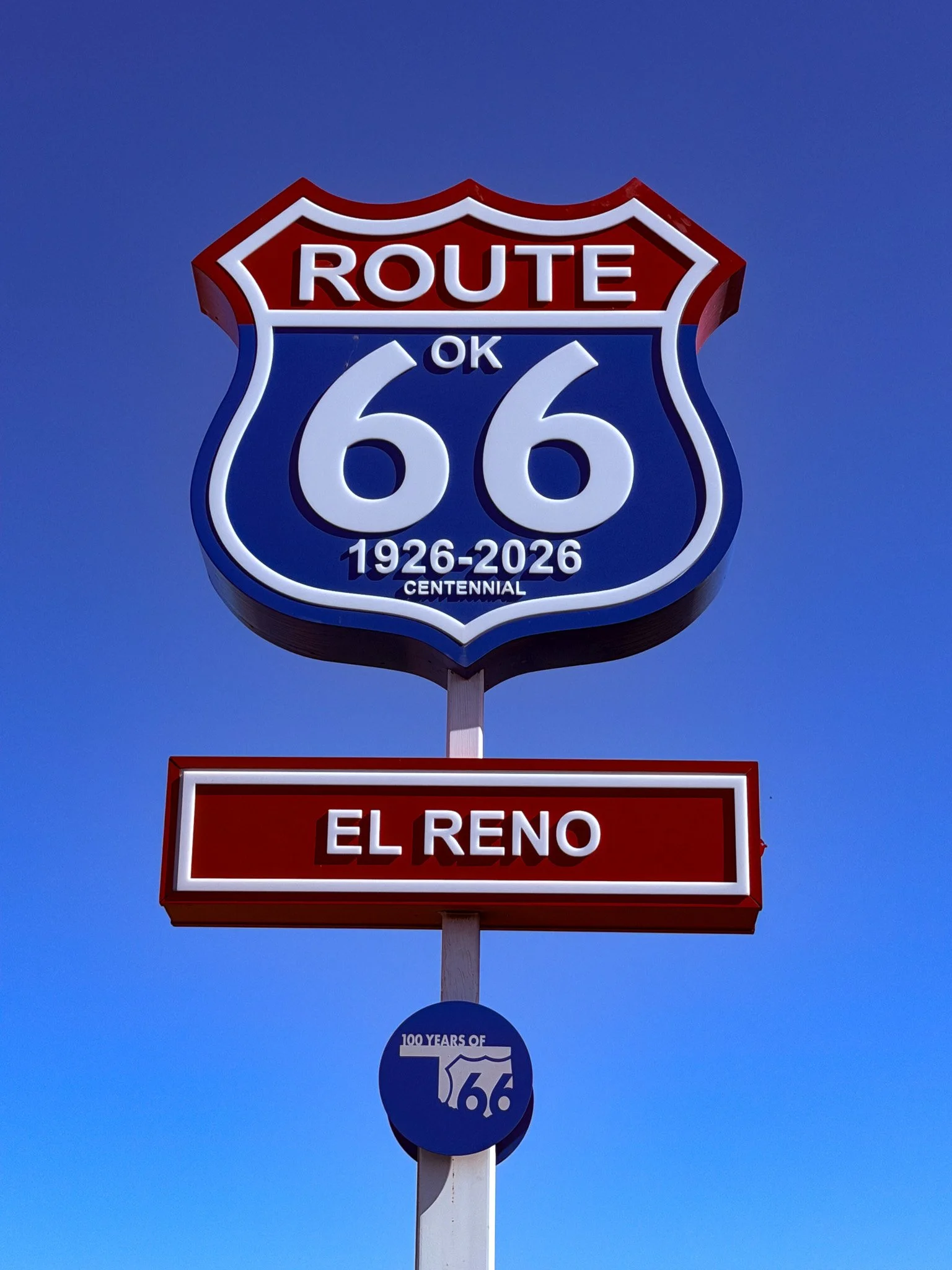
Leaving OKC we drove through El Reno, OK. All along the route in Oklahoma the towns really embrace the Route 66 heritage. But, as we saw, Cyrus Avery - the father of Route 66 - hailed from Oklahoma.
Click on Image for Map.
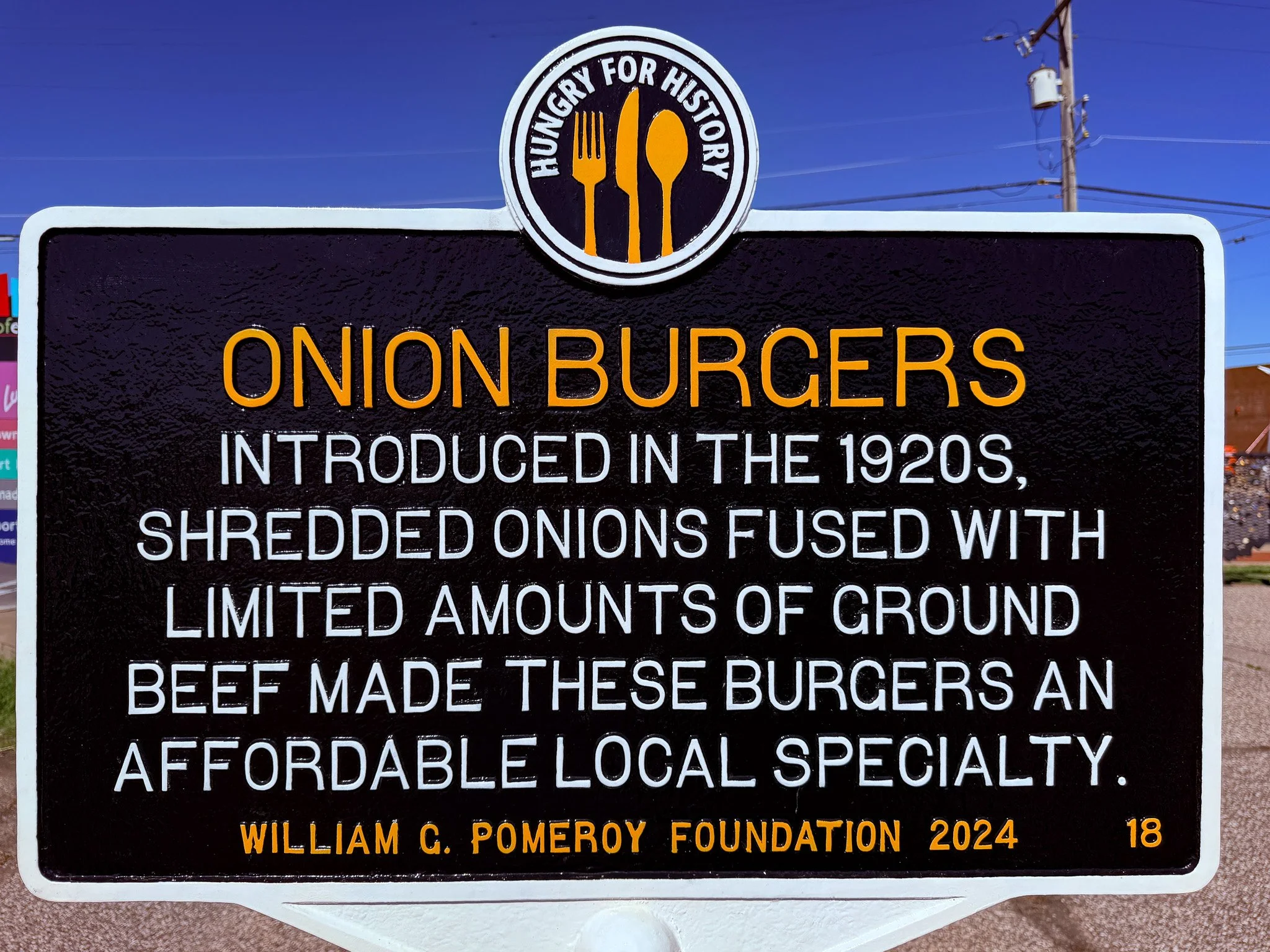
Onion burgers became a thing during the great depression years and they actually sound rather tasty - I might like to try one if the opportunity arises.
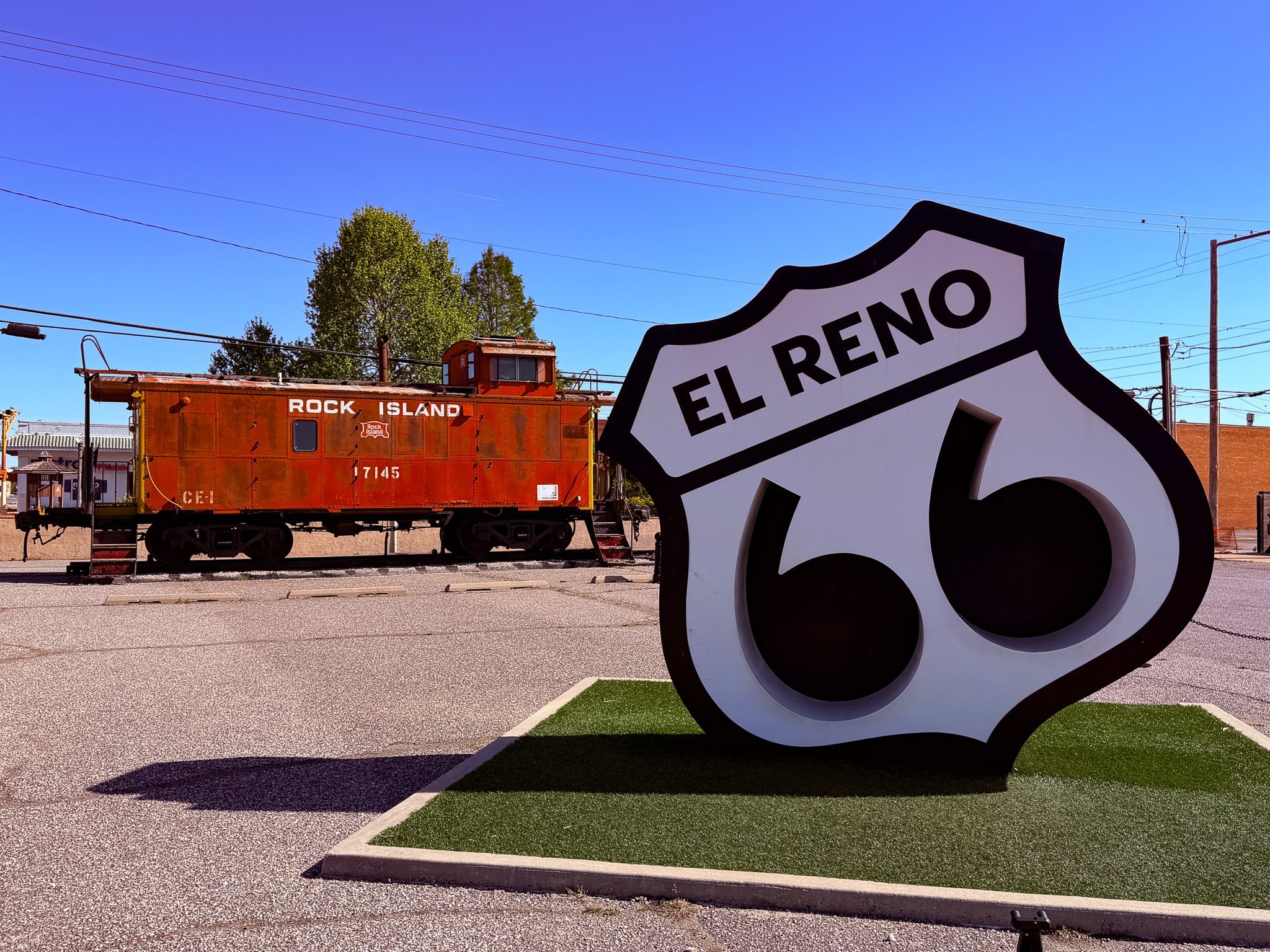
A few of the photo ops available in the small town of El Reno.
Click on Image for Map.
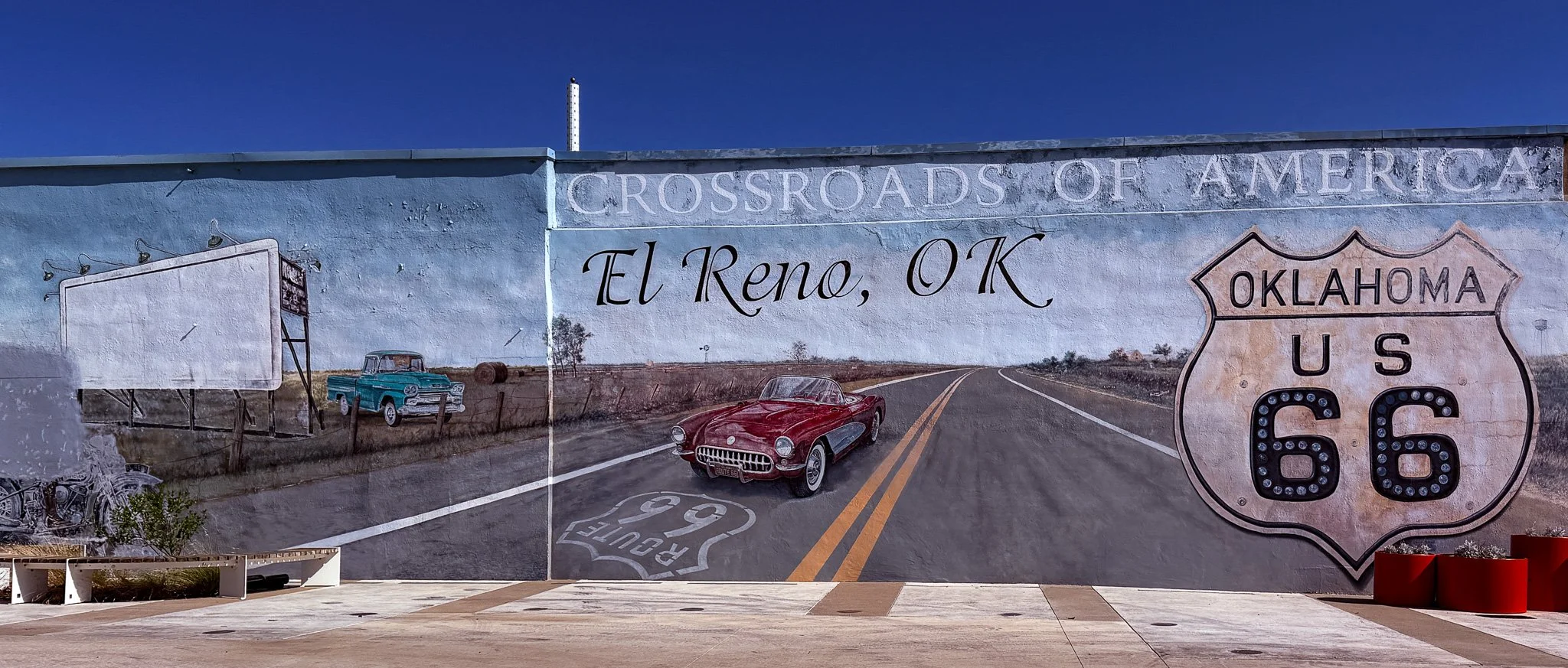
The obligatory downtown mural along Route 66.
Click on Image for Map.
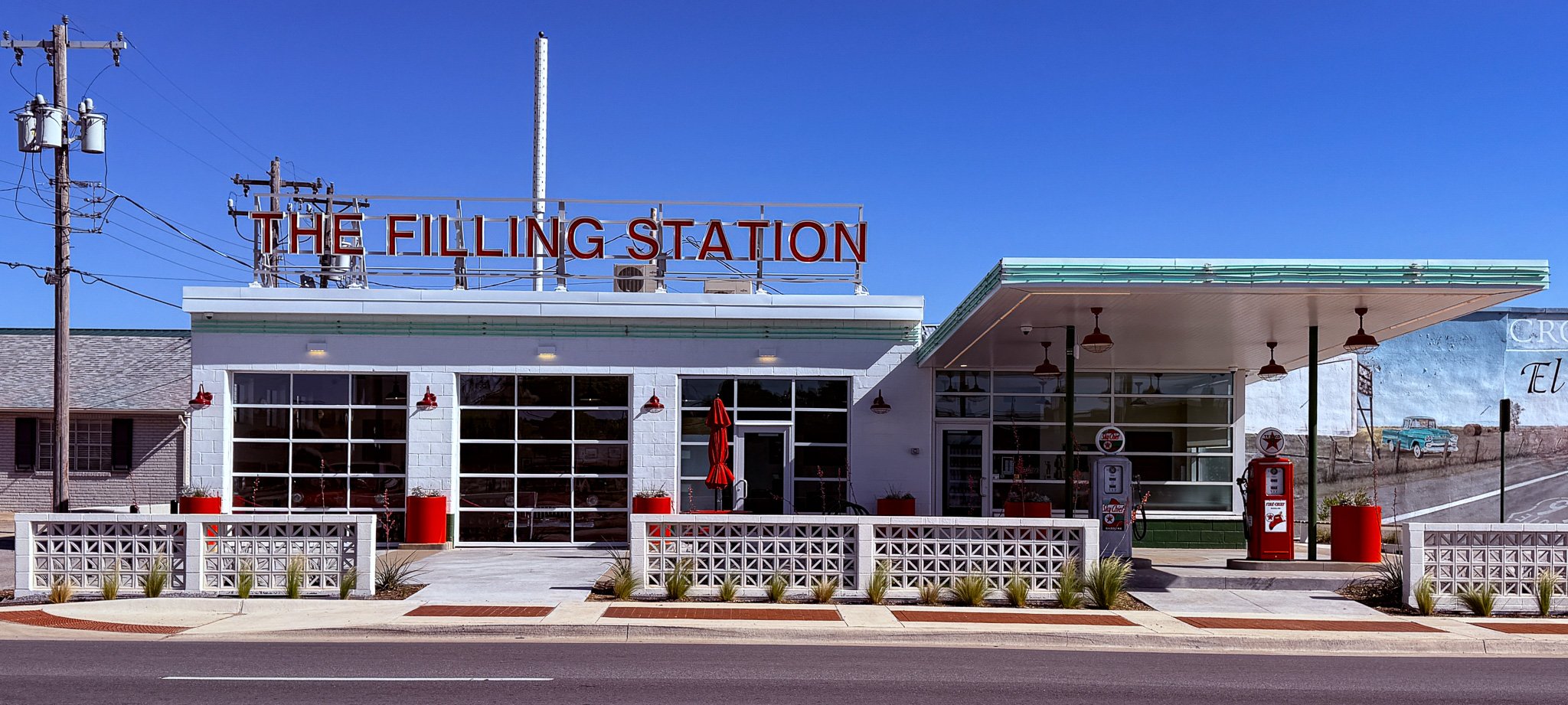
Another classic filling station restored as a visitors center. This one was closed on a Sunday morning.
Click on Image for Map.
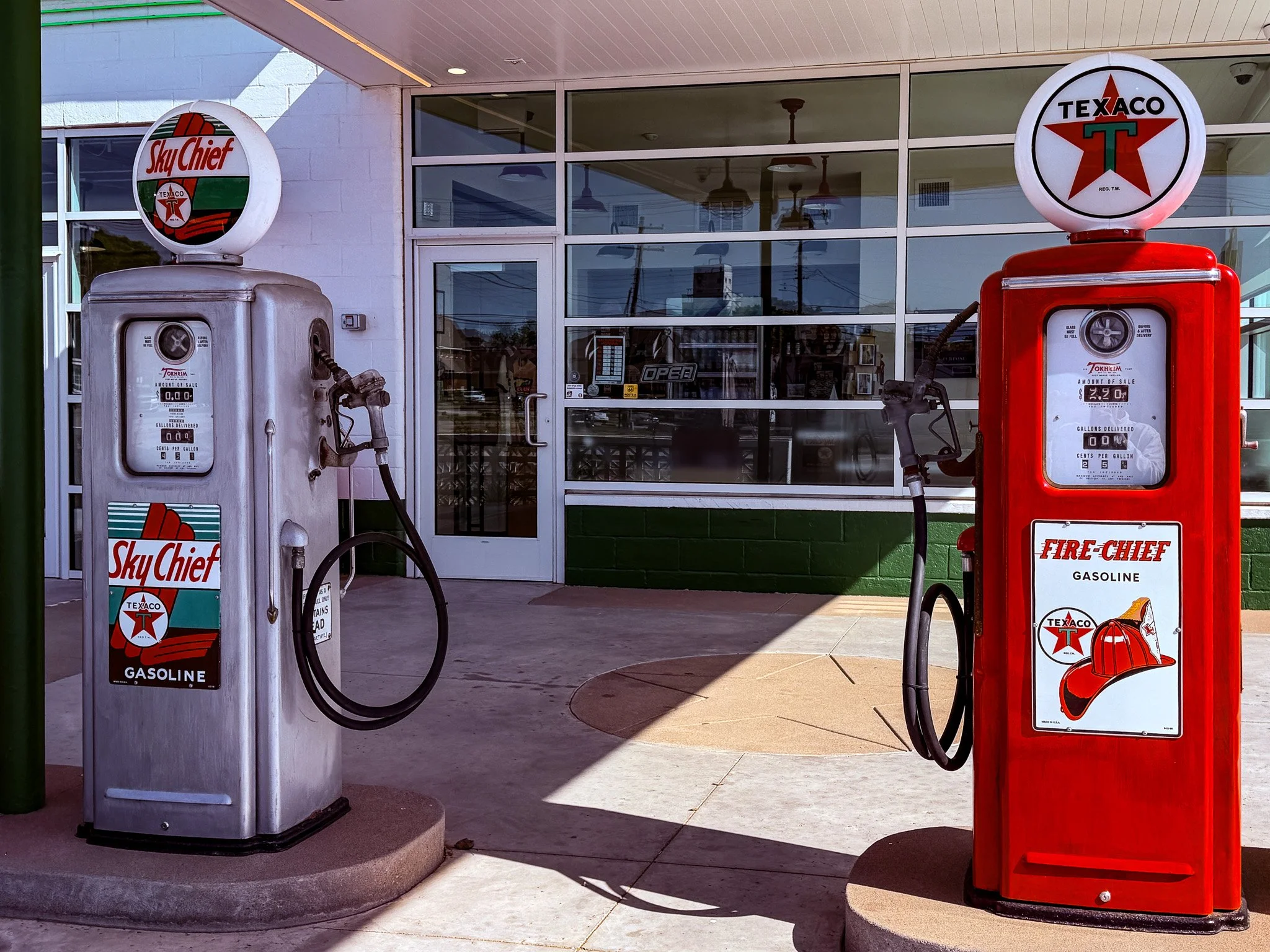
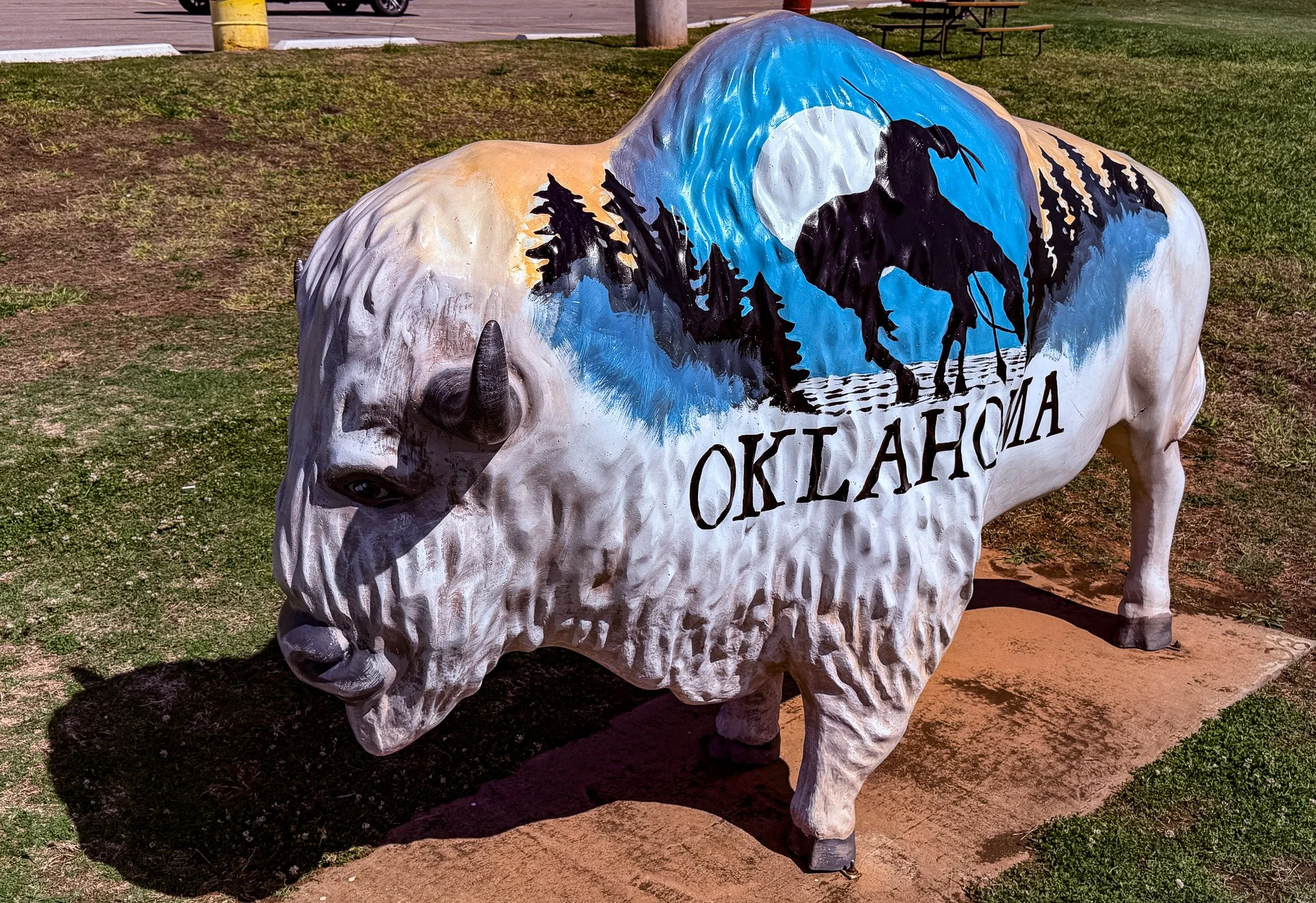
Made a brief stop at the Cherokee Trading Post to look at the live buffalo and snap a photo of this painted version.
Click on Image for Map.
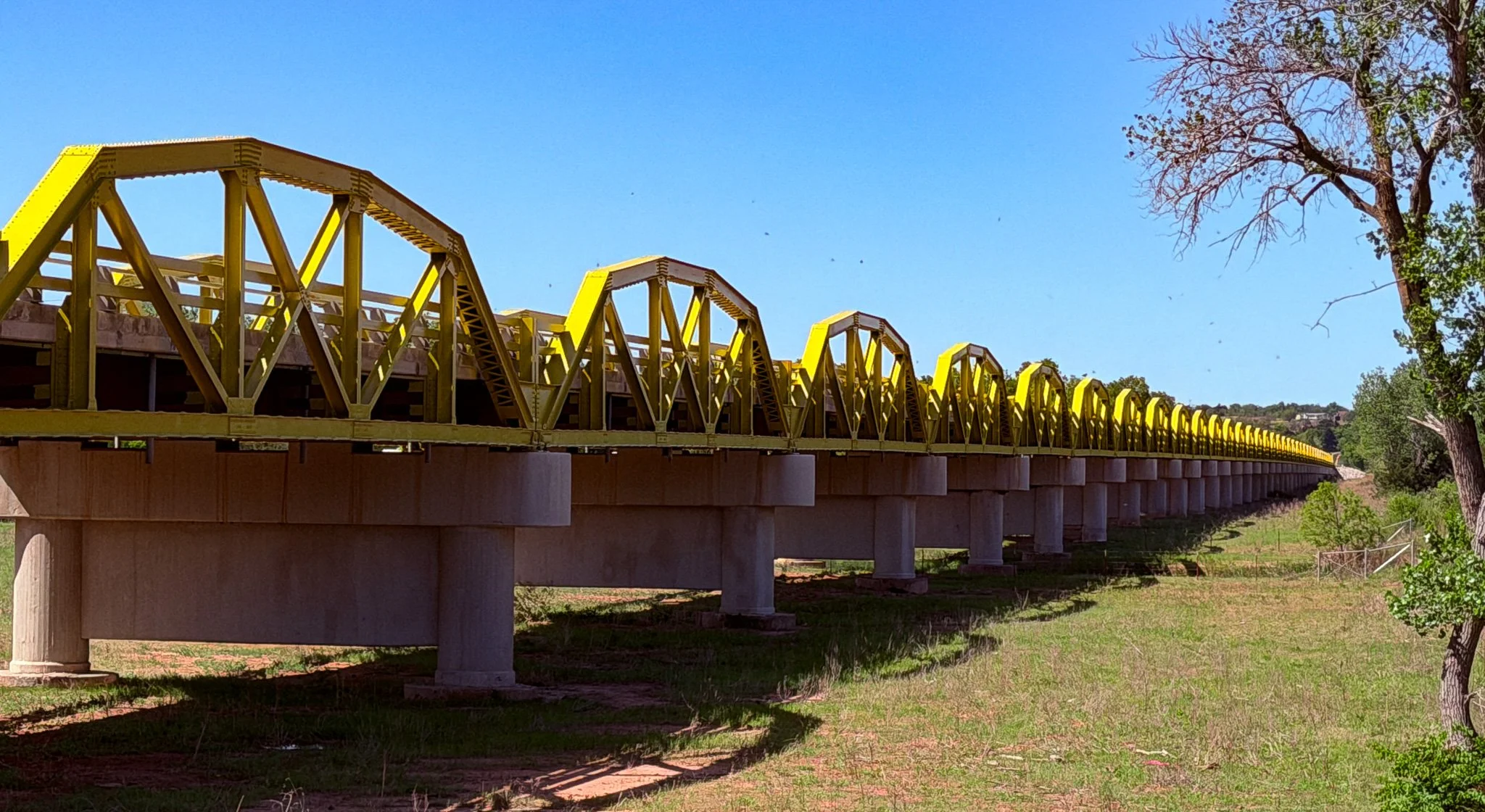
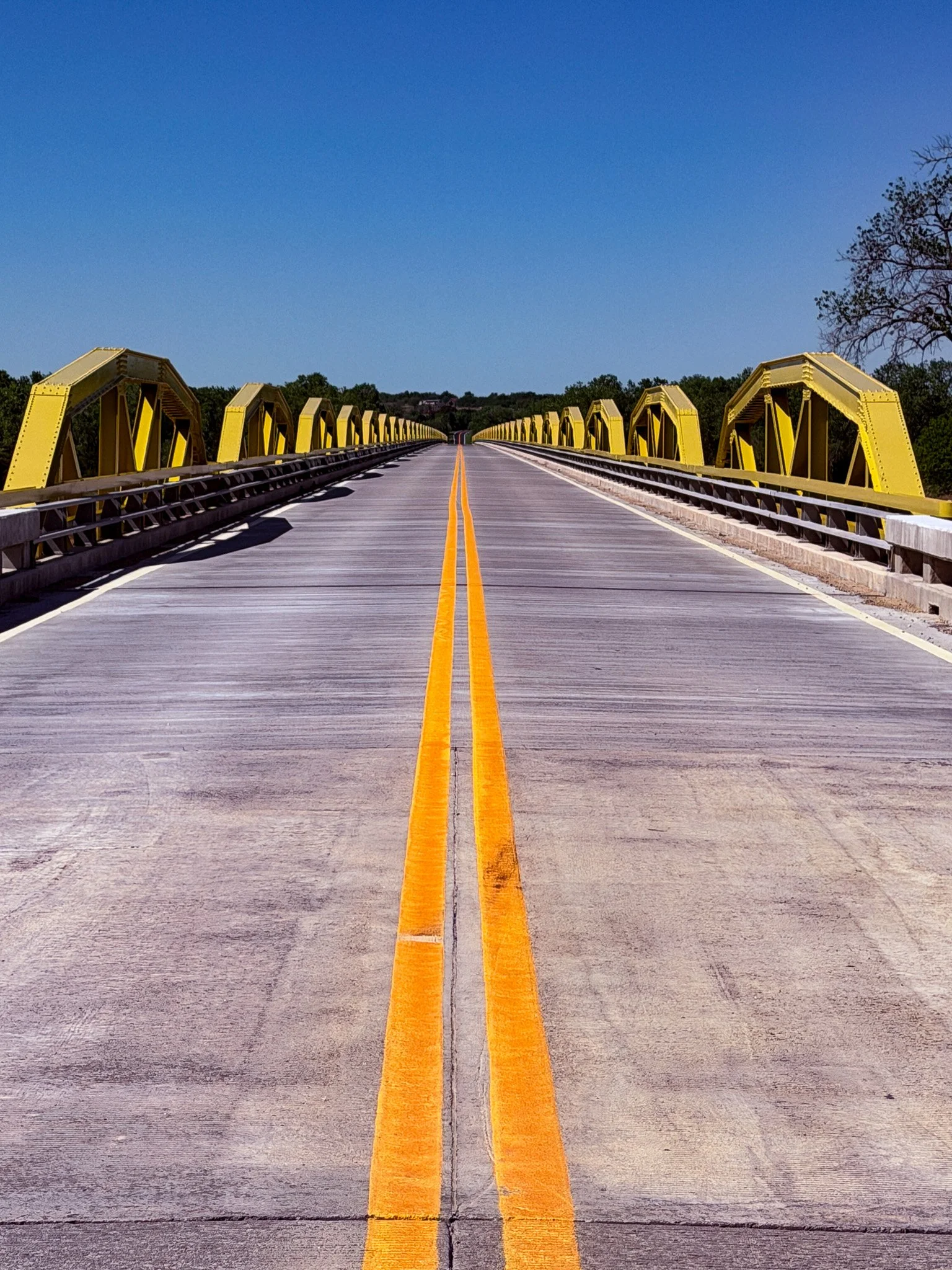
The famous “Pony Bridge” has been restored and looks great!
From ChatGPT:
The Bridgeport Bridge, also known as the “Pony Bridge,” is a landmark along historic Route 66 spanning the Canadian River. Built in 1934, it stretches nearly 4,000 feet with 38 steel pony truss spans, making it the longest bridge on Route 66. Once a vital crossing, it bypassed the original town route and helped modernize travel. Recently restored and reopened, it remains a striking symbol of Route 66 engineering and preservation.
Click on Image for Map.
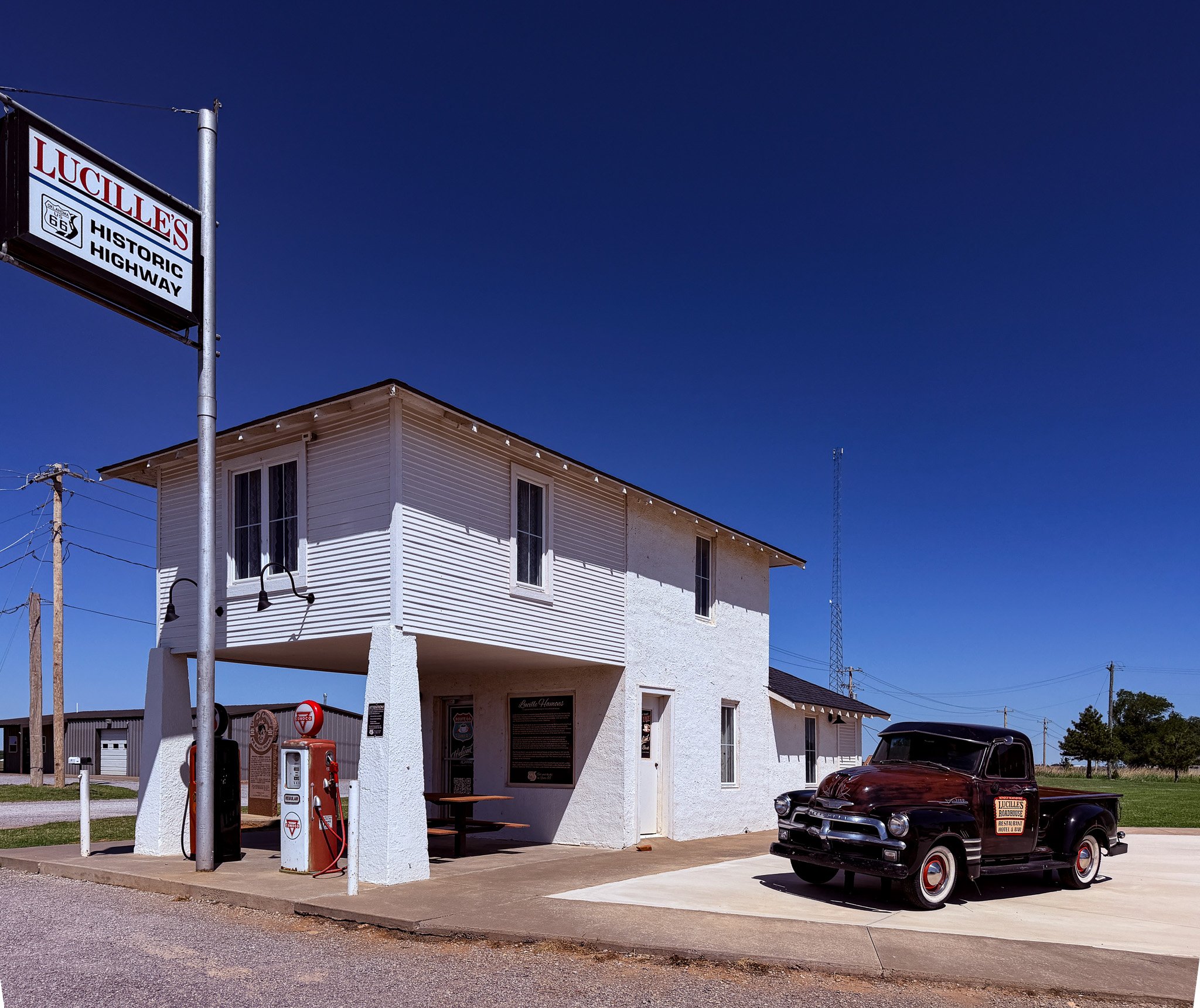
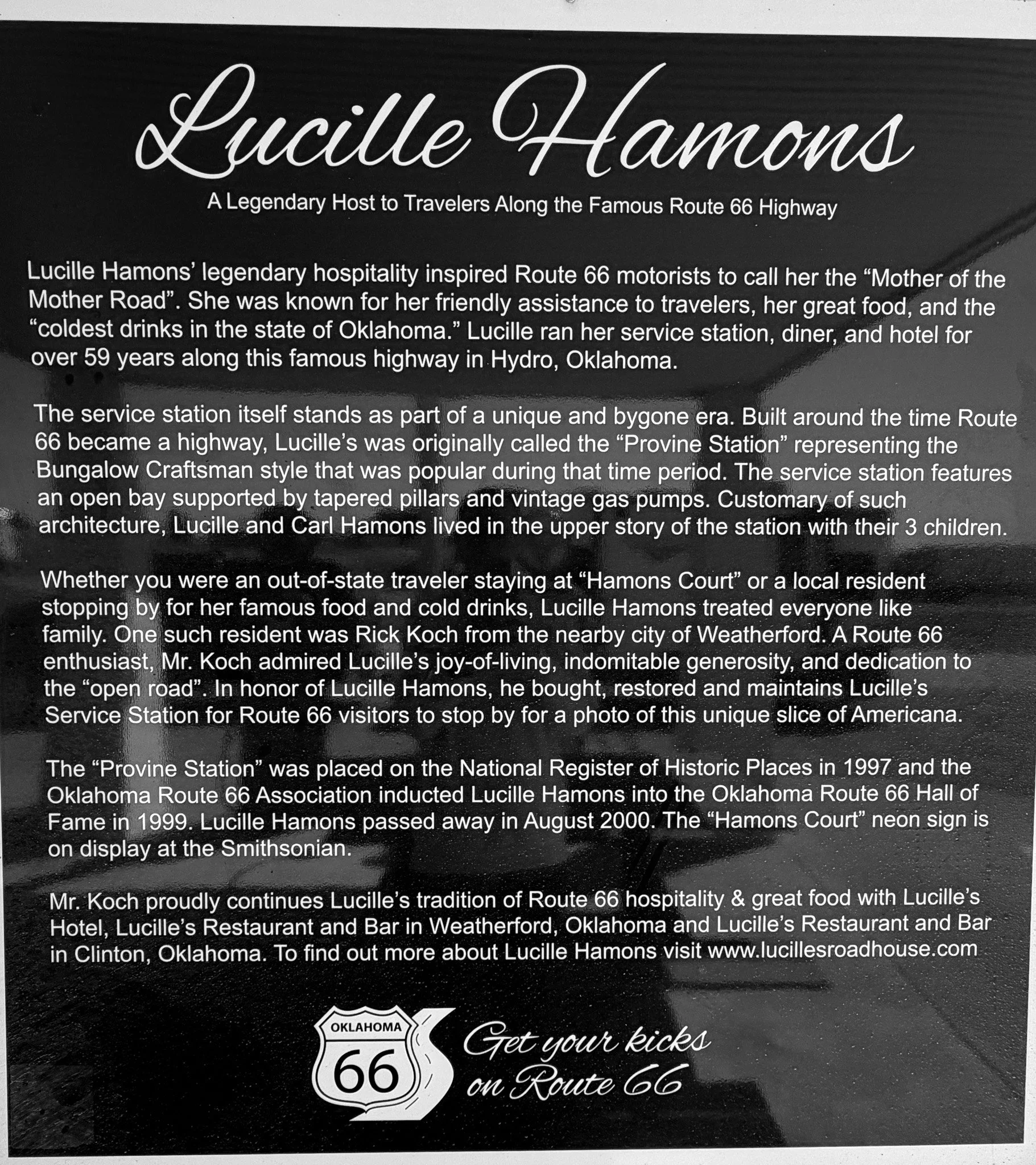
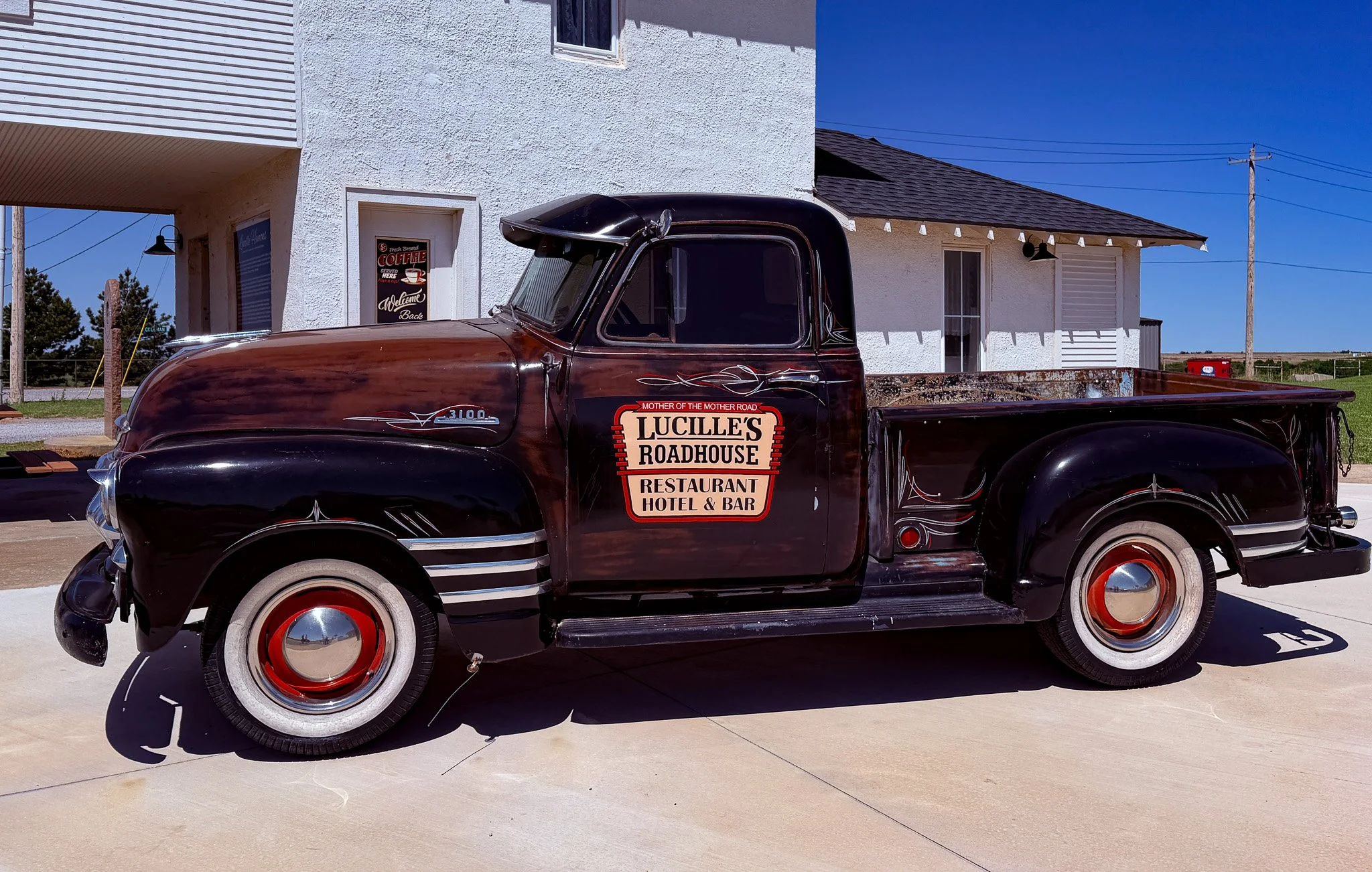
Lucille’s Historic Highway Gas Station.
Click on Image for Map.
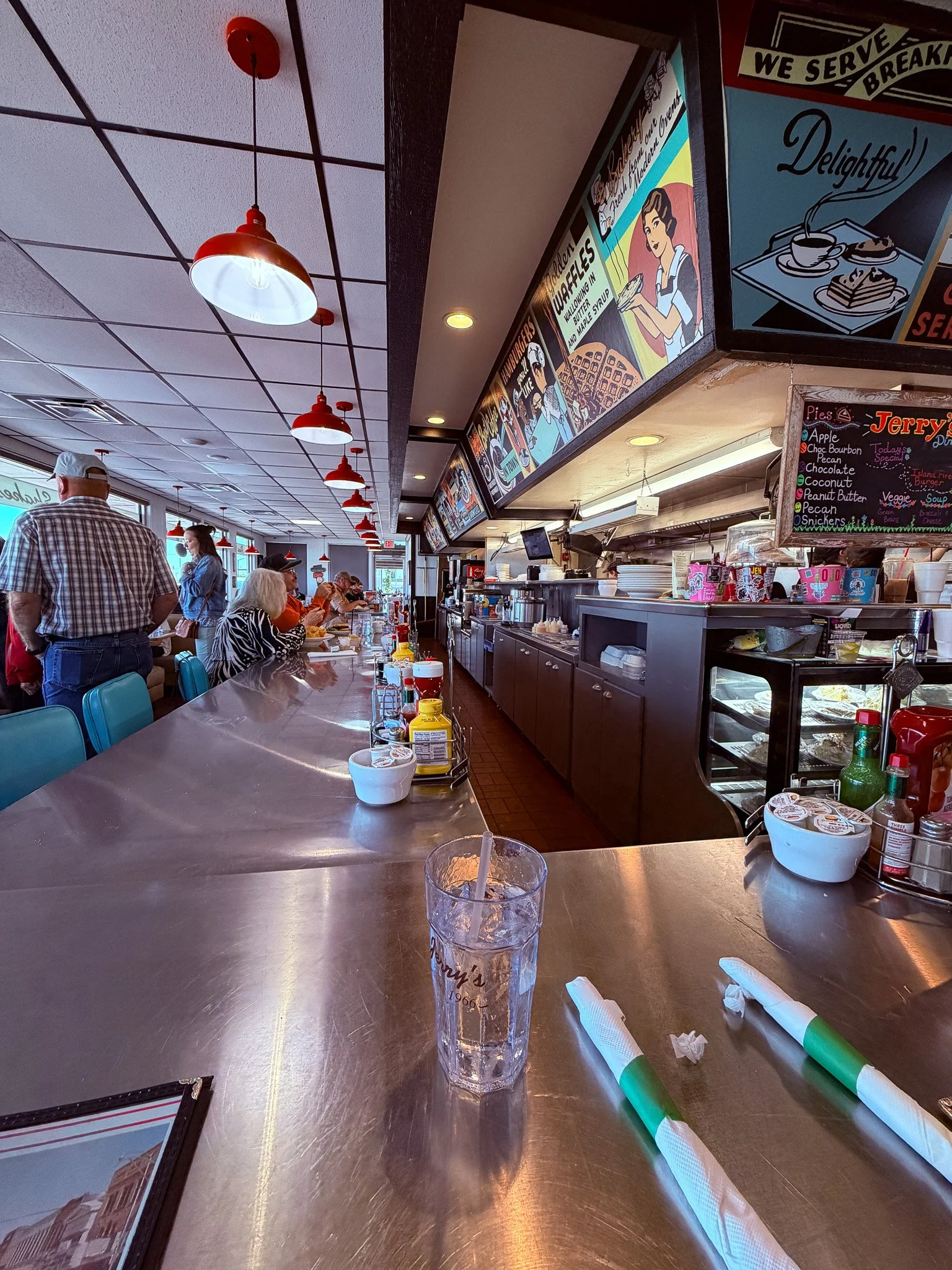
Lunch today was at Jerry’s Diner - a Route 66 institution.
From ChatGPT:
Jerry's Diner is a classic Route 66 stop in Weatherford, operating since 1966 along the highway’s historic Main Street alignment. With its retro 1950s-style design and traditional American menu, it reflects the roadside diner culture that flourished during Route 66’s peak. Long a gathering place for travelers and locals alike, it remains a living piece of the “Mother Road” experience.
Click on Image for Map.
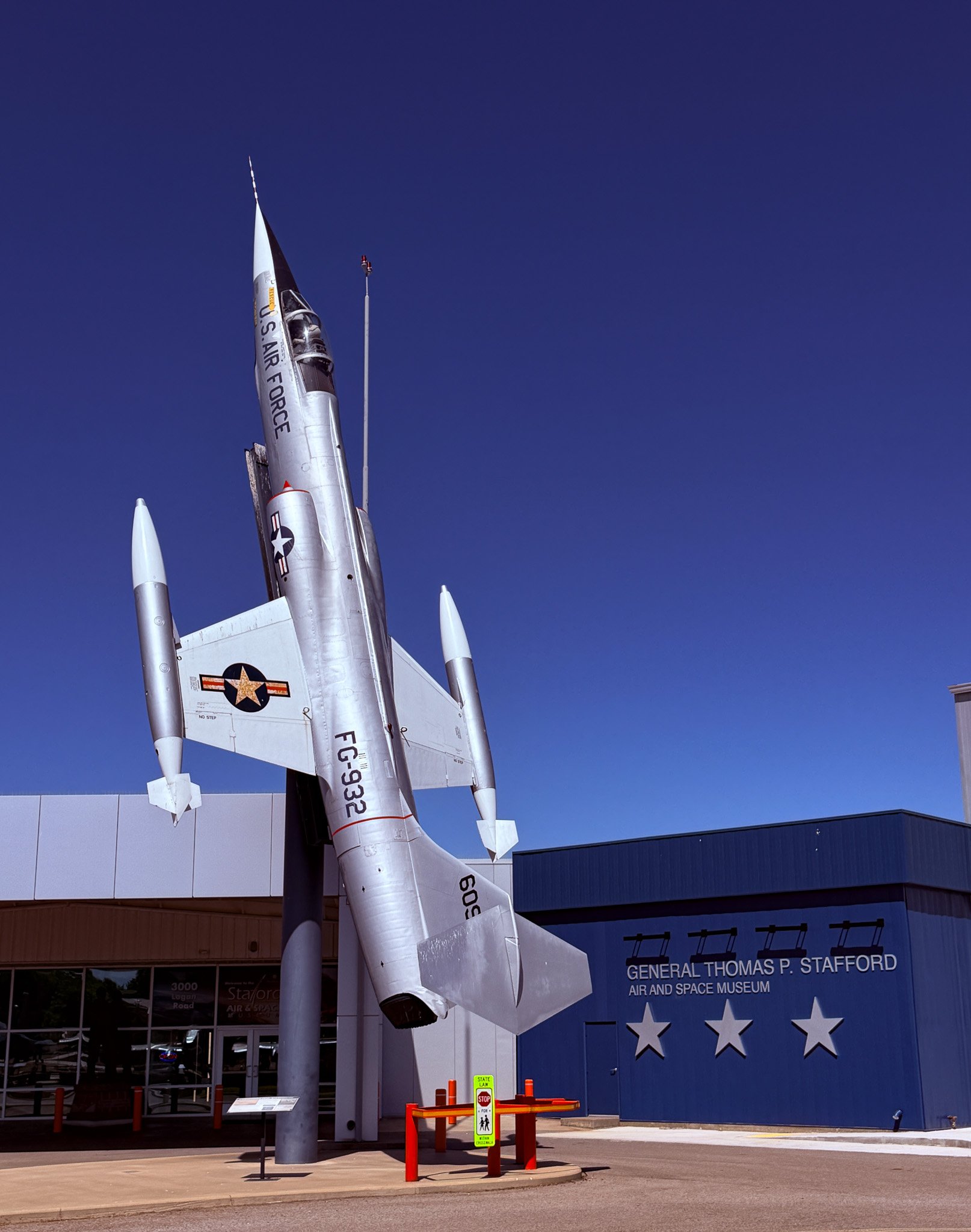
Our “big” stop for today was the Stafford Air & Space Museum in Weatherford, OK. We had budgeted two hours for this stop, but ended up spending three hours here. In truth, this could be an all day event for a geek like myself. As someone who spent a great deal of time visiting the National Air & Space Museum in Washington, DC during medical school - this is really on par with that experience. This is VERY well done!
Click on Image for Map.
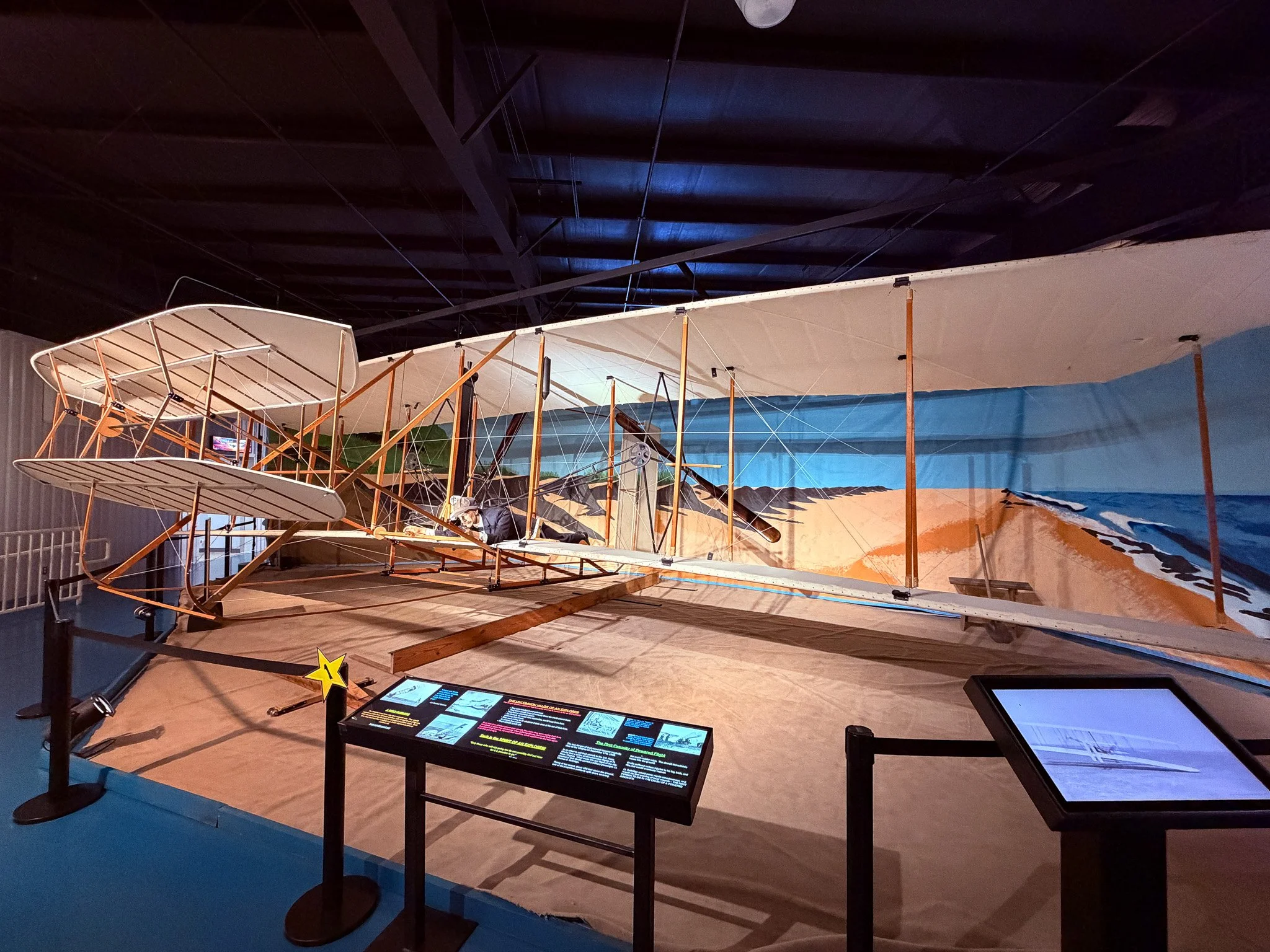
The first exhibit in the museum is this life size model of the Wright Brother’s first “airplane.” Keep this in mind when you consider that in less than 100 years we had landed a man on the moon and created the space shuttle - and so much more….
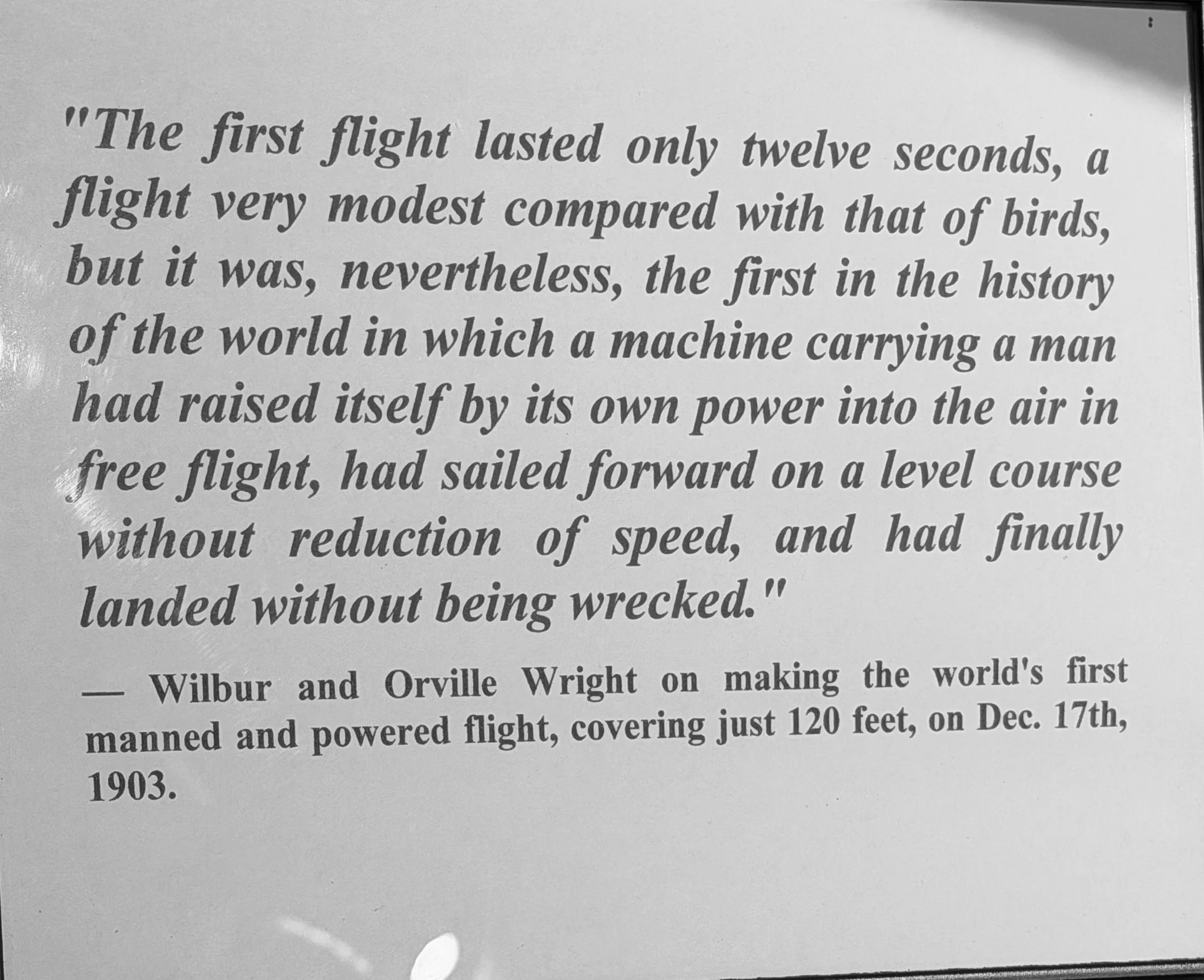
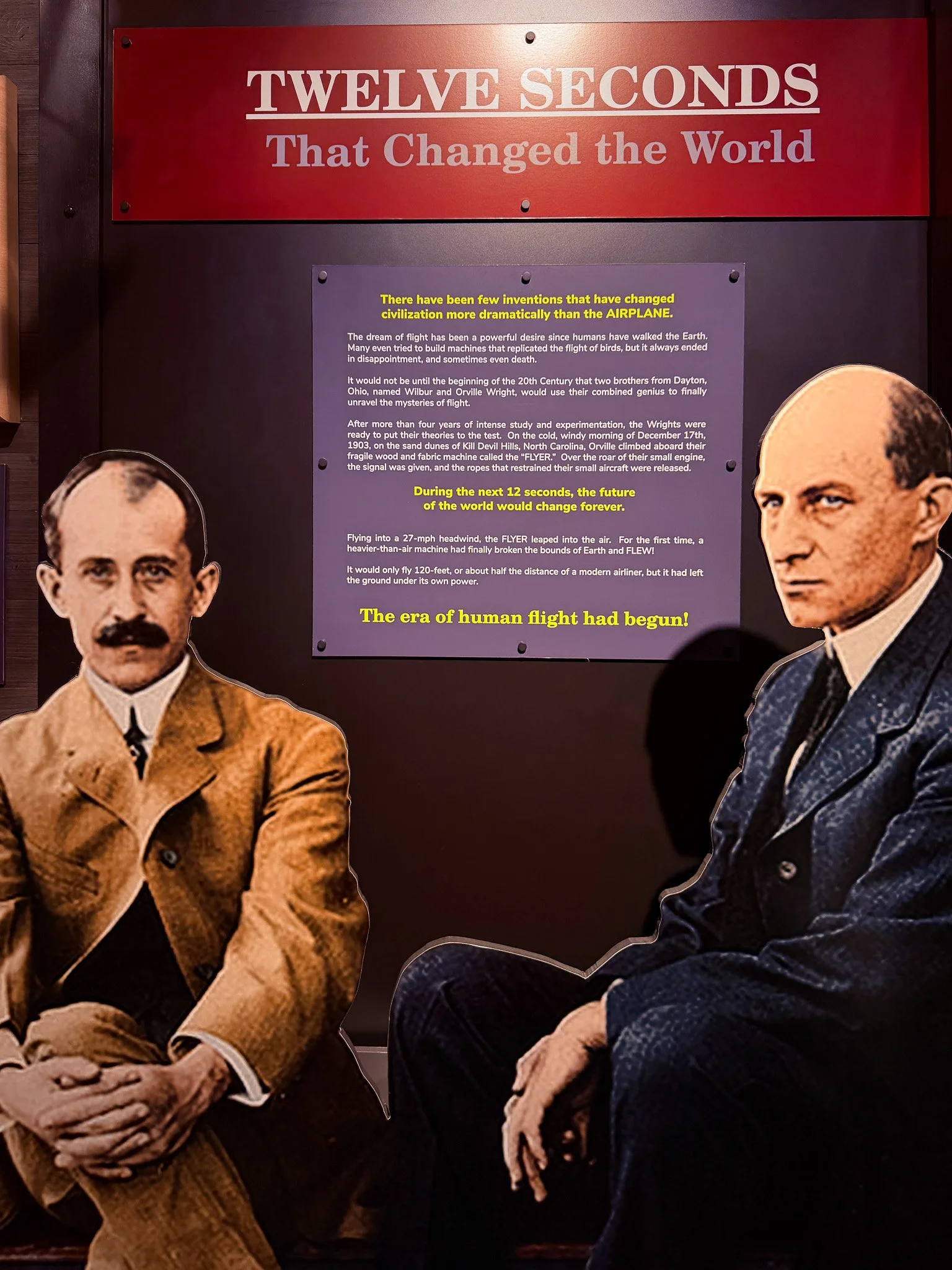
Twelve seconds that changed the world, indeed!
Provided we don’t blow ourselves up before then, just imagine what we could accomplish in the next 100 years!!
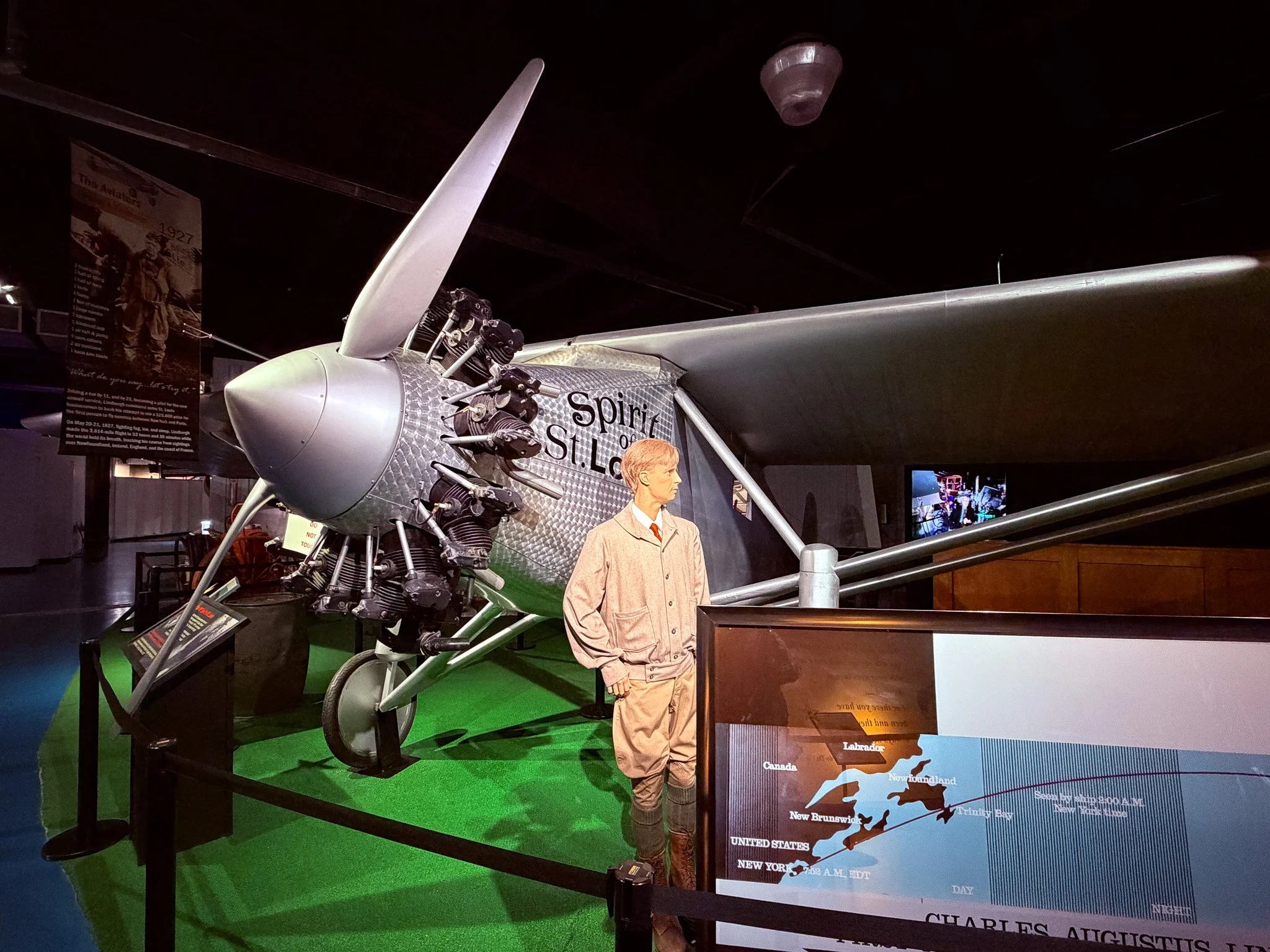
From ChatGPT:
The Spirit of St. Louis was the custom-built monoplane flown by Charles Lindbergh in 1927. It completed the first nonstop solo transatlantic flight from New York to Paris, transforming aviation history and making Lindbergh an international hero while demonstrating the potential of long-distance air travel.
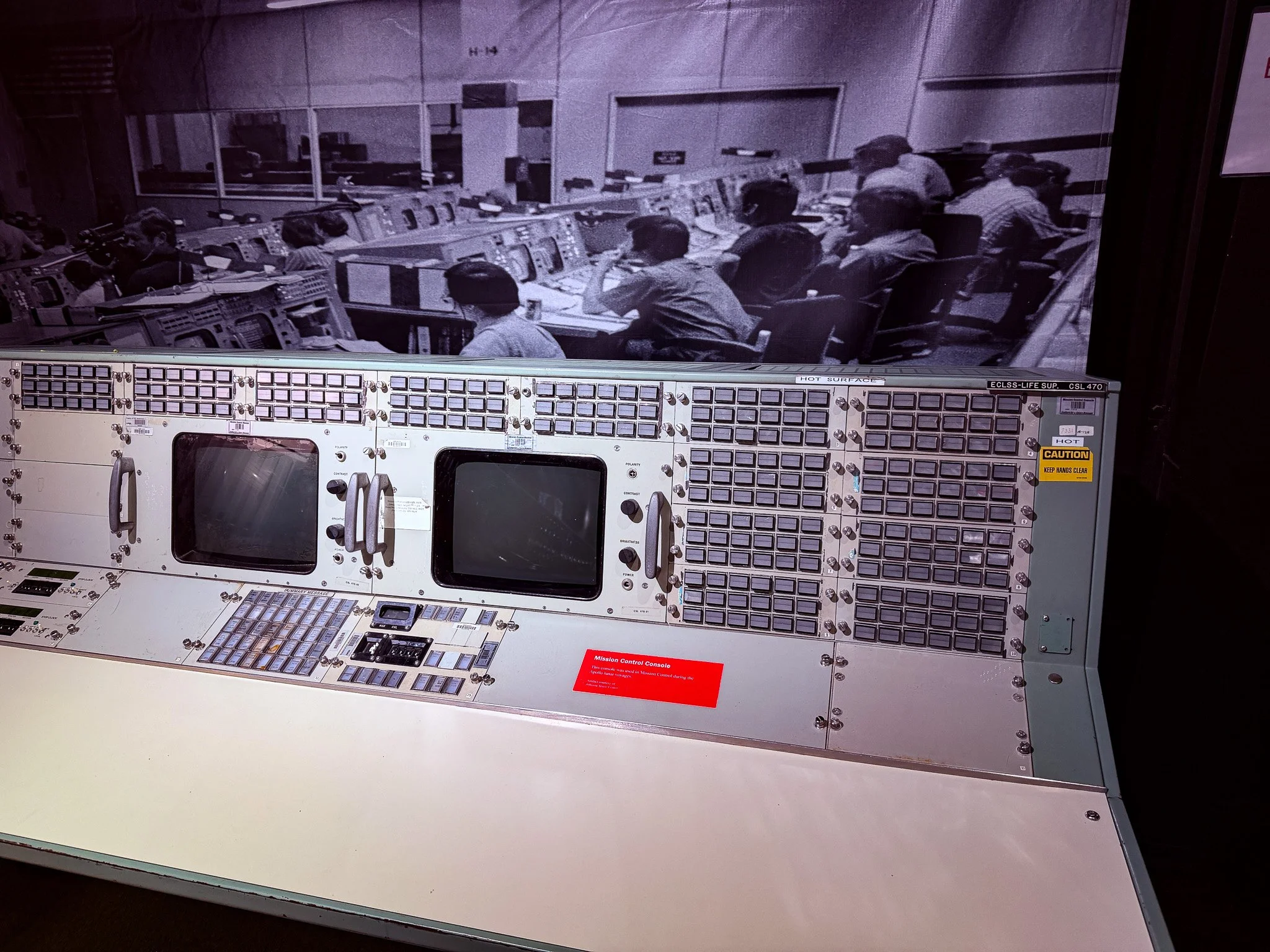
This is one of the actual control consoles from the historic Mission Control at the Johnson Space Center in Houston.
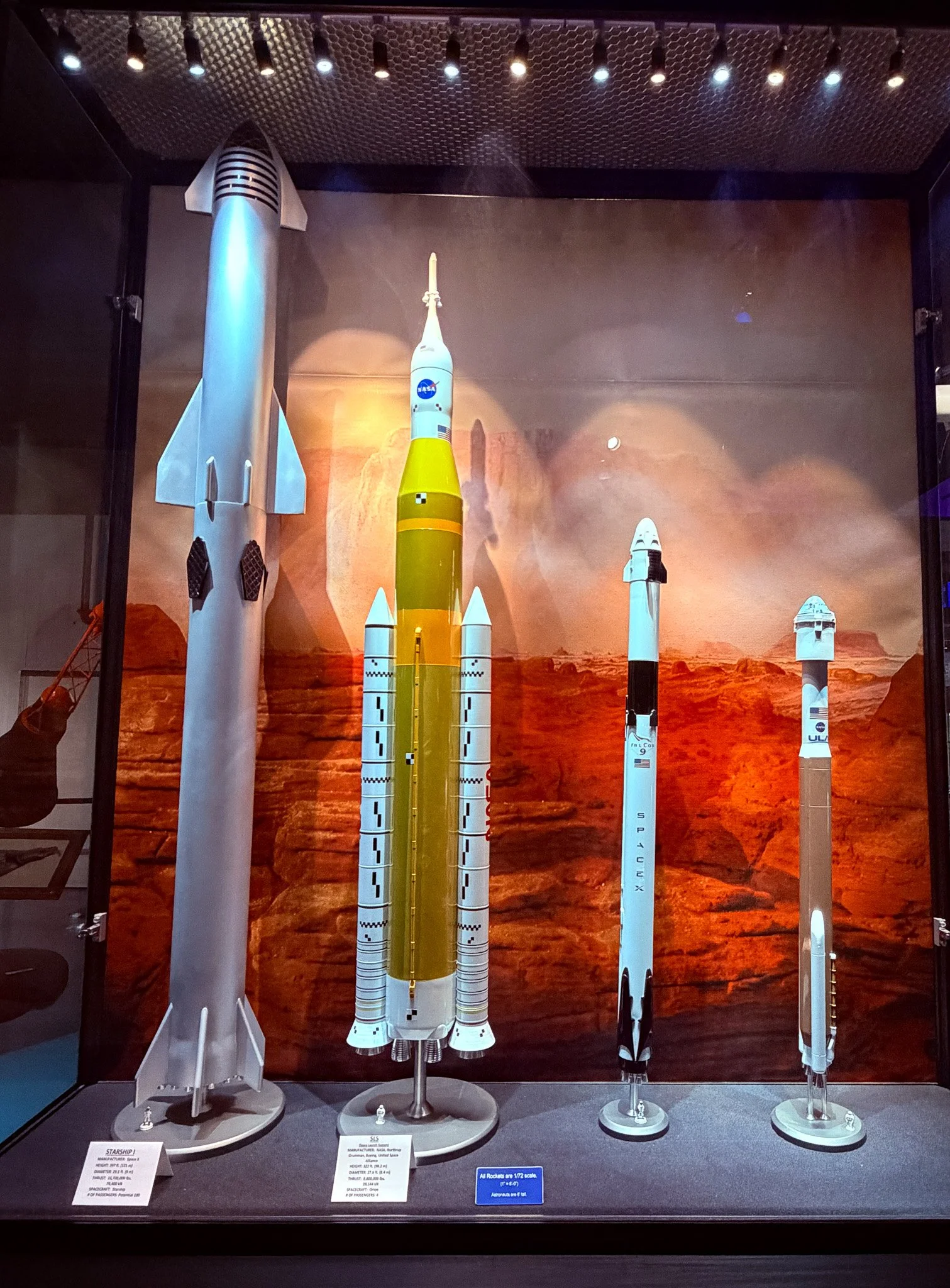
These are a few of the rockets currently in use. For frame of reference, in these models, you will see a small spaceman standing at the base of each one, and that is what a six-foot man would look like standing next to these huge rockets.
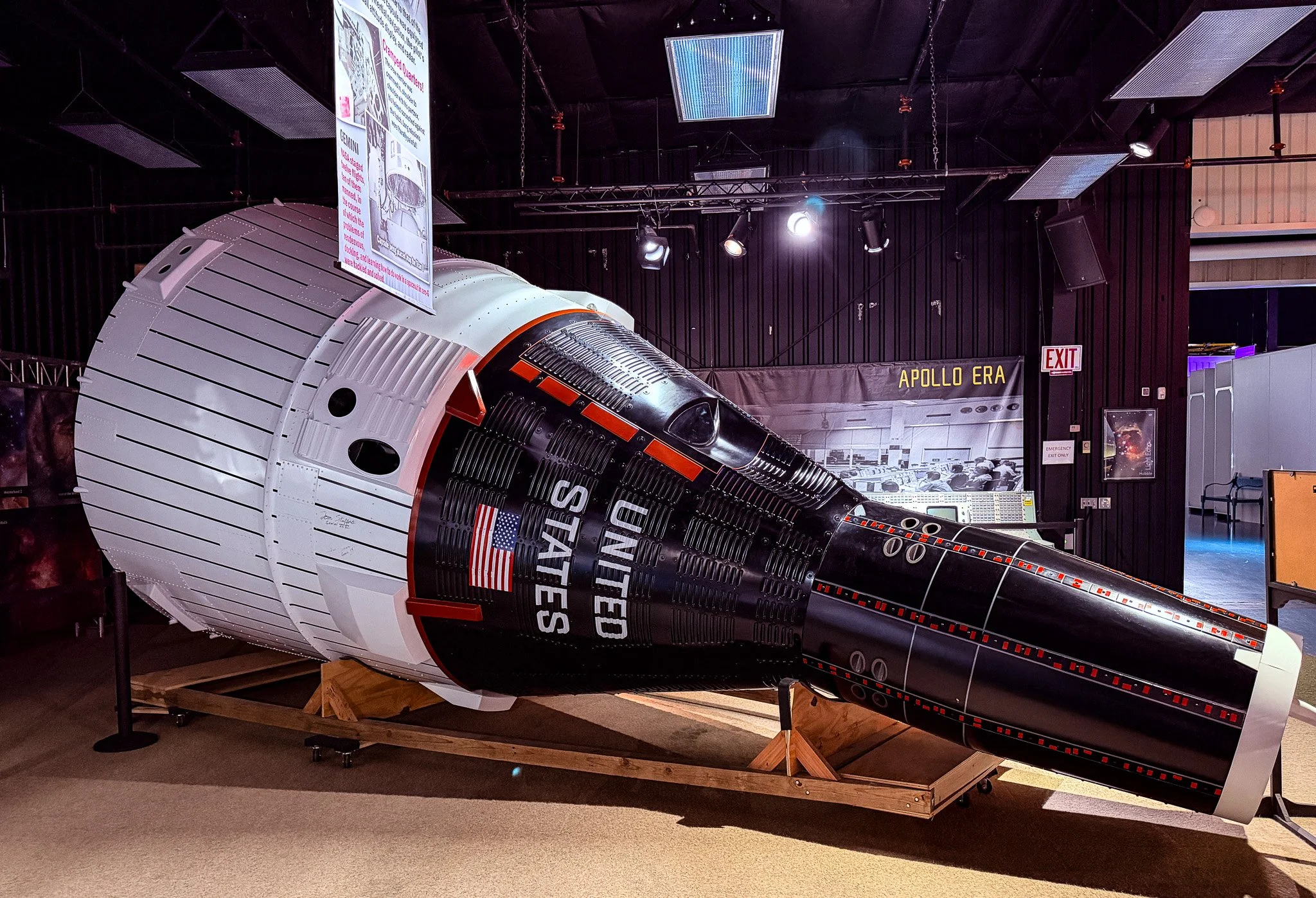
This is the orbital configuration of a Gemini Spacecraft. Before it would begin reentry the white sections on the left and the nose cone on the right would be jettisoned, leaving the two-man crew in the small section with United States written on it.
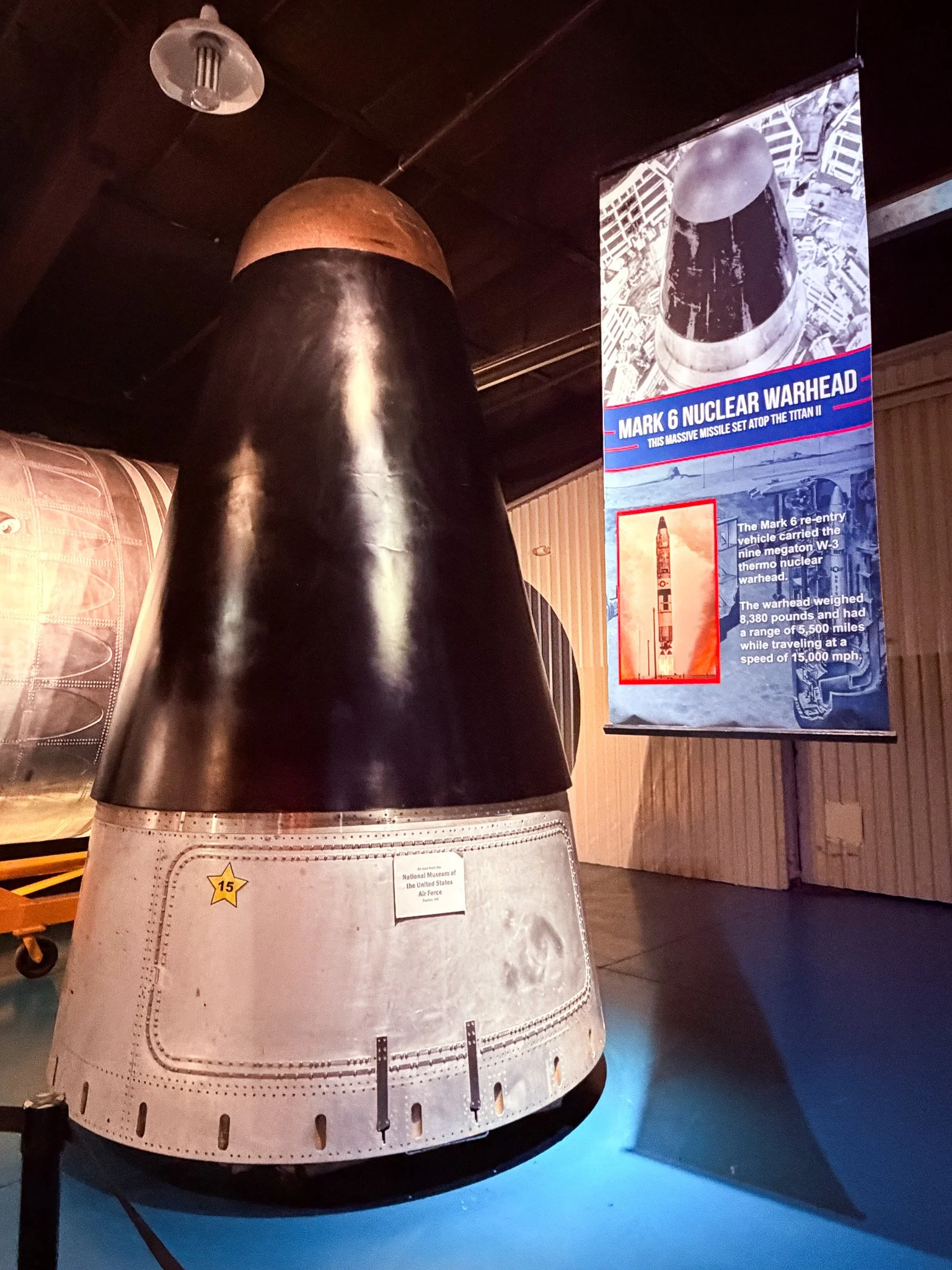
This is an actual Mark 6 Nuclear Warhead. This tipped the Titan II ICBM rocket. This is one of the largest thermonuclear warheads ever built by the U.S. It was capable of producing an explosion 600 time the power of the atomic bomb dropped on Hiroshima, Japan.
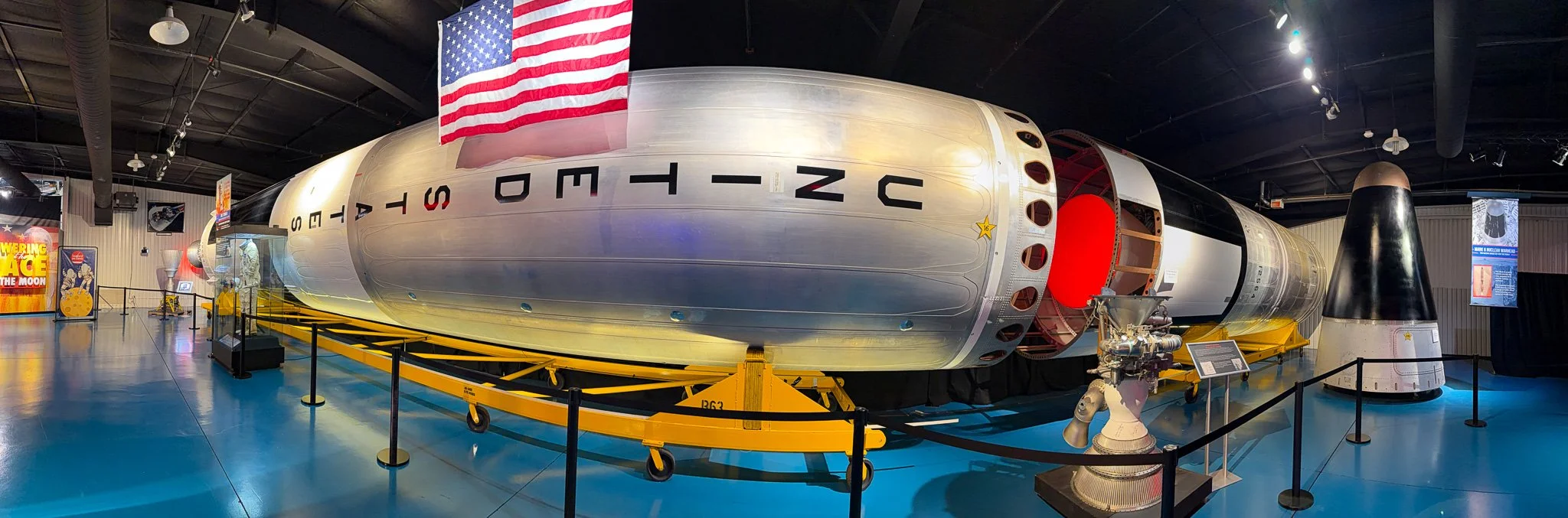
This is the Titan II Rocket and was used to deliver the warhead seen in the previous photo. It is so huge that I needed to use the Pano photo to make it all fit in a single image. This particular rocket spent most of its life inside an underground, hardened missile silo in Kansas tipped with a huge nuclear warhead seen above.
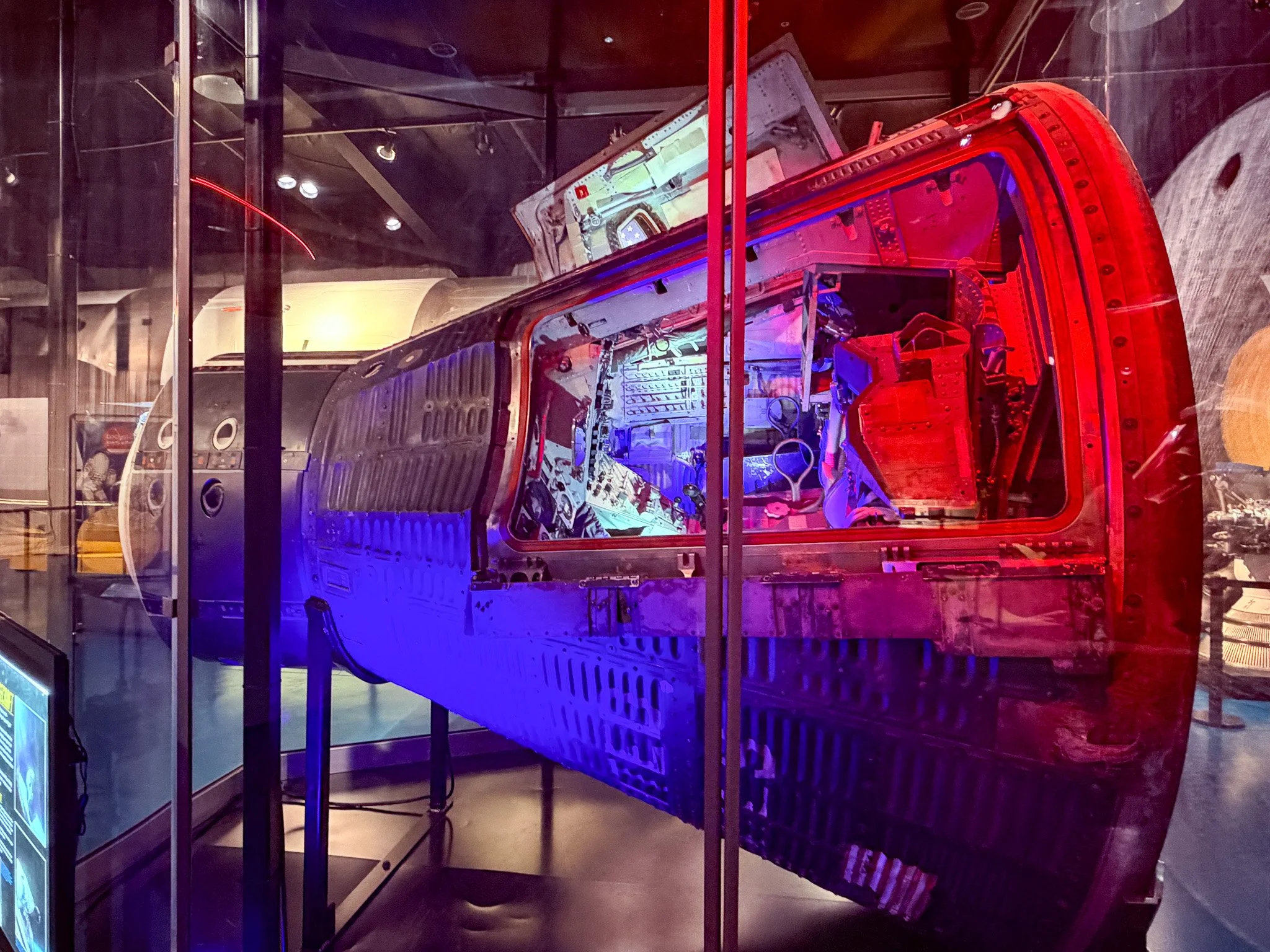
This is the ACTUAL Gemini VI spacecraft flown by astronauts Tom Stafford & Wally Schirra when they performed the first rendezvous in space with another spacecraft on December 15, 1965.
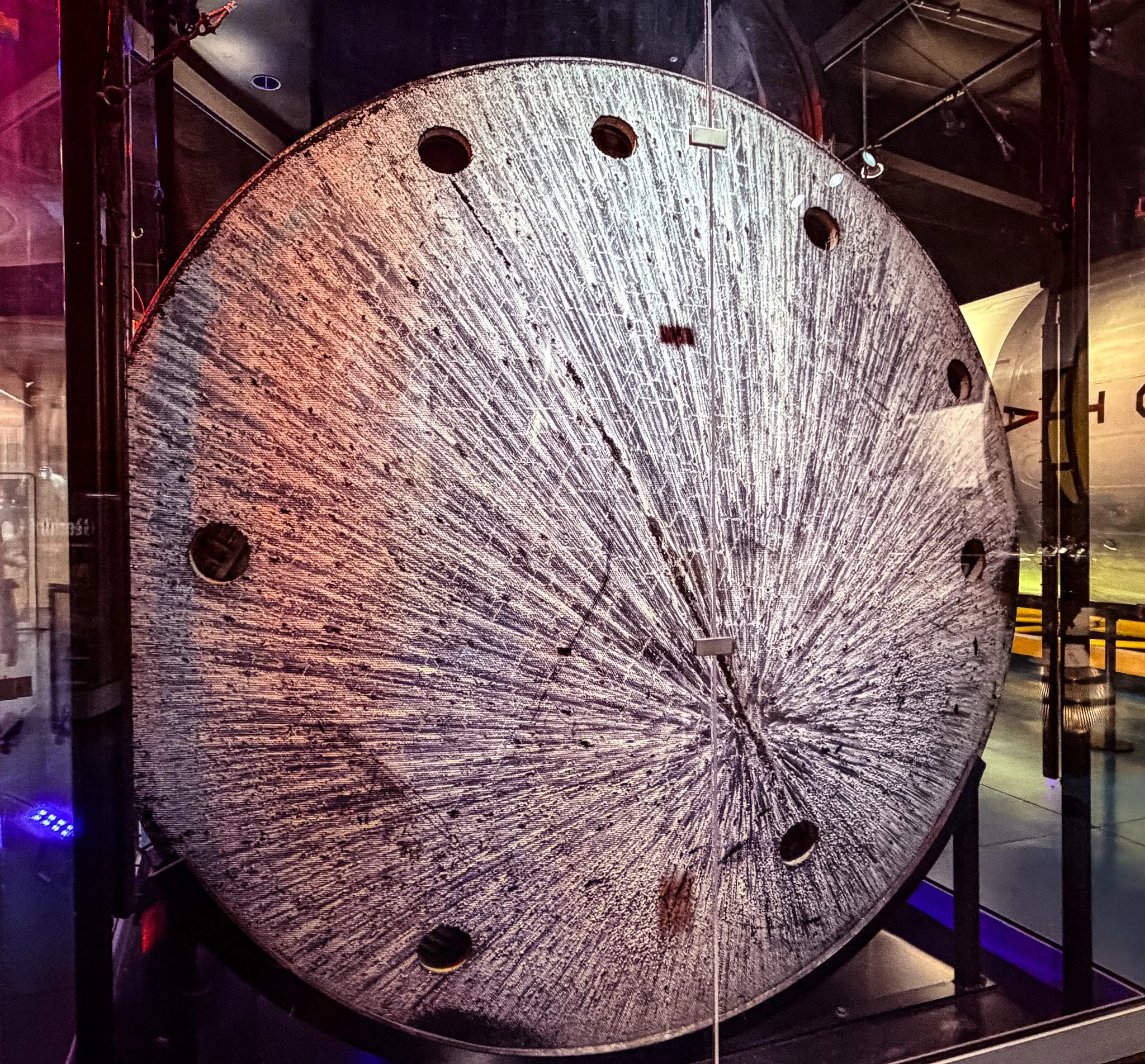
This view shows the heat shields and the burn marks they suffered upon reentry.
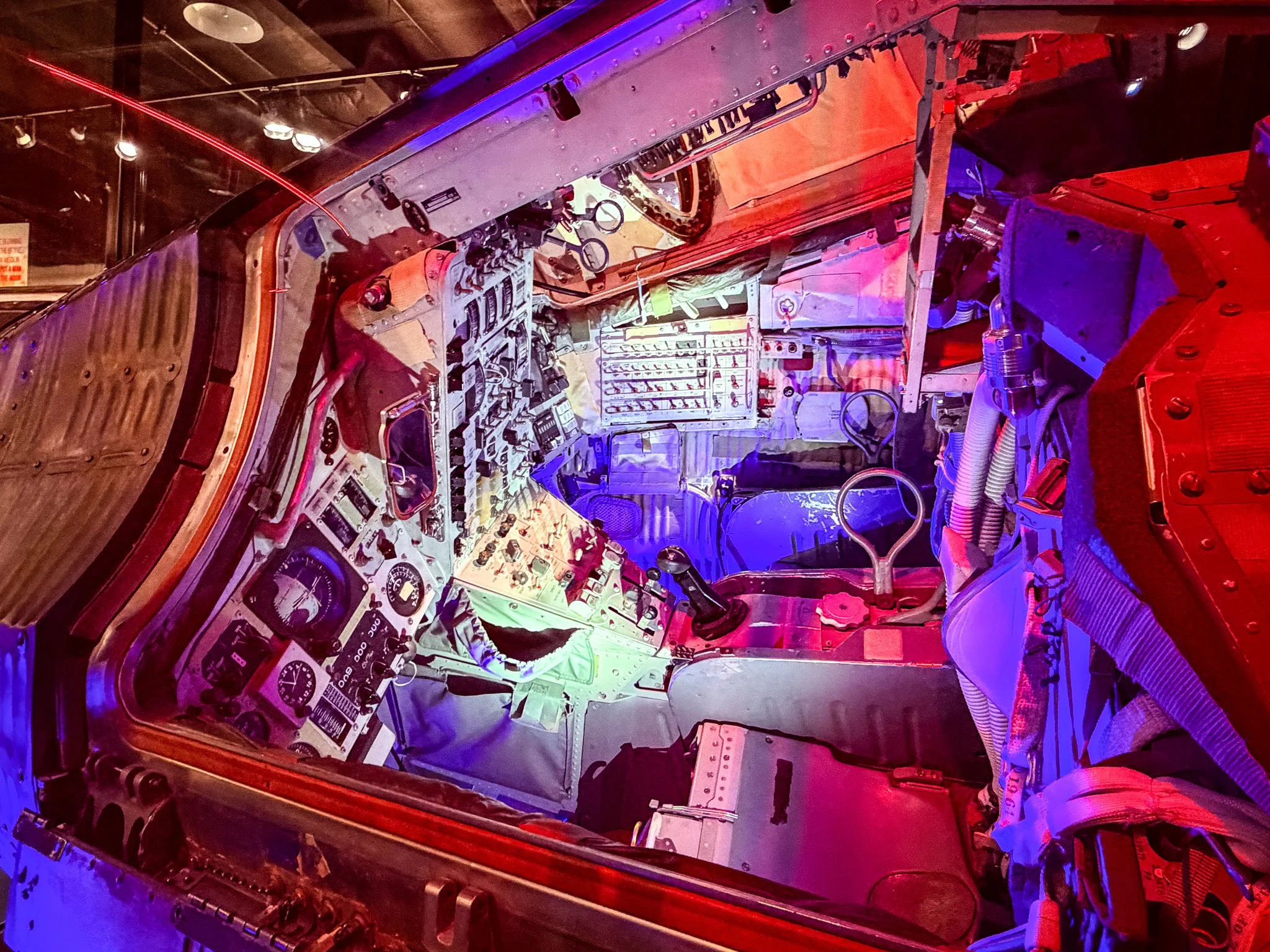
The interior of the Gemini VI from 1965. Notice how primitive the instrumentation was back then compared to the technology of today.
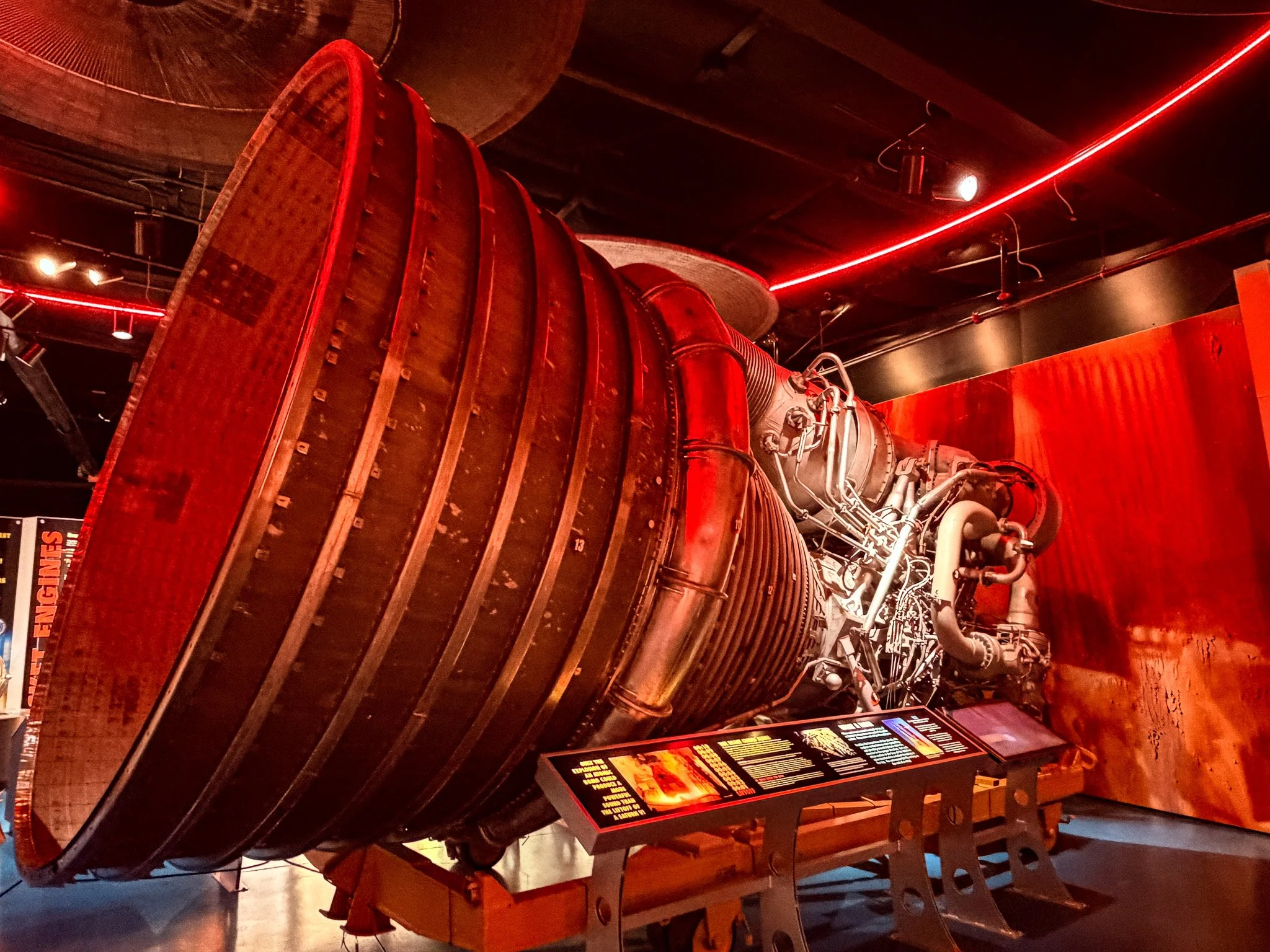
The F-1 Rocket Engine.
Five of these powered the giant Saturn V moon rocket. Each of the five engines burned a swimming pool amount of fuel each second!
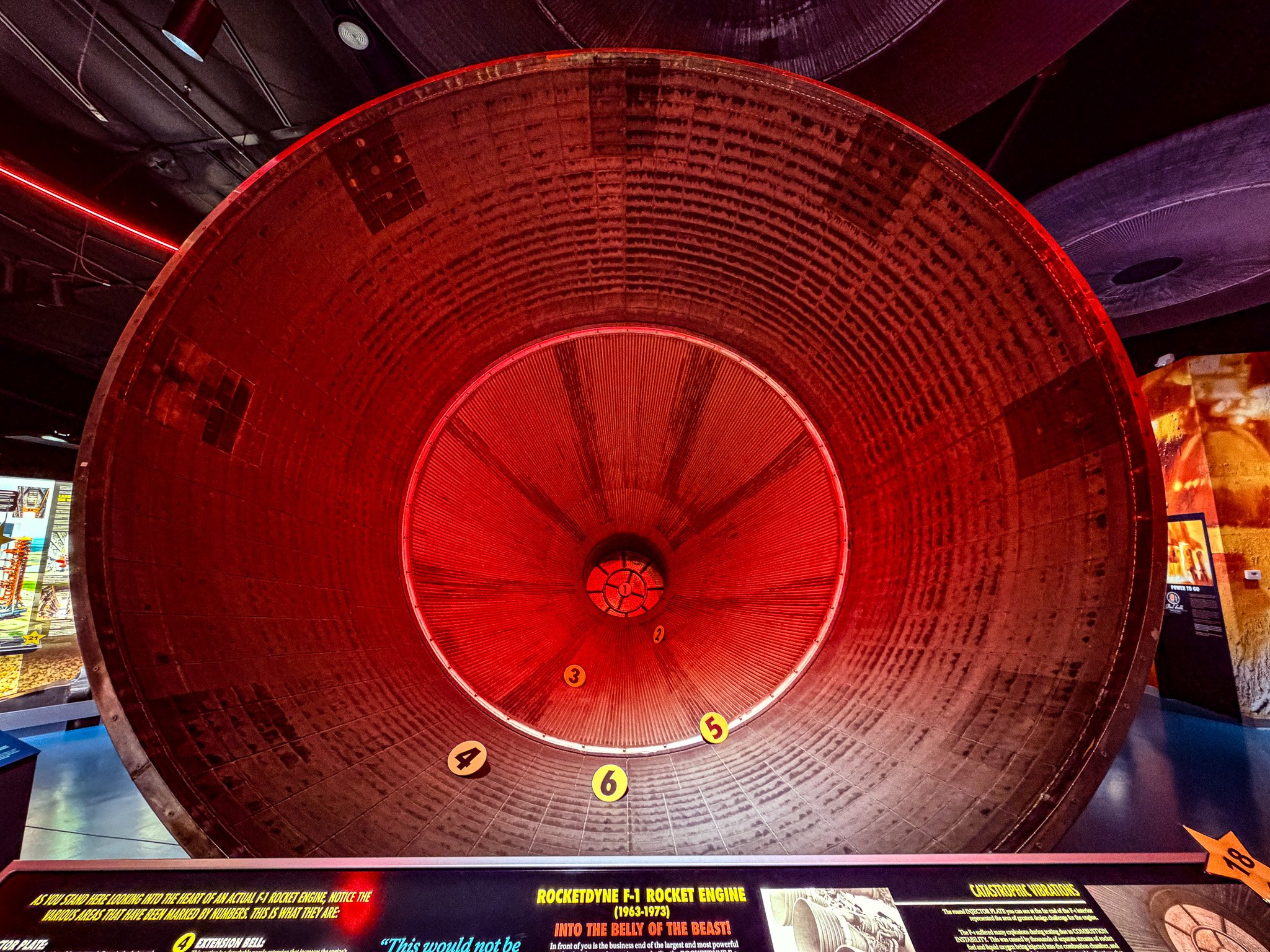
Looking up the business end of an F-1 rocket engine. The temperature in the combustion chamber of this engine approached the temperature of the sun.
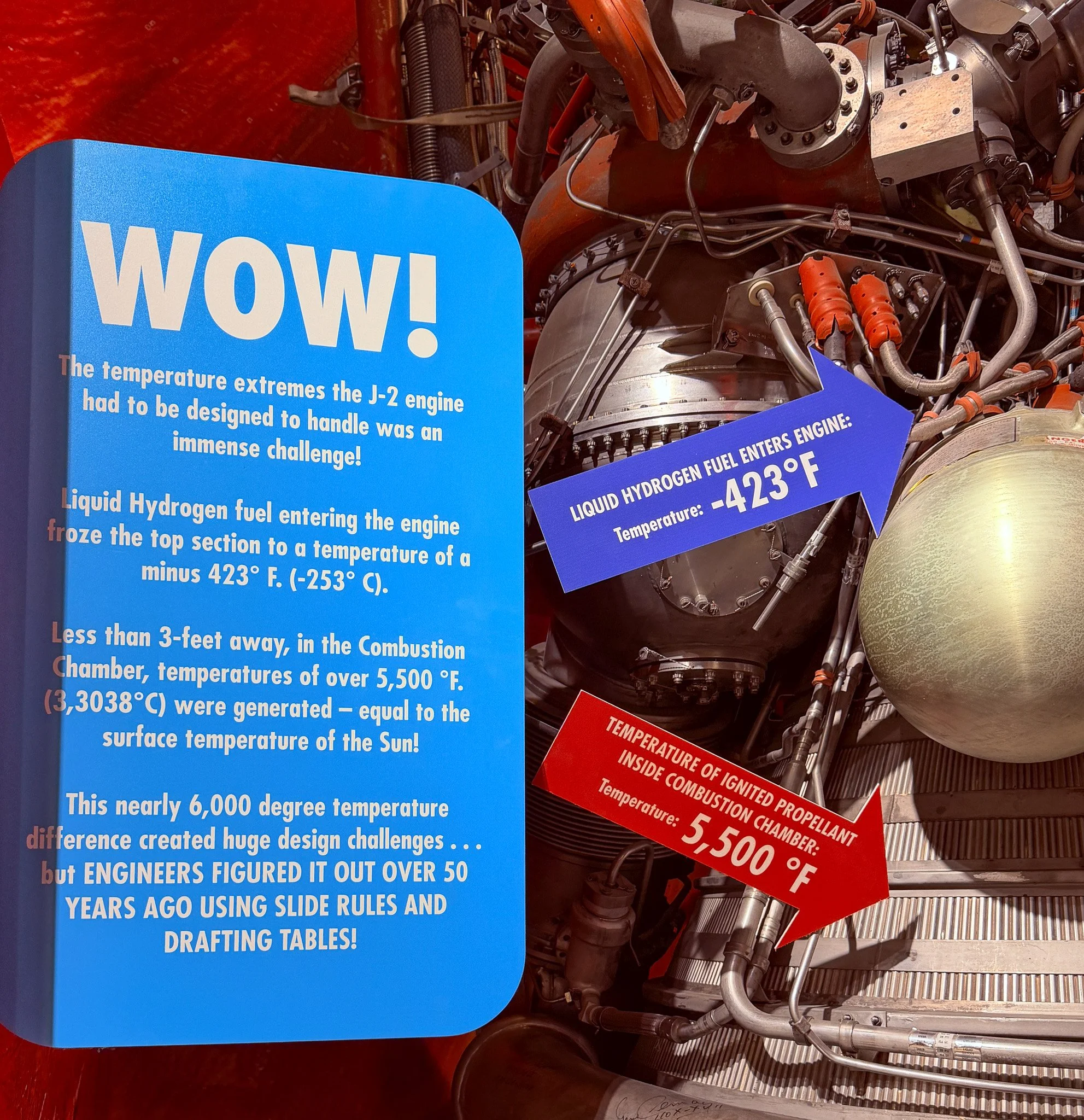
This is mind boggling to think that scientists of the day figured all this complexity out with slide rules and drafting tables - no artificial intelligence to help out.
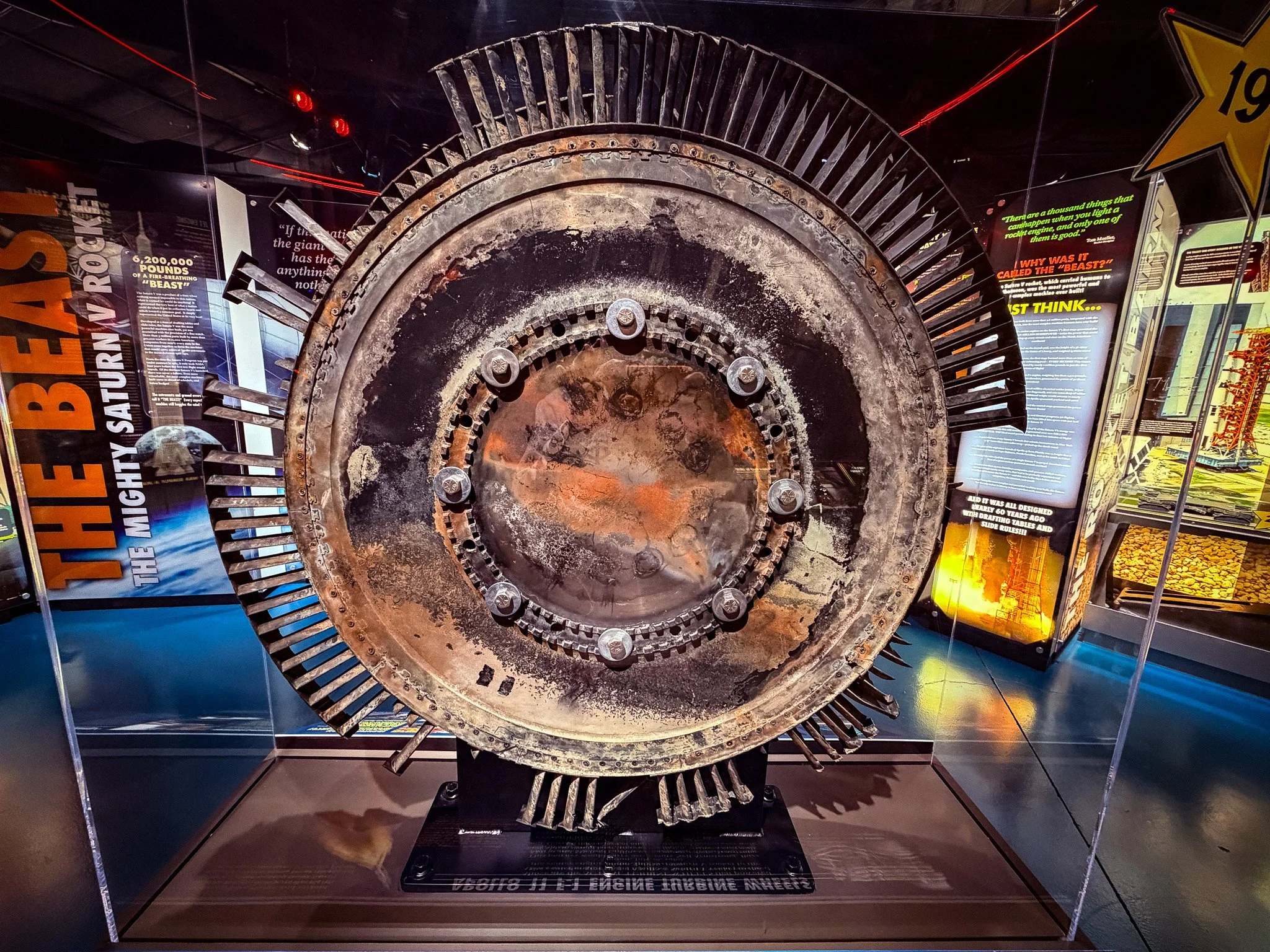
This is the actual turbine wheel from the center engine on the Saturn V rocket that delivered Neil Armstrong and Buzz Aldrin to the moon on July 16, 1969.
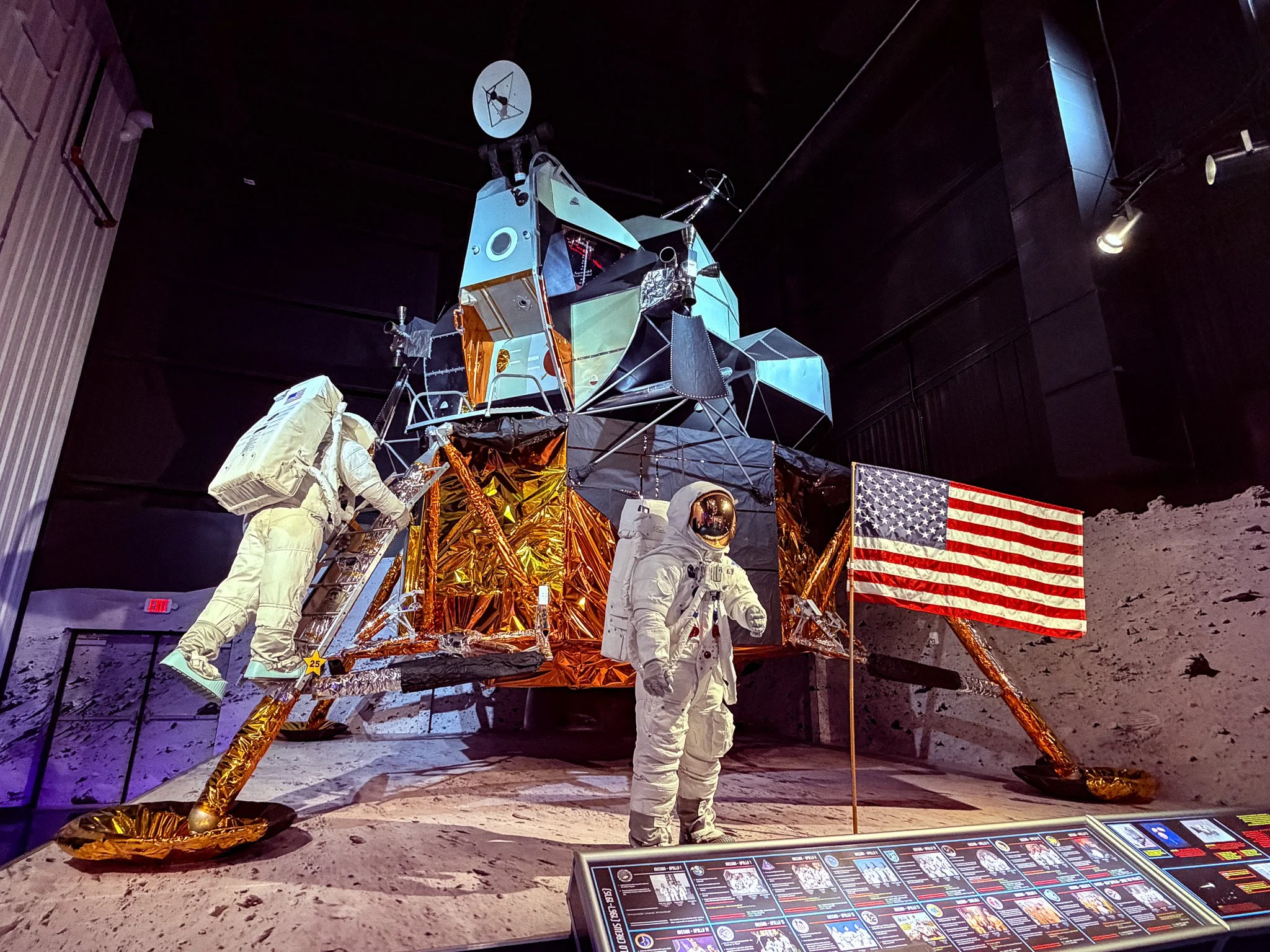
Full-scale replica of the lunar module that delivered Armstrong and Aldrin to the surface of the moon.
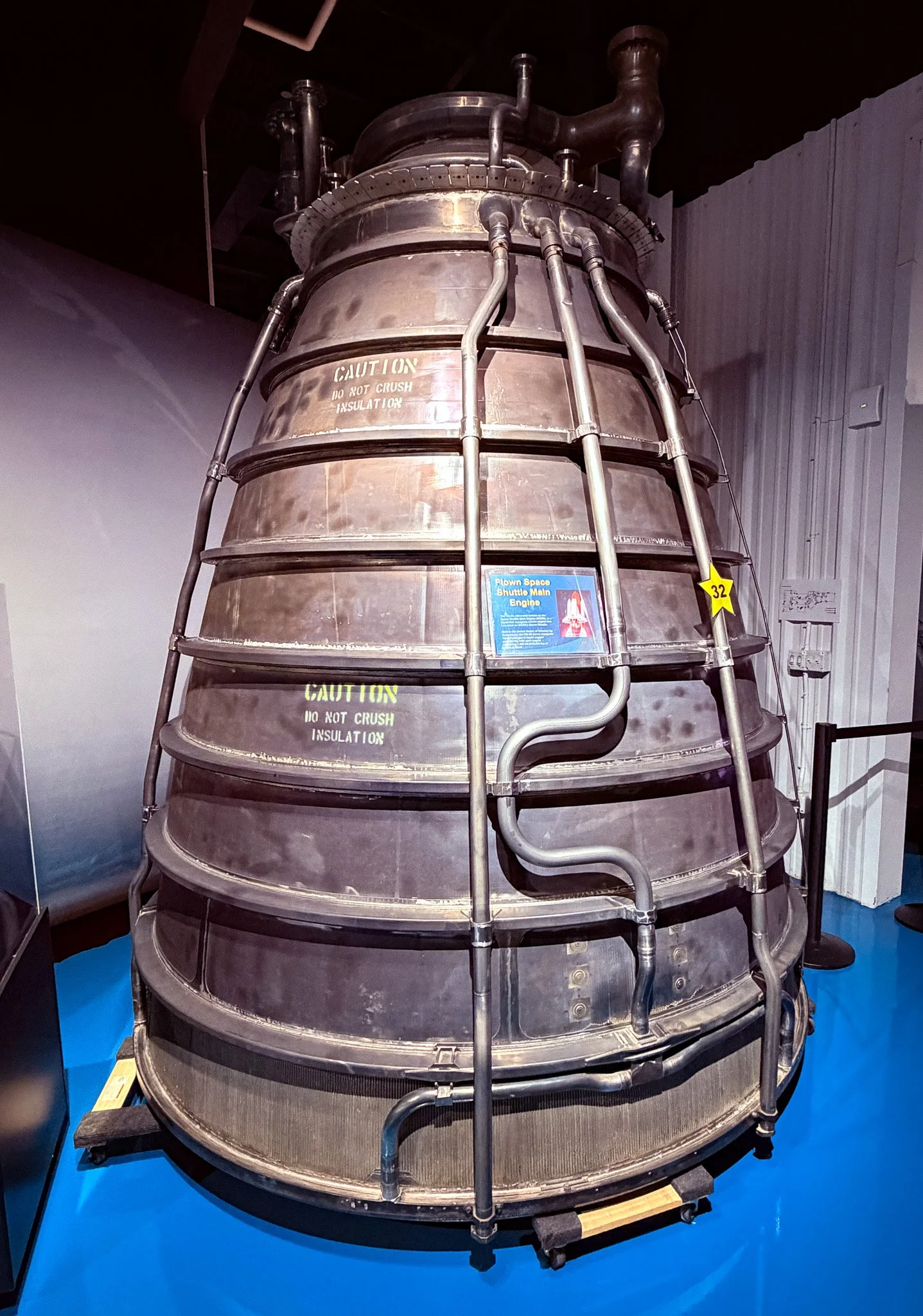
Space shuttle main engine which helped power the orbiter into space on seven different missions.
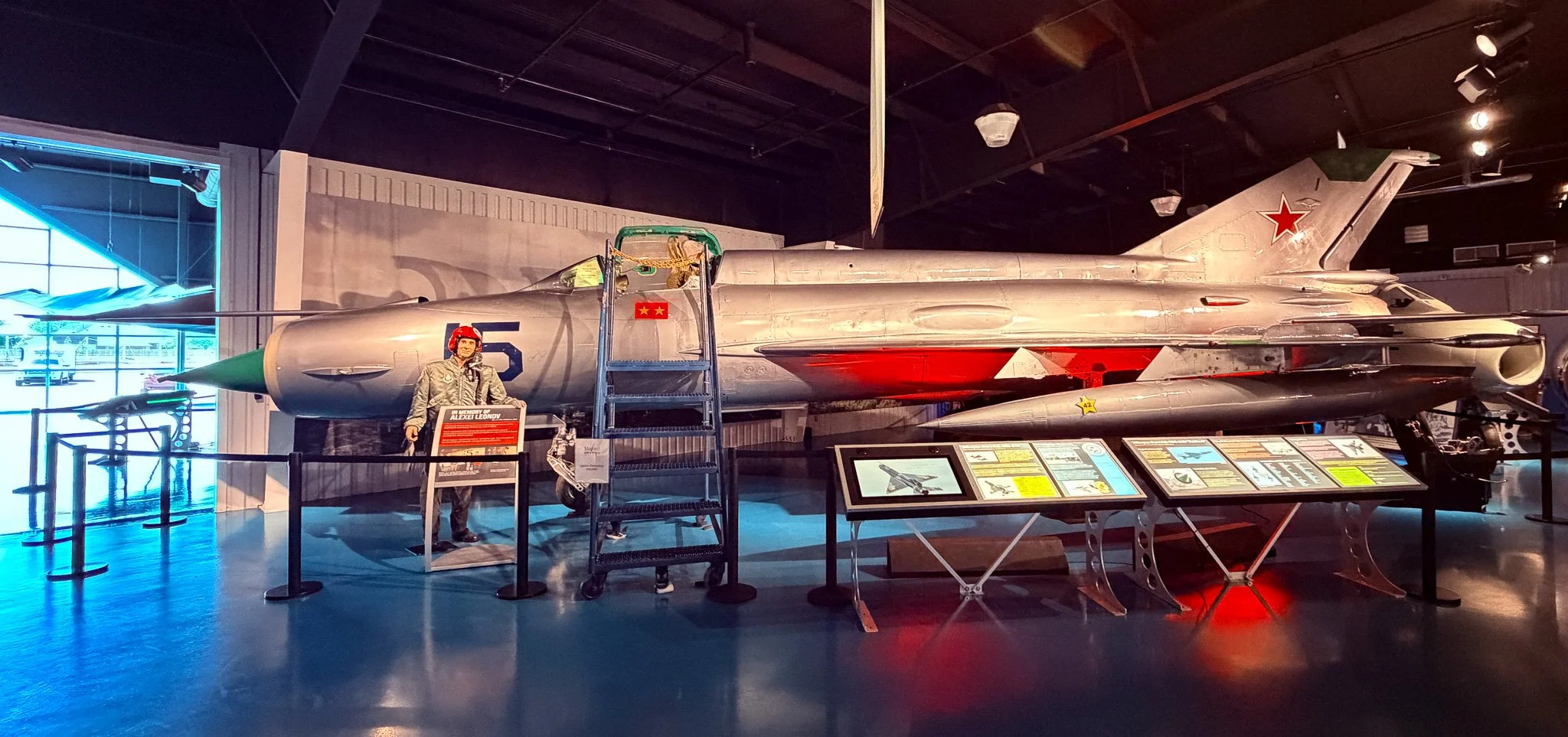
Actual Soviet MIG-21.
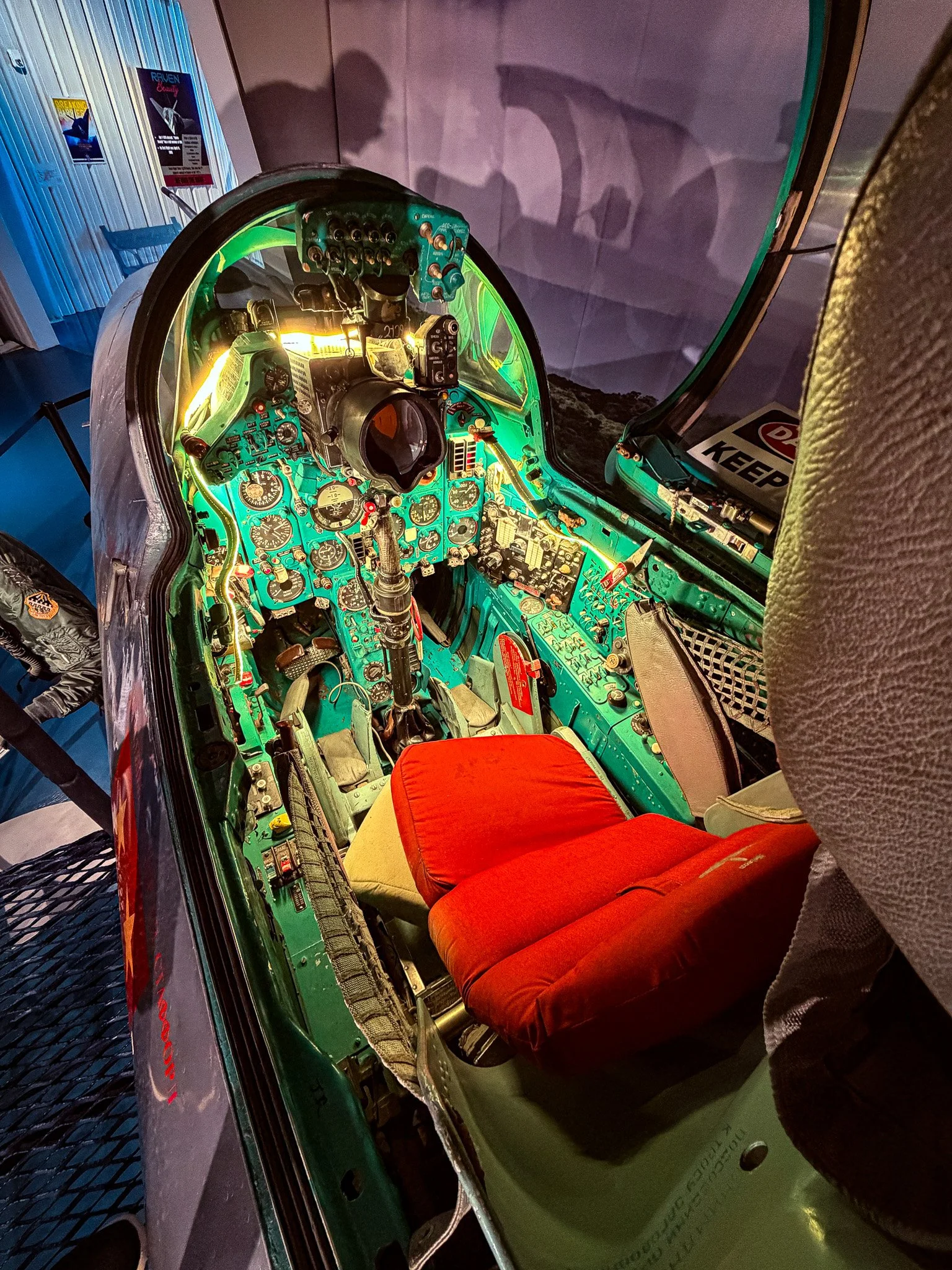
MIG-21 cockpit.
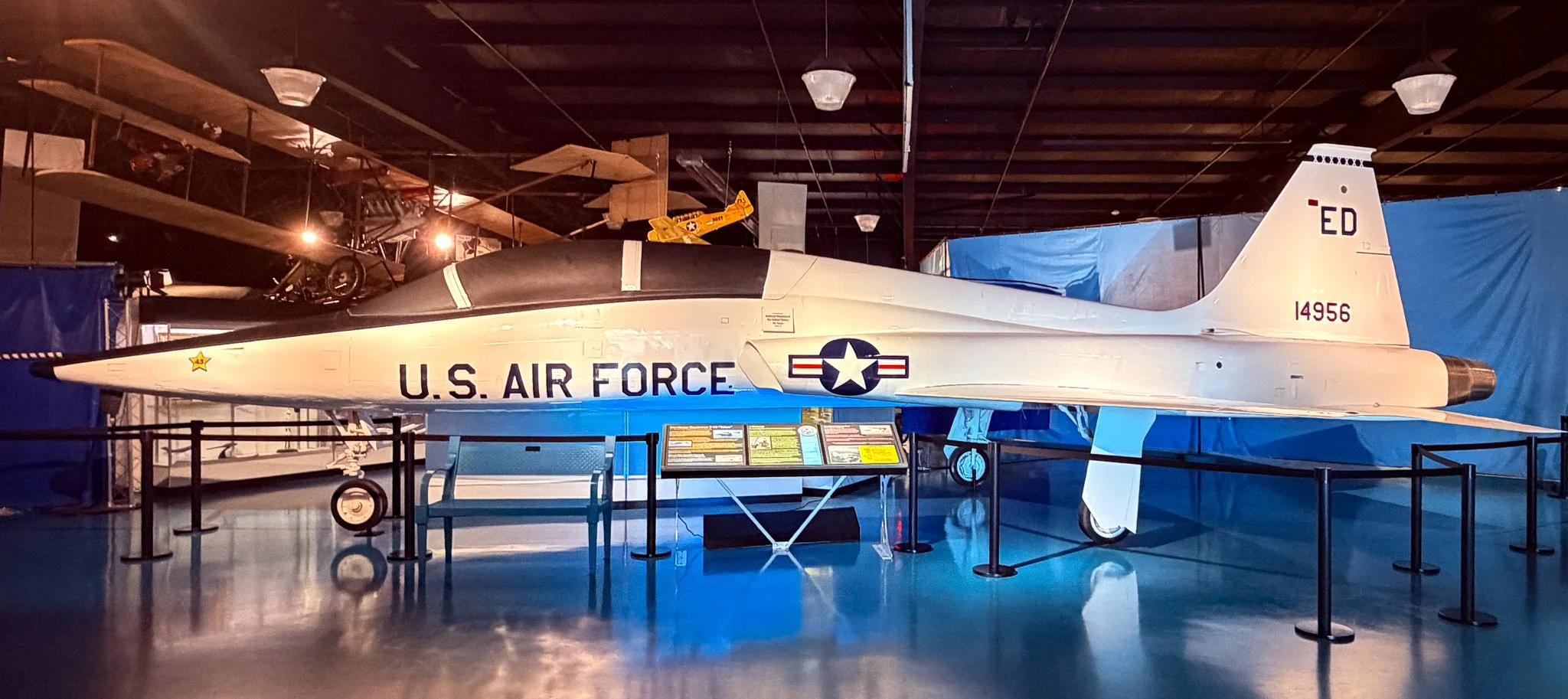
This is an actual T-38 “Talon” Trainer used to train fighter pilots and astronauts since the 1960’s and this model is still in use today.
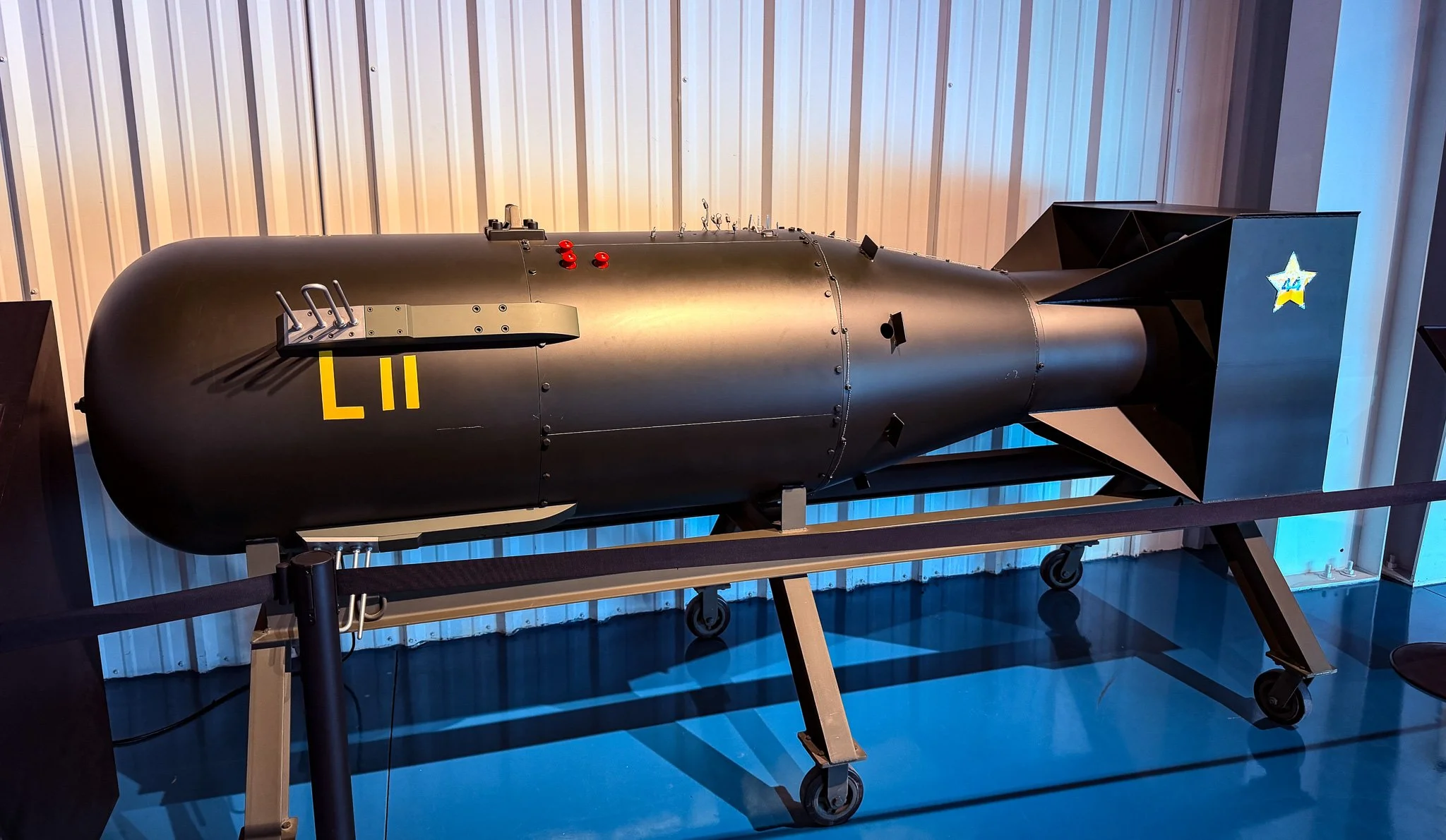
“Little Boy” Bomb.
This is a full-scale replica of the actual “Little Boy” bomb which was dropped on Hiroshima on August 6, 1945.
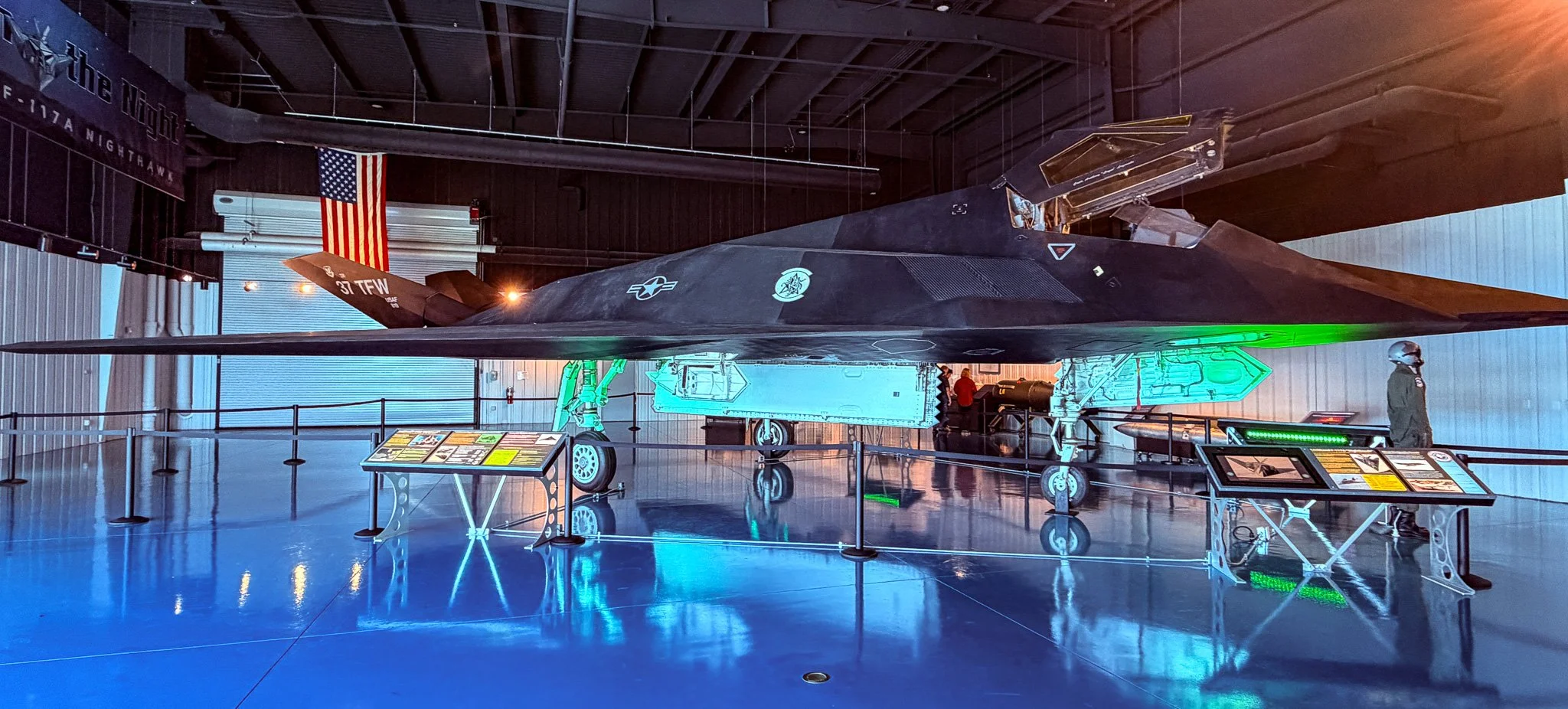
This is an actual Northrop B-2 Spirit Stealth Bomber.
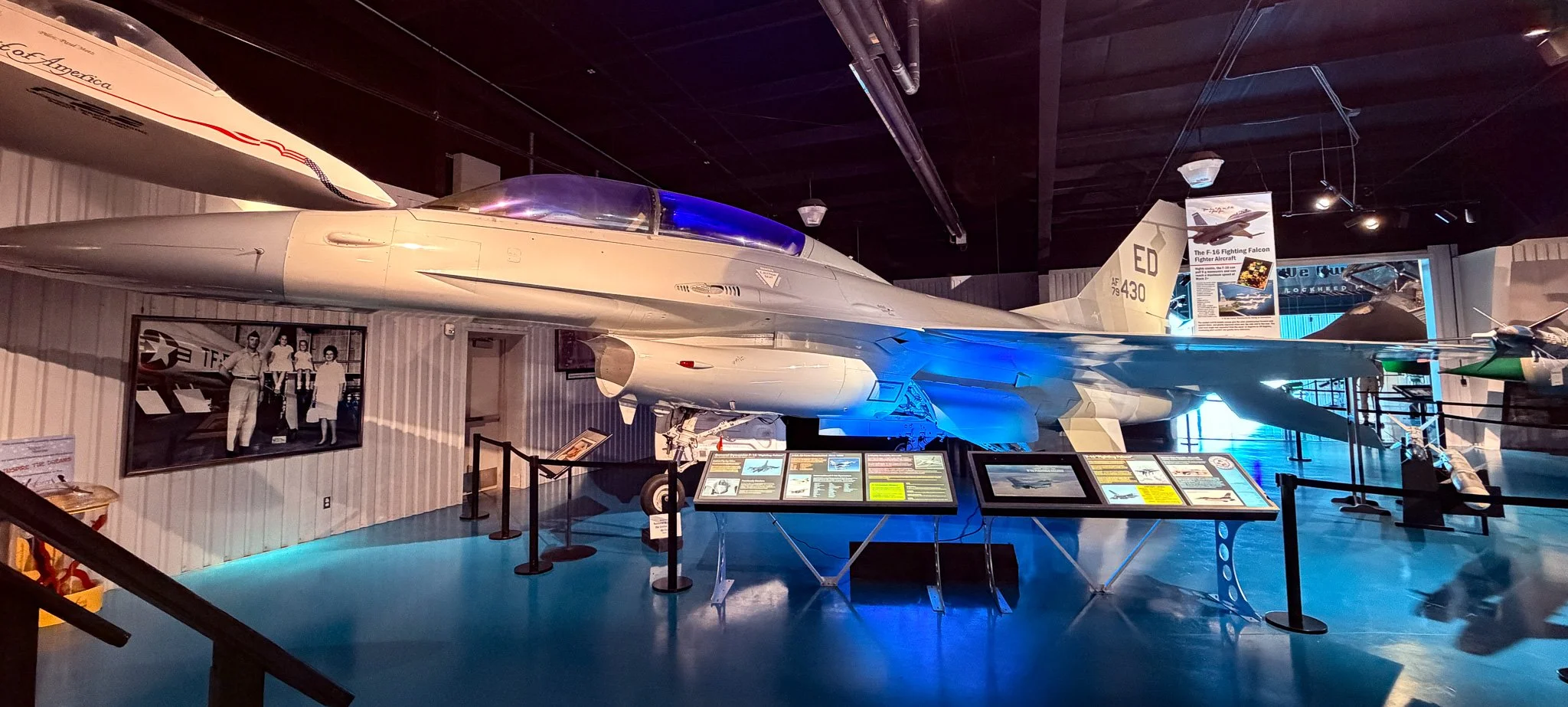
Actual F-16 “Fighting Falcon.”
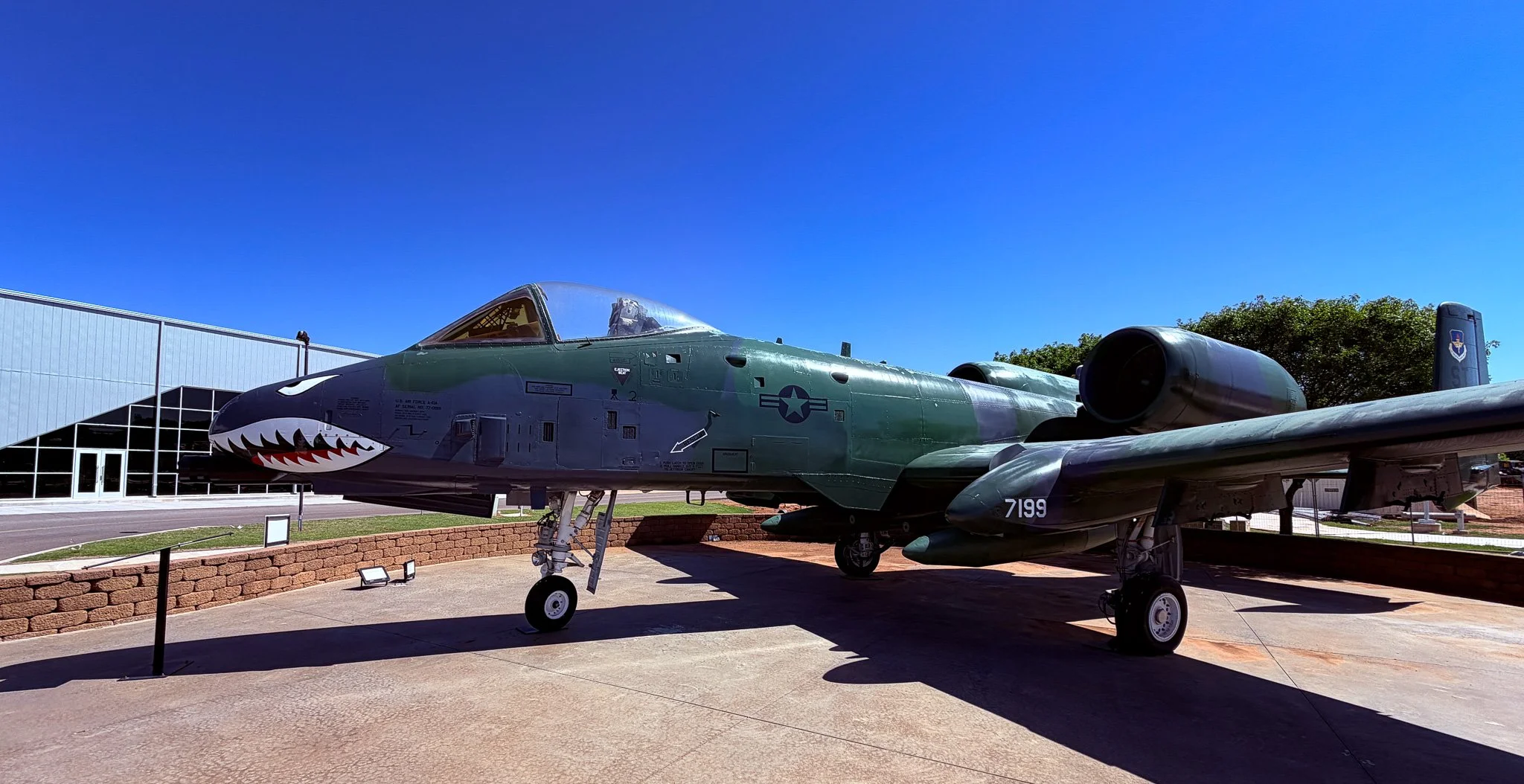
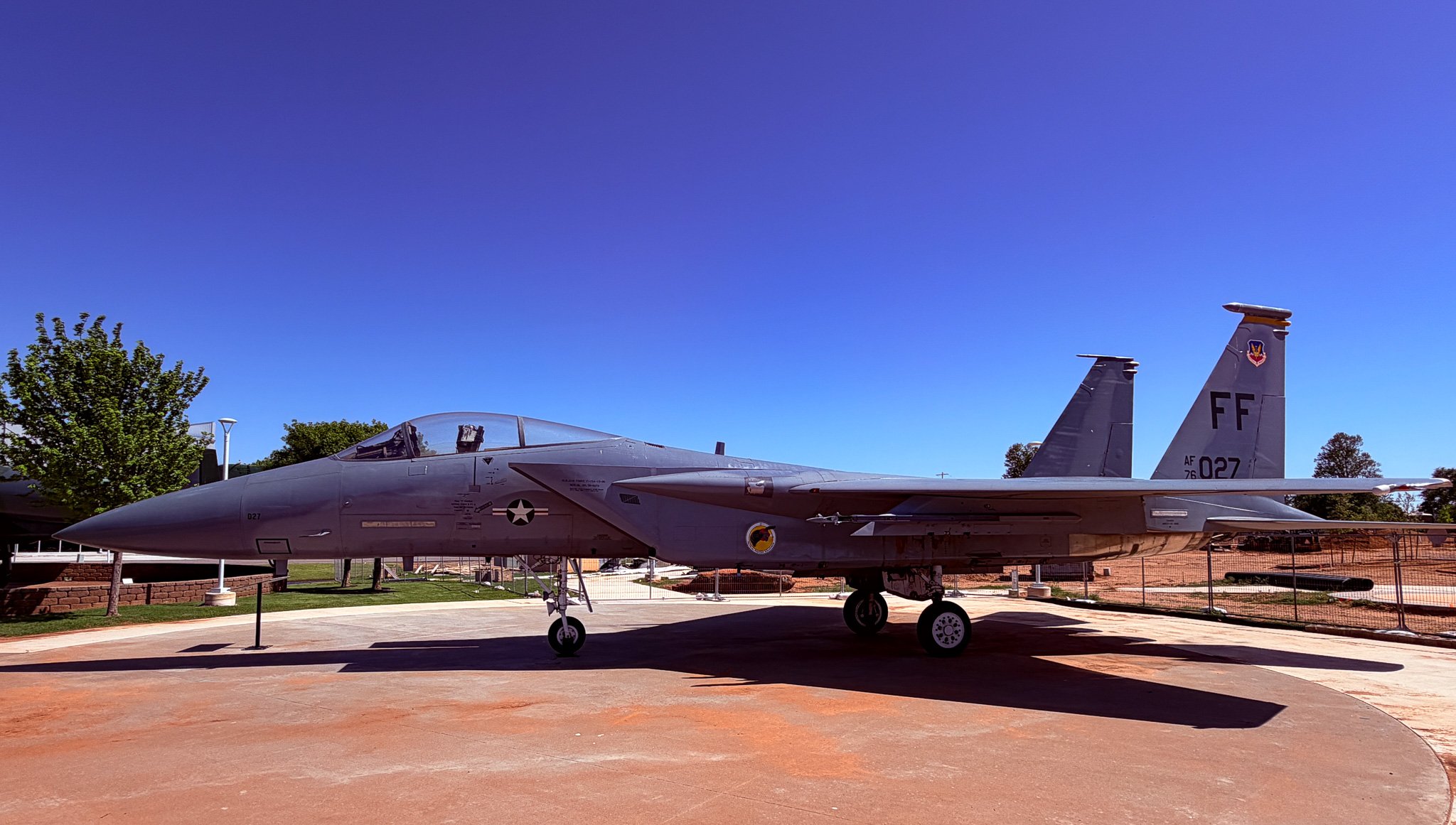
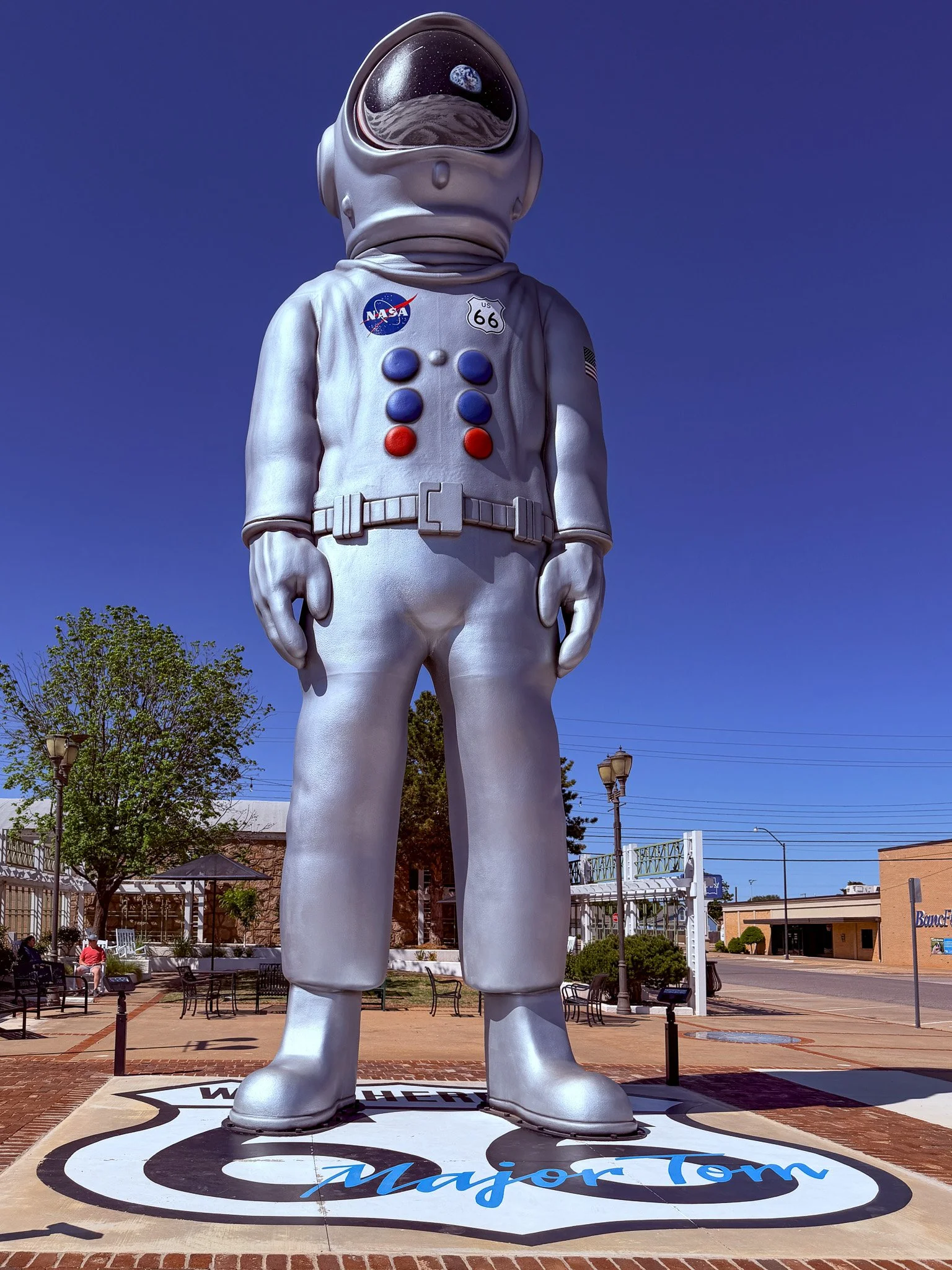
Weatherford really embraces both Route 66 and its association with the Stafford Air & Space Museum. Major Tom stands in the middle of downtown.
Click on Image for Map.
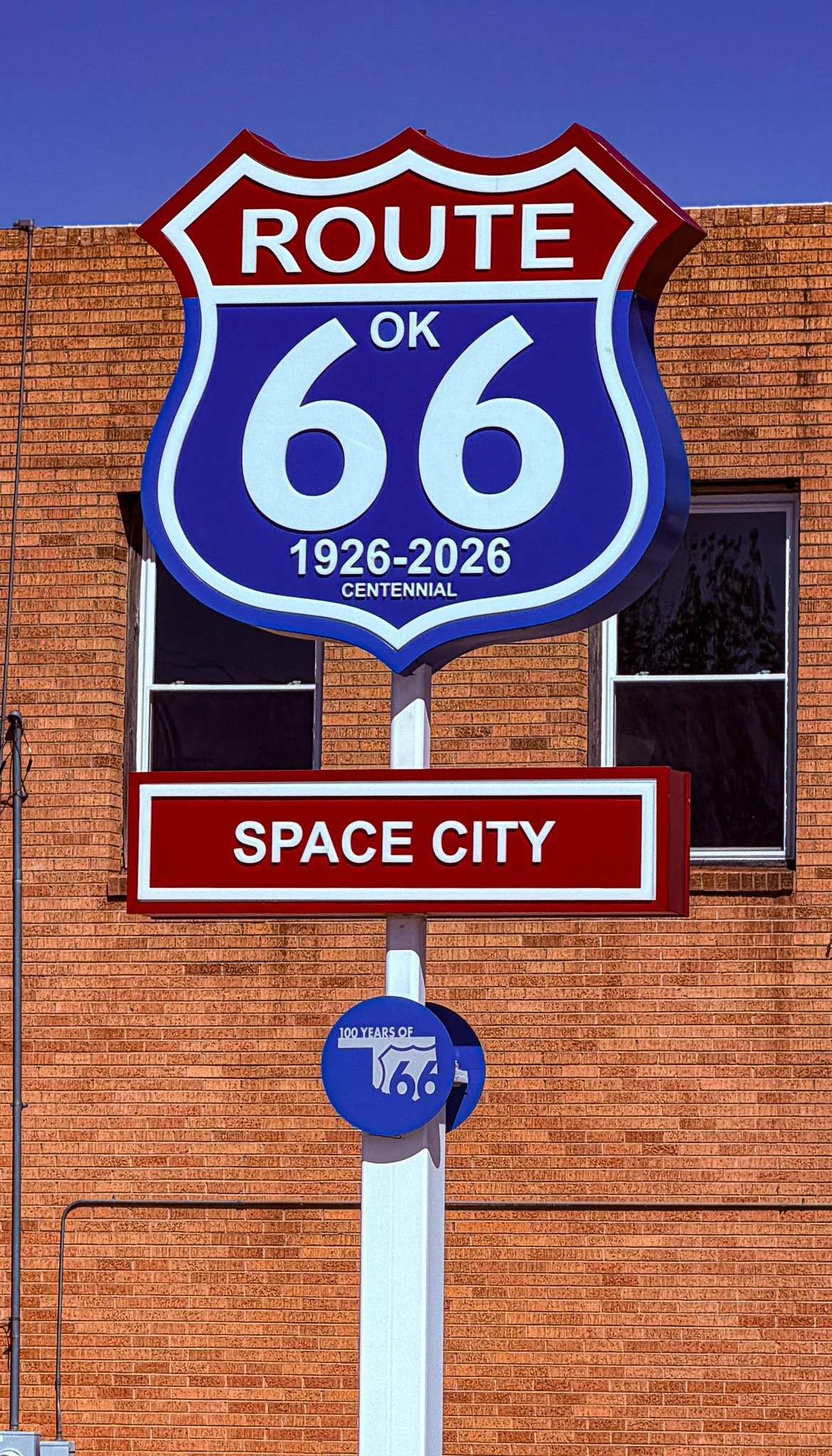
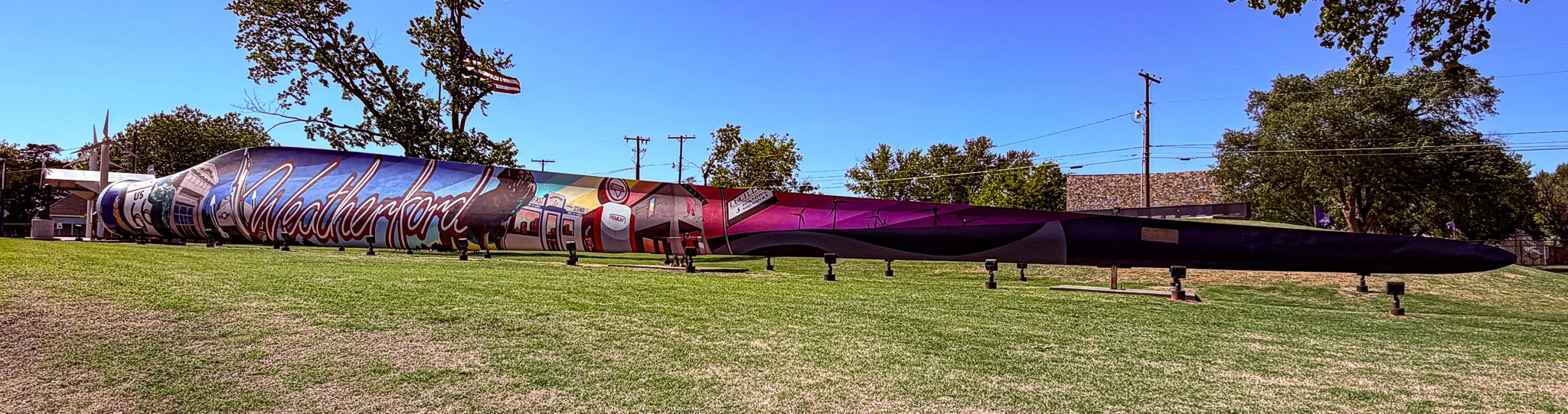
This is a windmill blade in a Weatherford park which has been painted to honor the town and on the other side to honor the U.S. military.
Click on Image for Map.
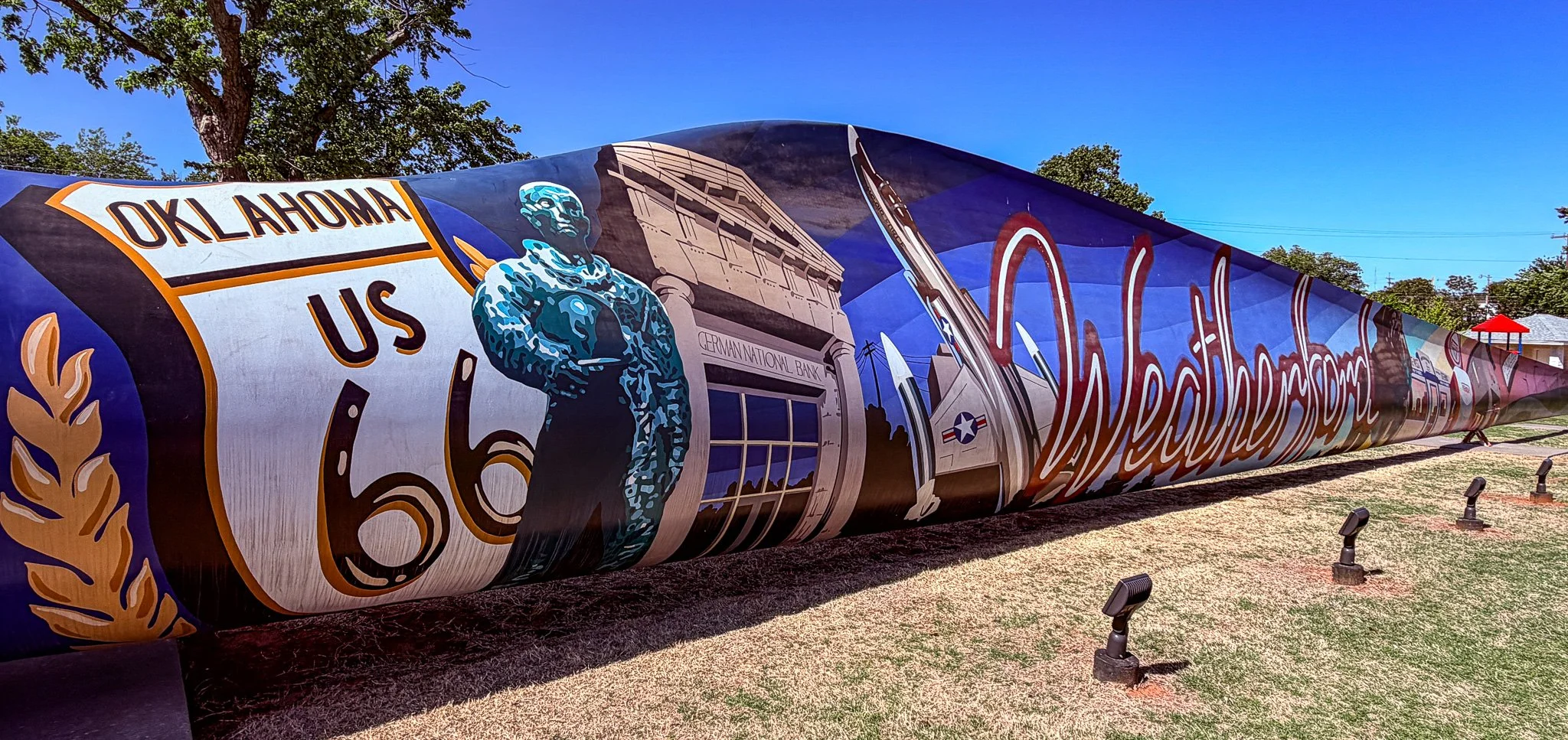
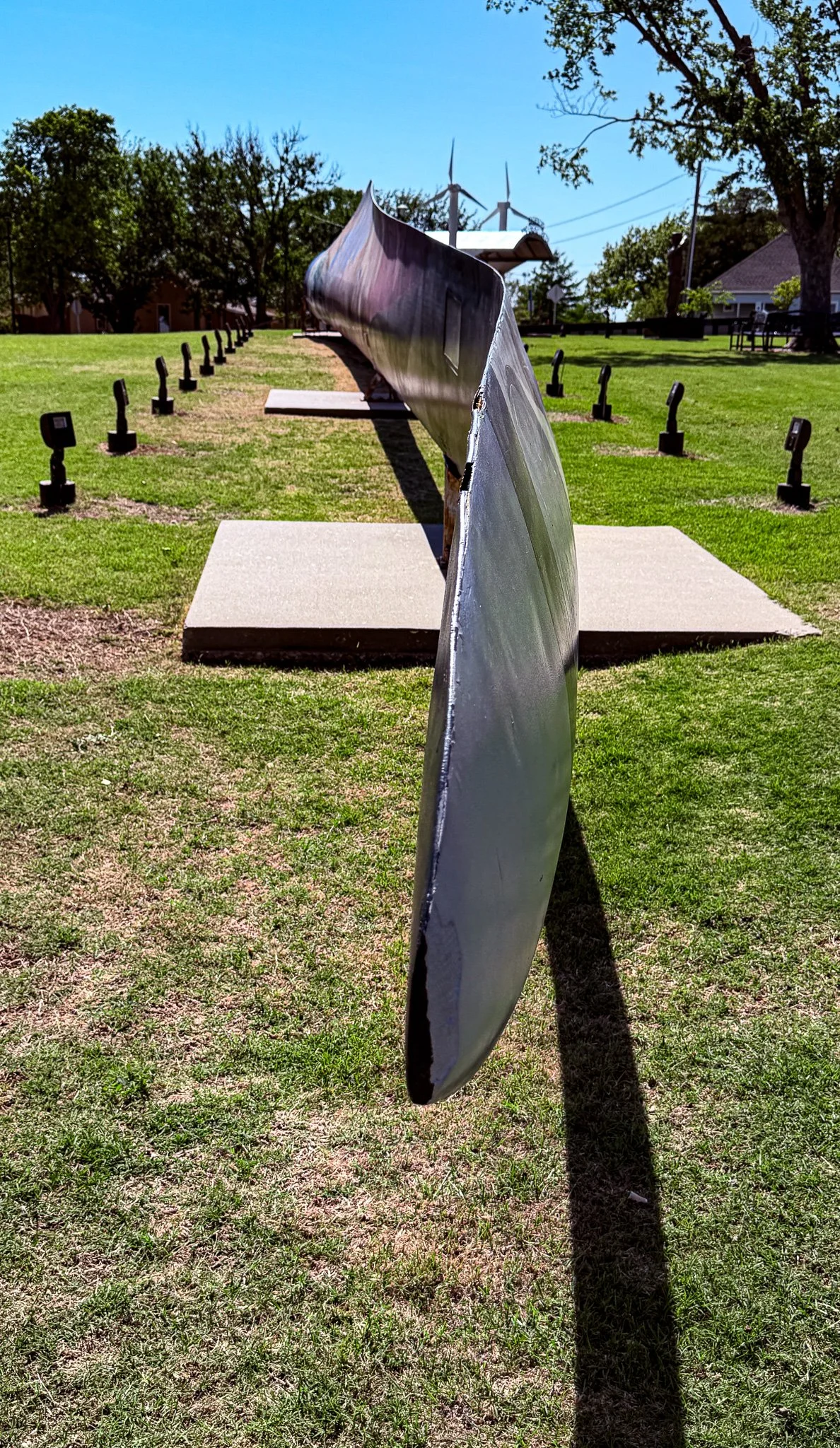
This is a fantastic vantage point that really shows off the aerodynamic curvature of these blades which you cannot appreciate just looiing at them from a distance.
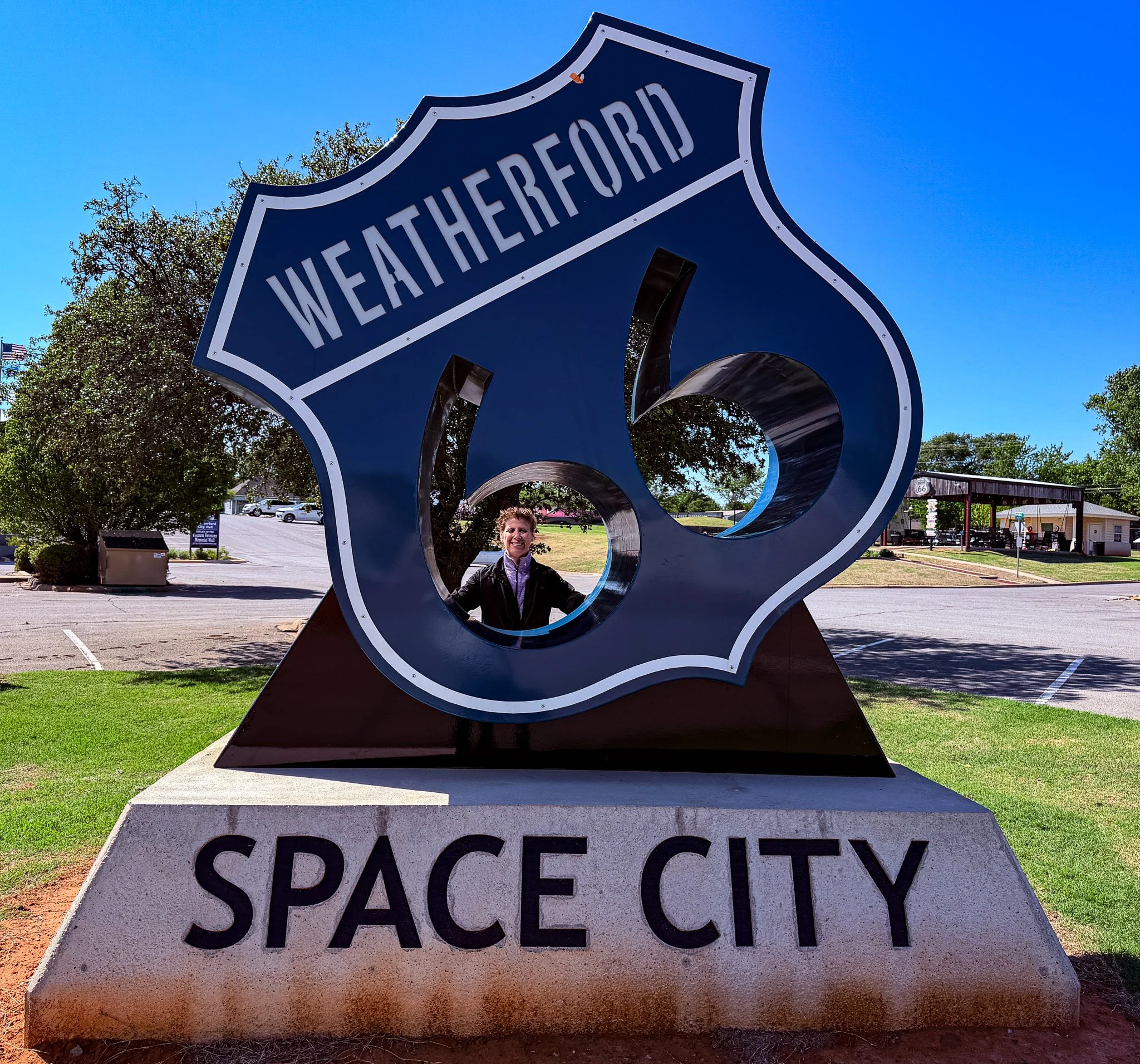
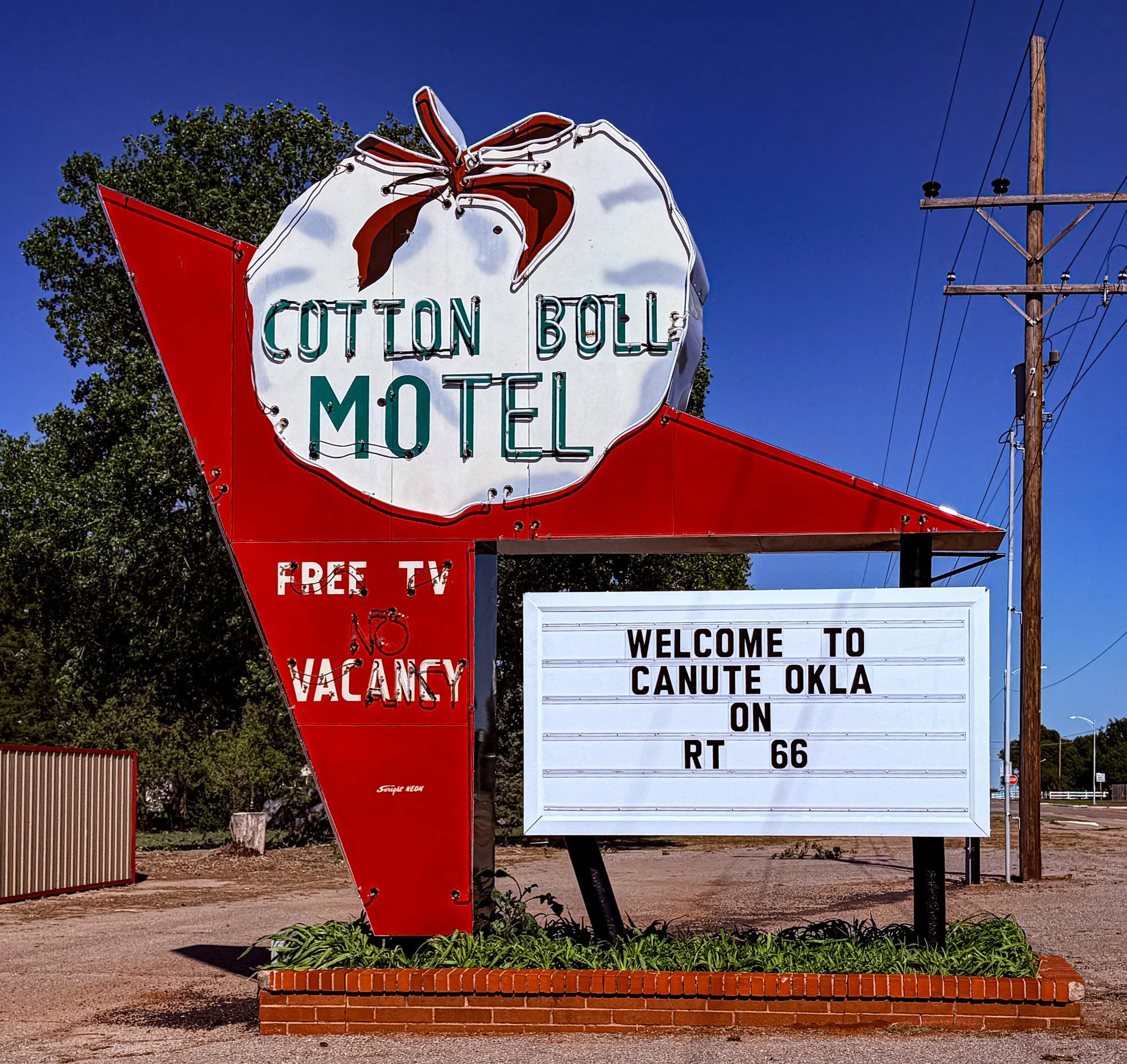
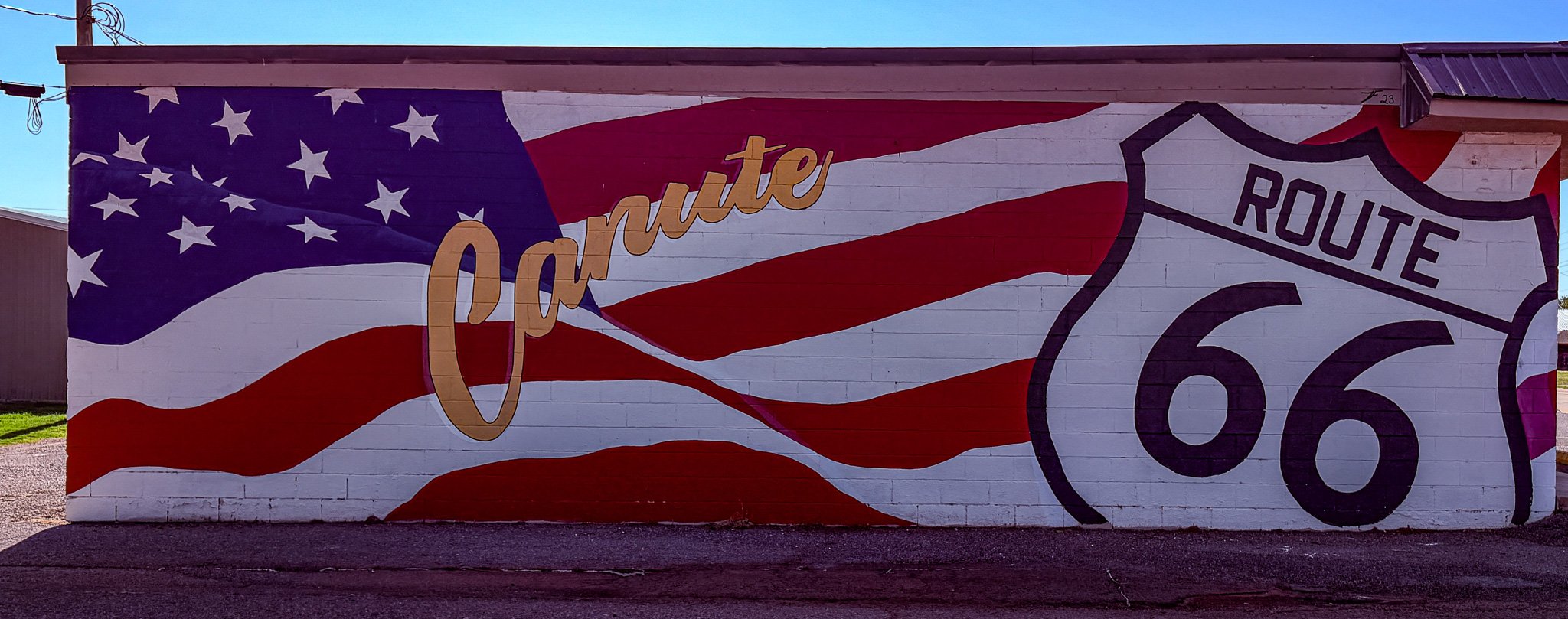
We stopped briefly in Canute, OK to take a photo of the old Cotton Boll motel sign and a mural across the street.
Click on Image for Map.