Blue Ridge Parkway Day #8
Sunday, October 26, 2025
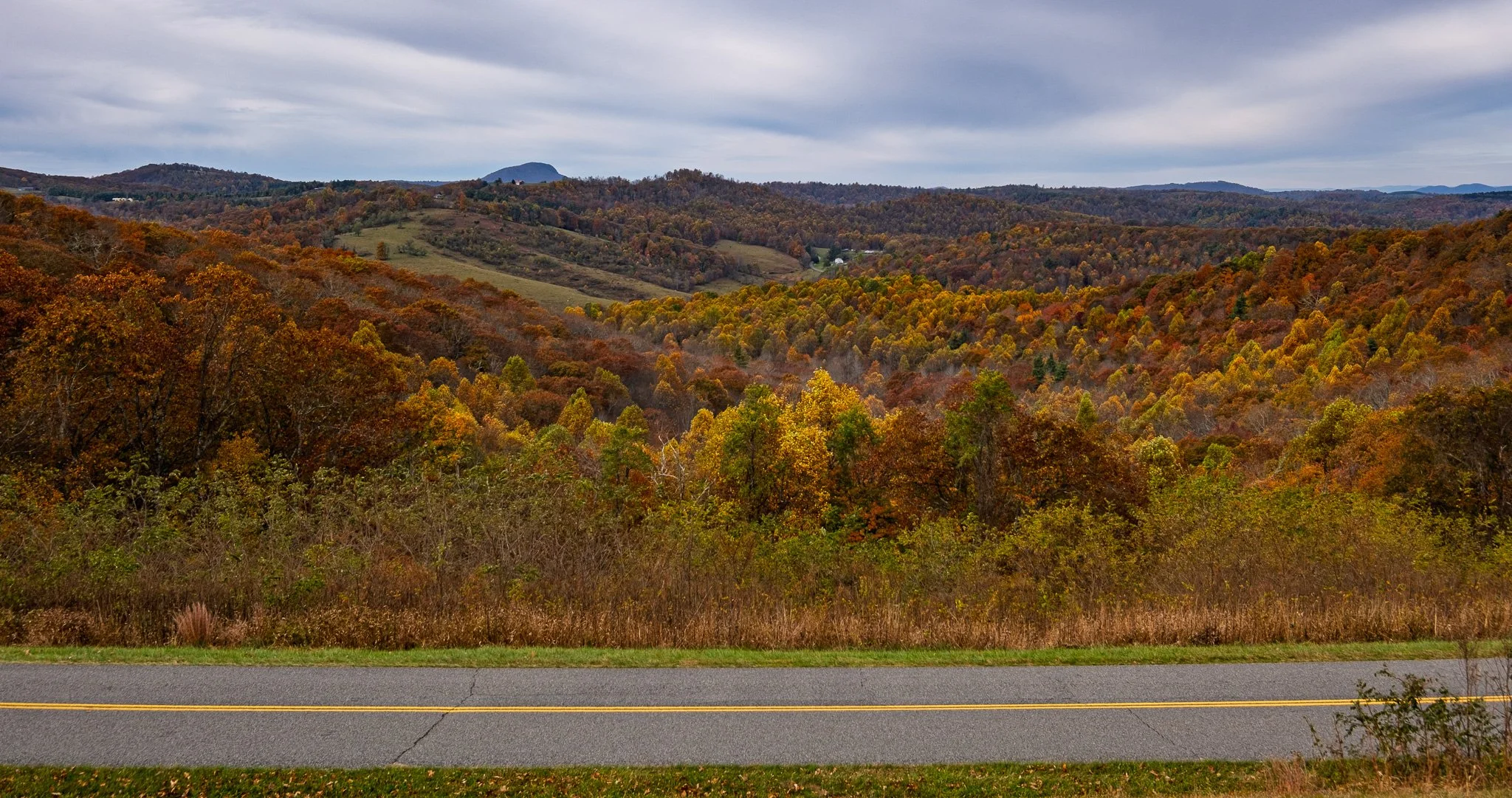
The Saddle overlook view to the west.
Click on Image for Map.
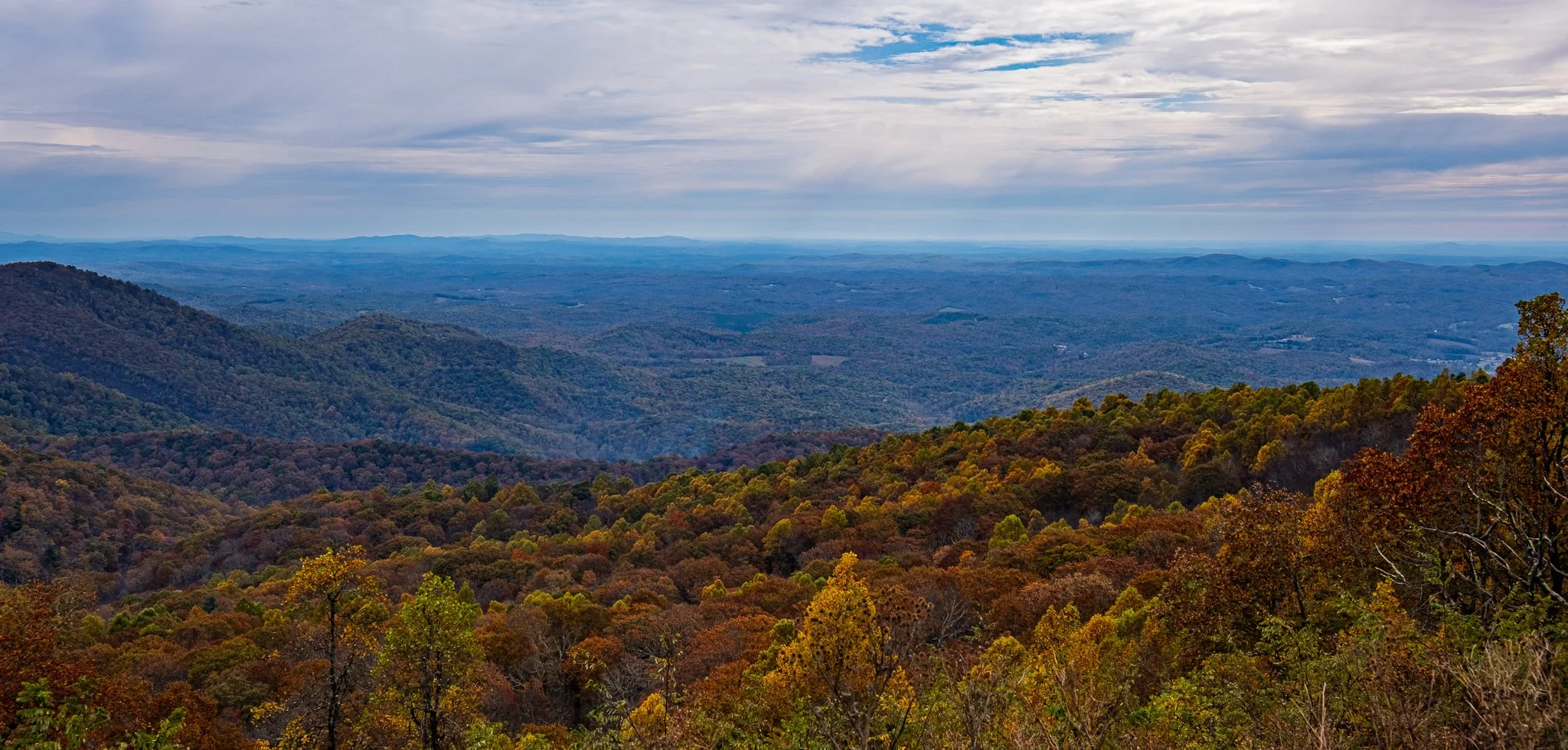
Looking east from the Saddle overlook.
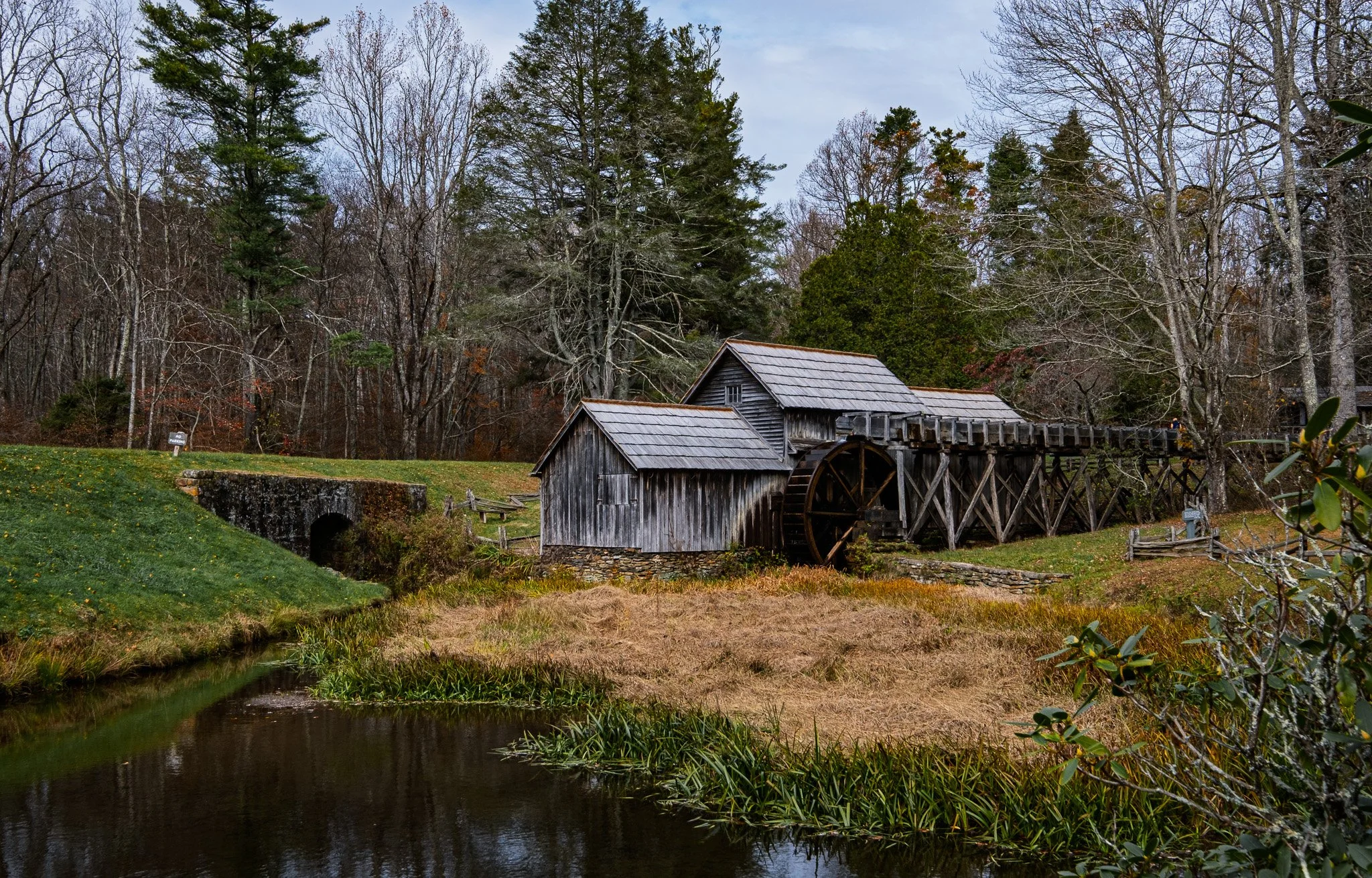
The Mabry Mill.
From ChatGPT:
Mabry Mill, at Milepost 176.2 on the Blue Ridge Parkway in Virginia, is one of the most photographed and beloved historic sites on the route. Built by Edwin B. Mabry around 1903–1910, this charming water-powered mill once served as a gristmill, sawmill, blacksmith, and woodworking shop for local farmers. Today the National Park Service preserves the mill complex with interpretive trails, demonstrations of traditional Appalachian crafts, scenic views, and a glimpse into early 20th-century mountain life. Visitors enjoy the mill’s iconic setting amid forest and pond reflections year-round.
Click on Image for Map.
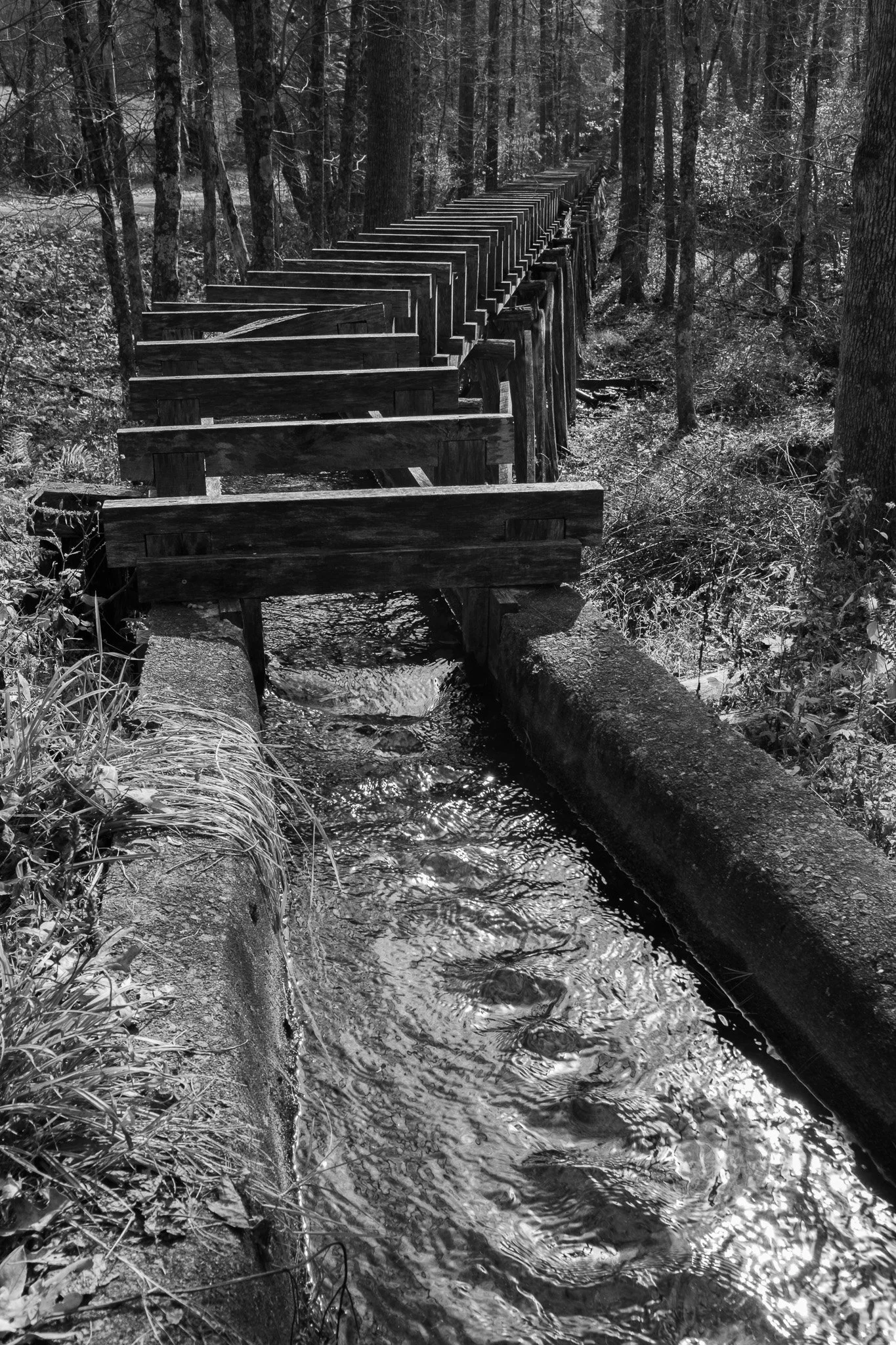
These structures are called millraces. When it’s made of wood and elevated, it’s often referred to as a wooden flume, but millrace is the general term. These extensive wooden flumes were made to direct river water onto the paddle wheel to run the mill.
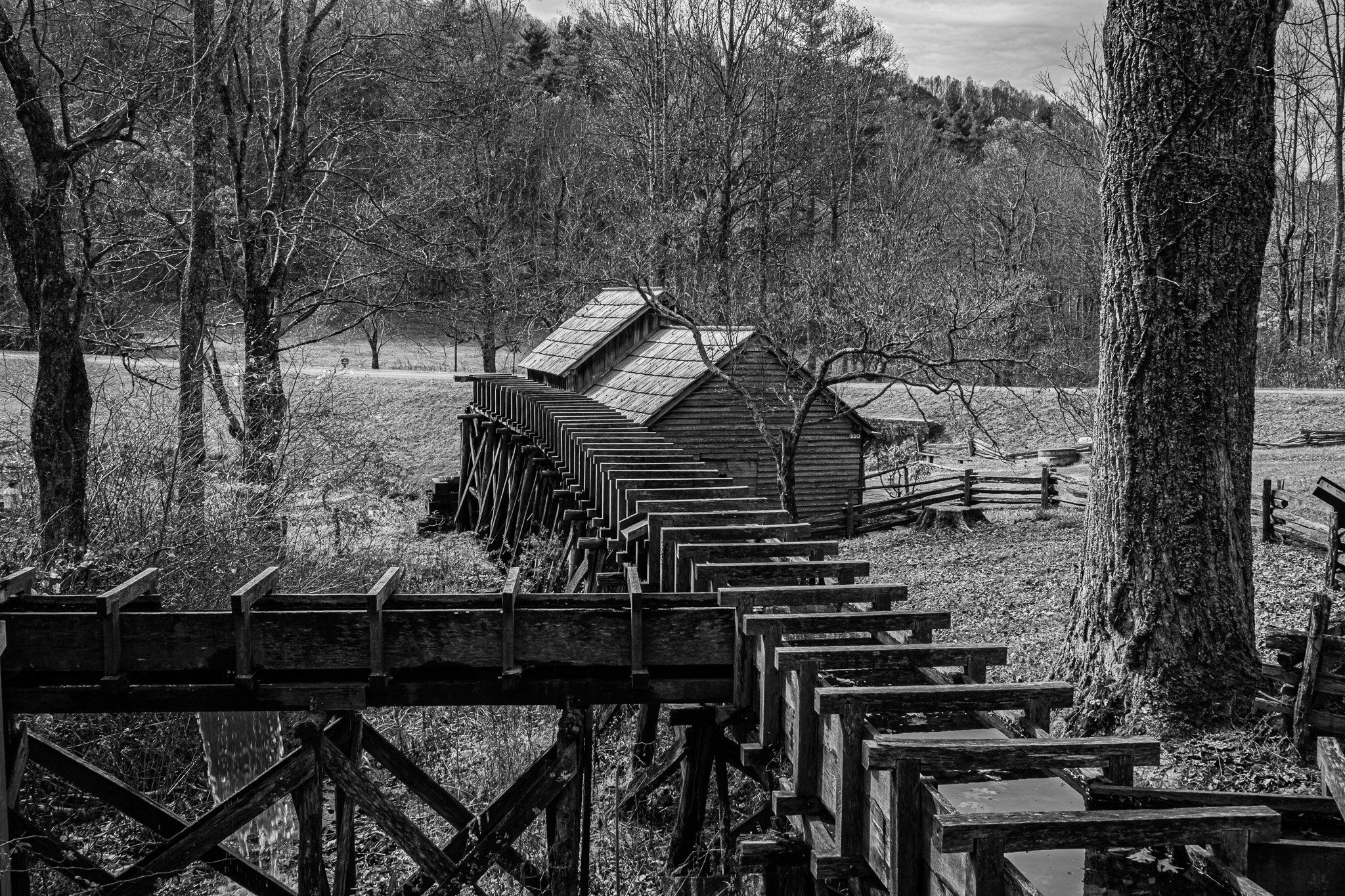
The construction of the wooden flumes alone is an amazing project.
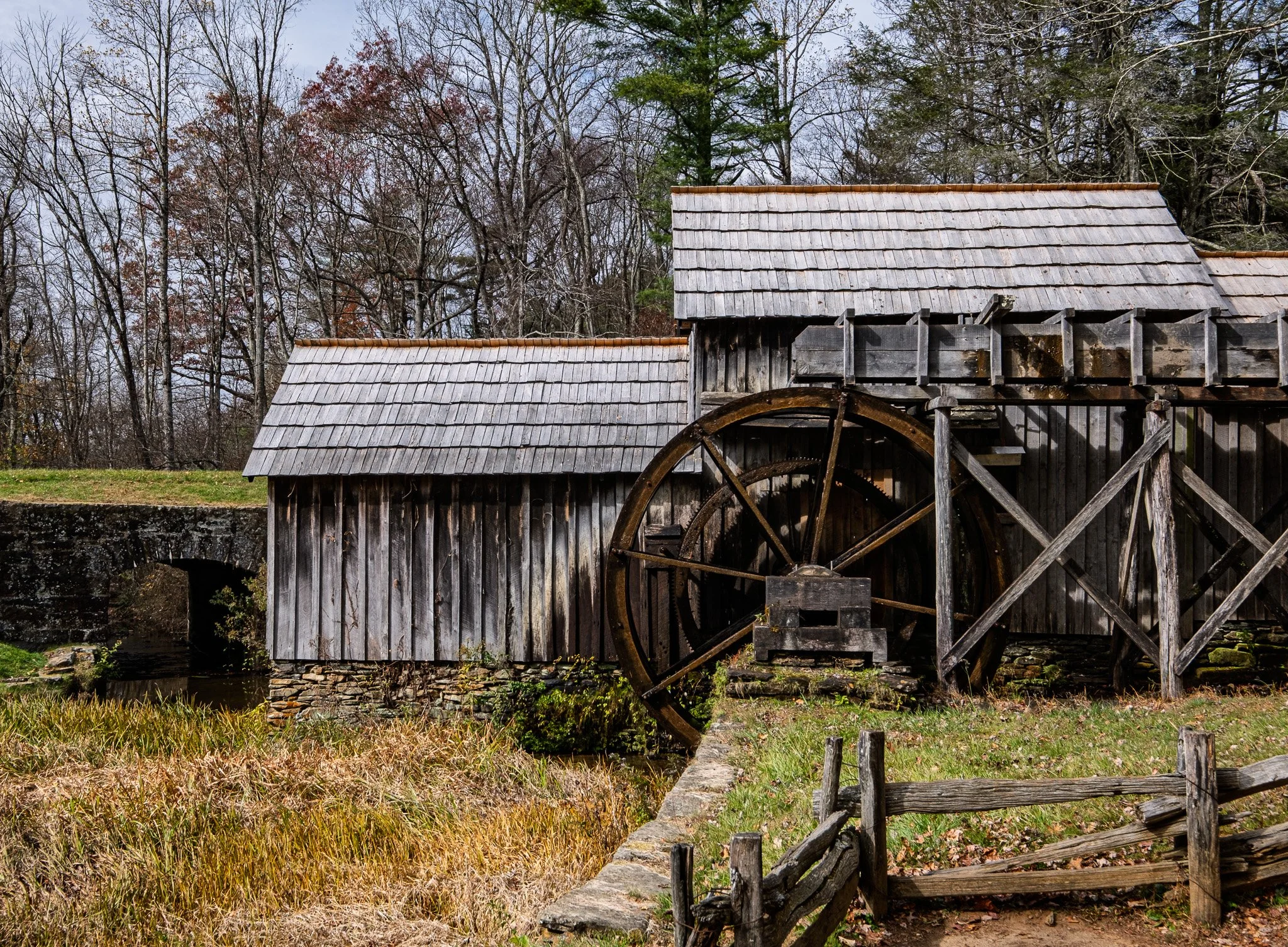
Water from the flumes power the paddle wheel and the entire operation of the mill.
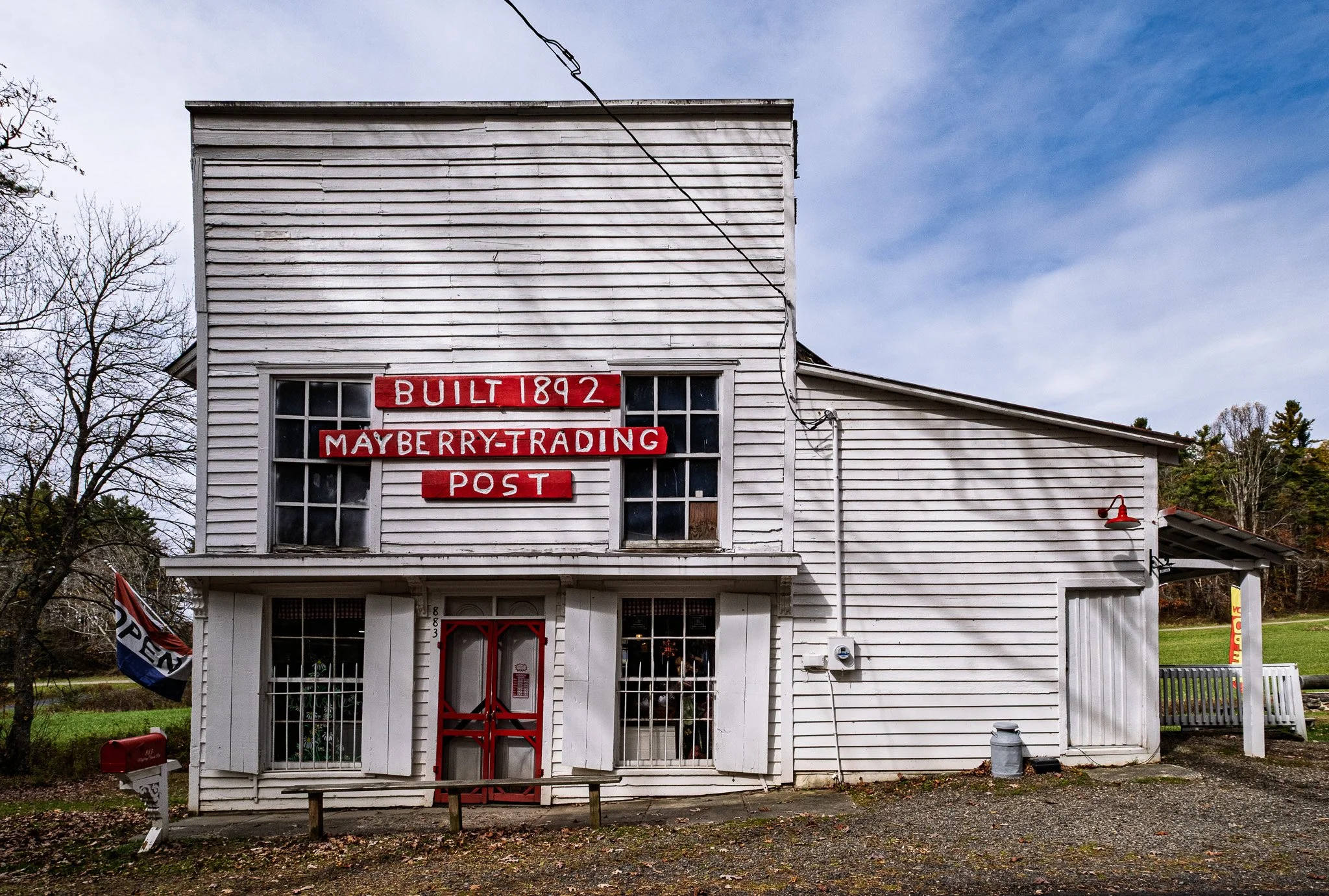
From ChatGPT:
The Mayberry Trading Post is a historic general store built in 1892 near Milepost 180.5 on the Blue Ridge Parkway in Meadows of Dan, Virginia. Originally serving the local community as a store and post office, it now offers local crafts, prepared food, traditional mountaincraft demonstrations, music, and a nostalgic glimpse into Appalachian heritage. Its enduring presence connects visitors with authentic mountain culture and history.
Click on Image for Map.
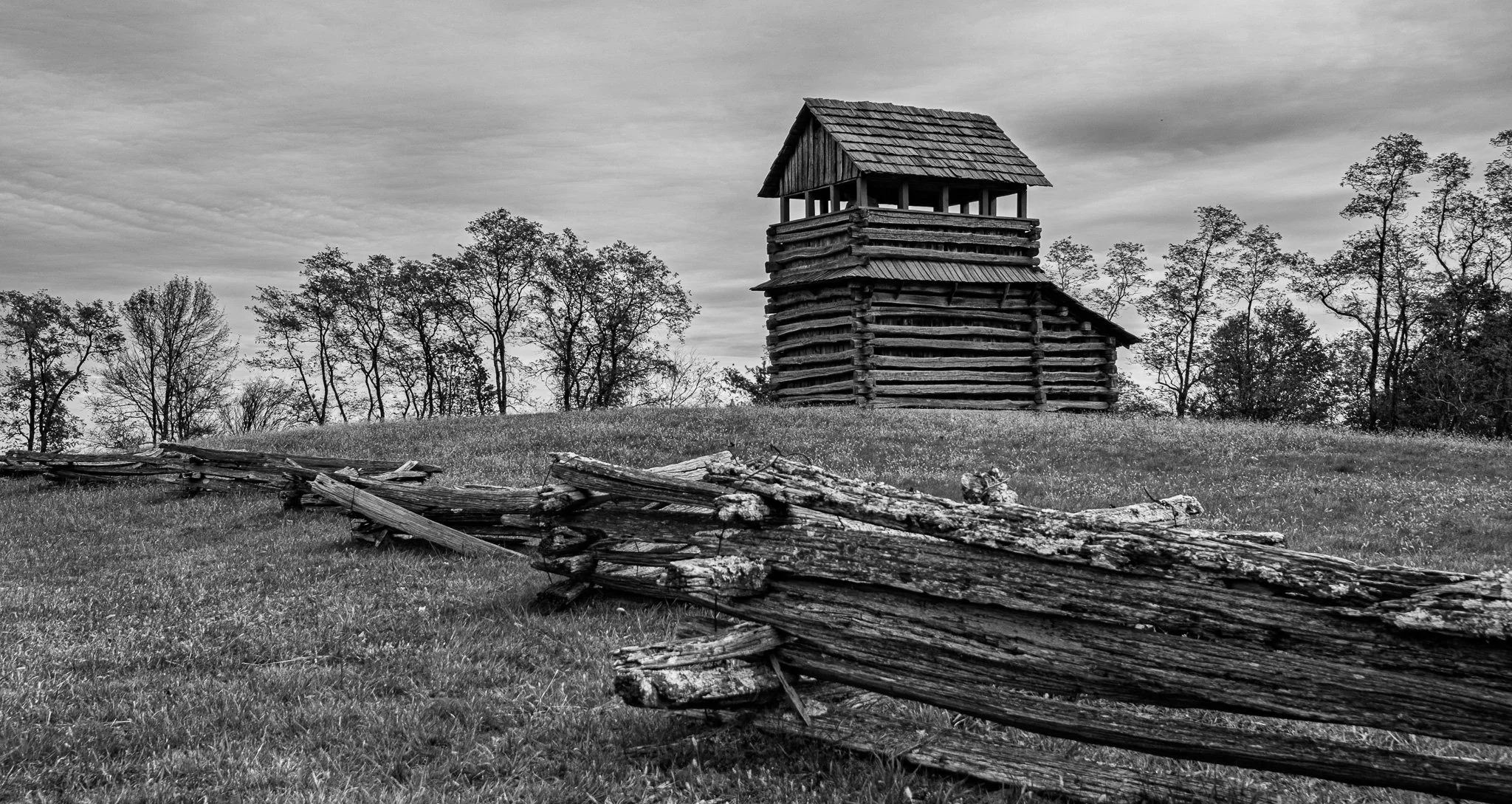
From ChatGPT:
The Groundhog Mountain fire/lookout tower near Milepost 188.8 on the Blue Ridge Parkway is a historic wooden observation tower originally built in the 1940s by the Virginia State Forest Service to spot forest fires and hazards. Climbing its rustic stairs rewards visitors with panoramic views of surrounding mountains like Buffalo Mountain and the Piedmont below, alongside picnic facilities and interpretive displays at the Groundhog Mountain Picnic Area.
Click on Image for Map.
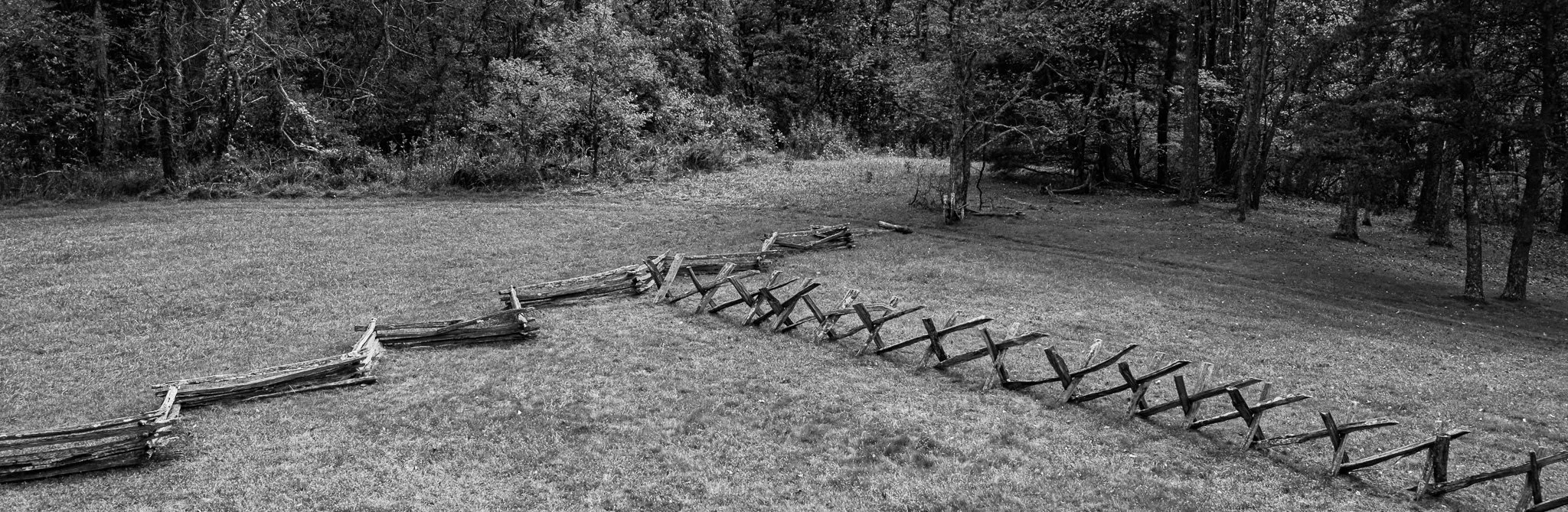
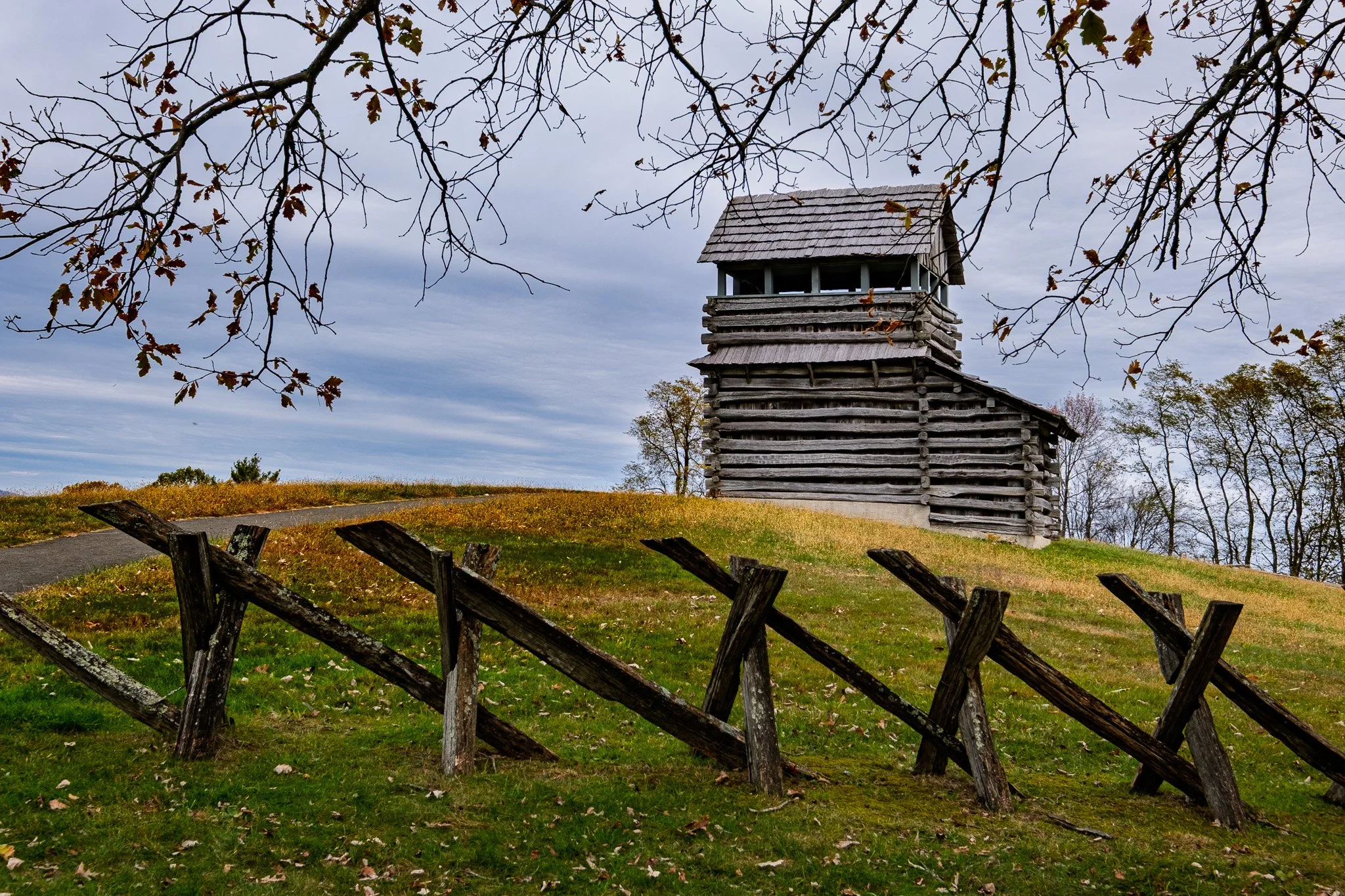
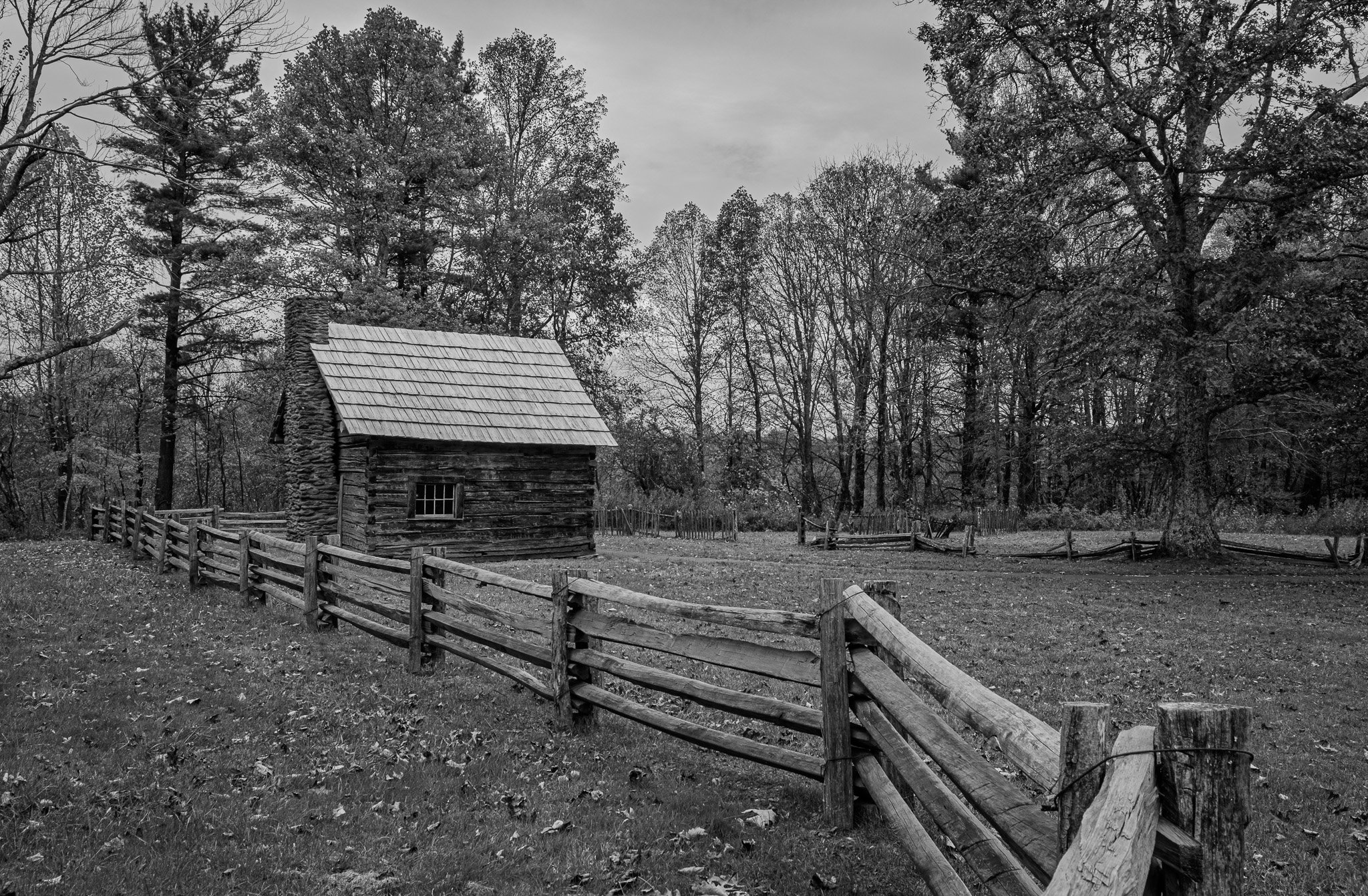
Interpretive plaques at the fire tower discussed the different types of fencing seen along the Blue Ridge Parkway. These are examples of split-rail and zigzag fences.
From ChatGPT:
Wooden fencing along the Blue Ridge Parkway reflects traditional Appalachian craftsmanship and landscape preservation. Common styles include split-rail fencing, made from rough-hewn logs for livestock control, and worm (zigzag) fencing, requiring no posts and well suited to rocky ground. Board fencing appears near historic farms, while rustic post-and-rail designs guide visitors subtly. Together, these fences blend function, history, and scenery, reinforcing the Parkway’s pastoral character.
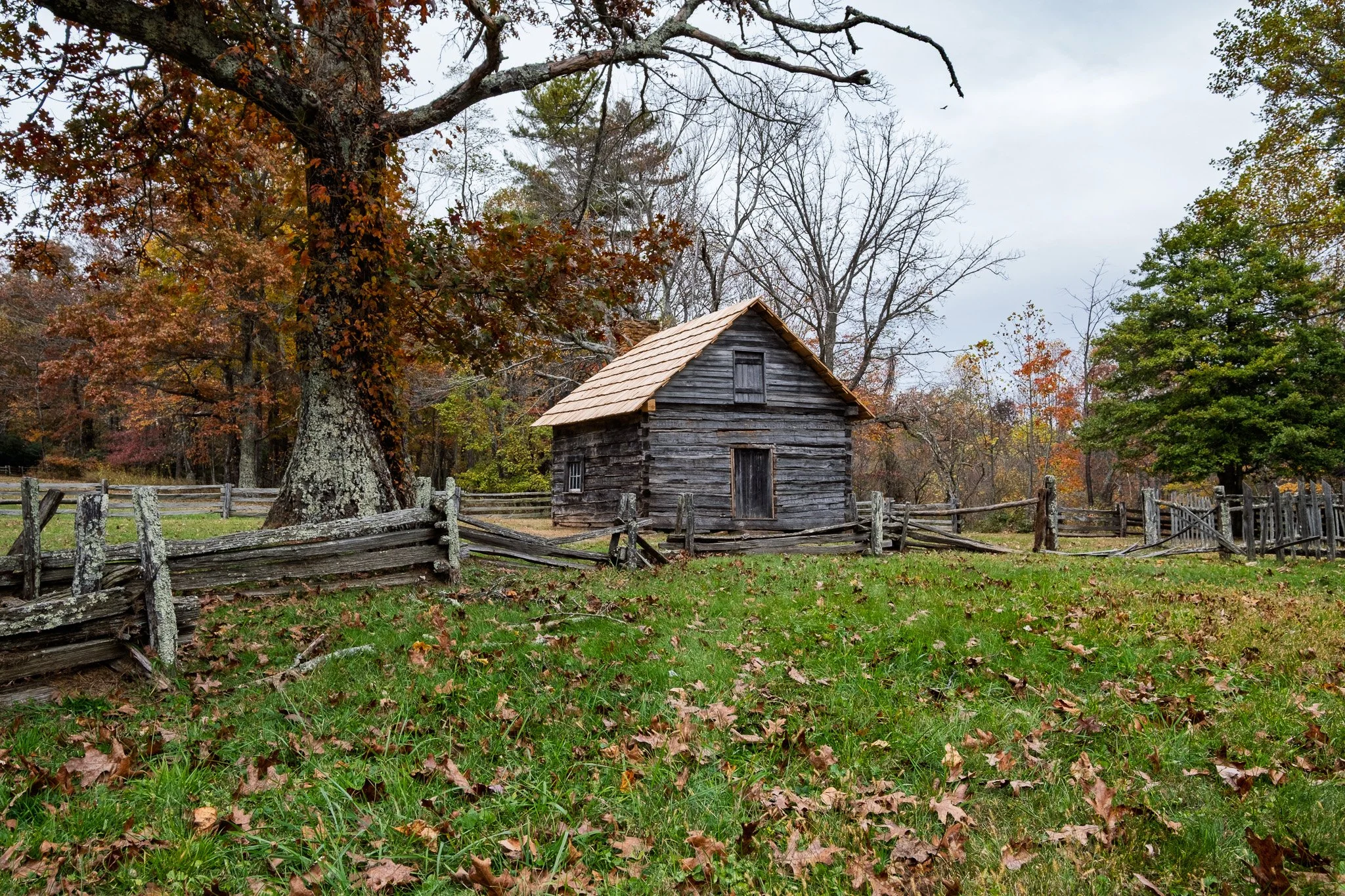
Puckett cabin. This was the home of a local midwife who’s story is told in the next image. A great story on its own, but even more so for someone who has been an Obstetrician.
Click on Image for Map.
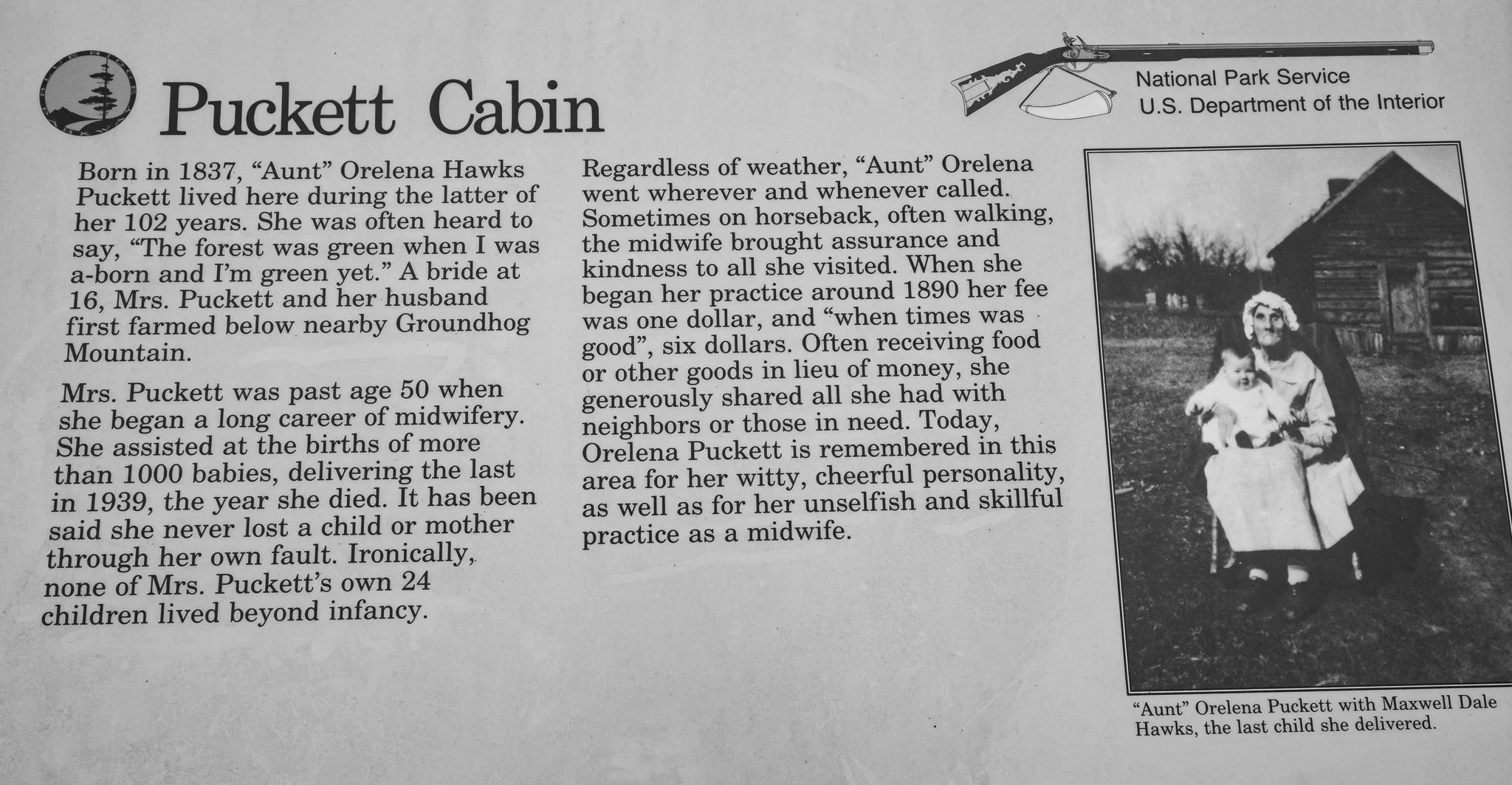
Notice the door over her left shoulder - it is rather unchanged from the prior image.
Puckett cabin from the rear.
From ChatGPT:
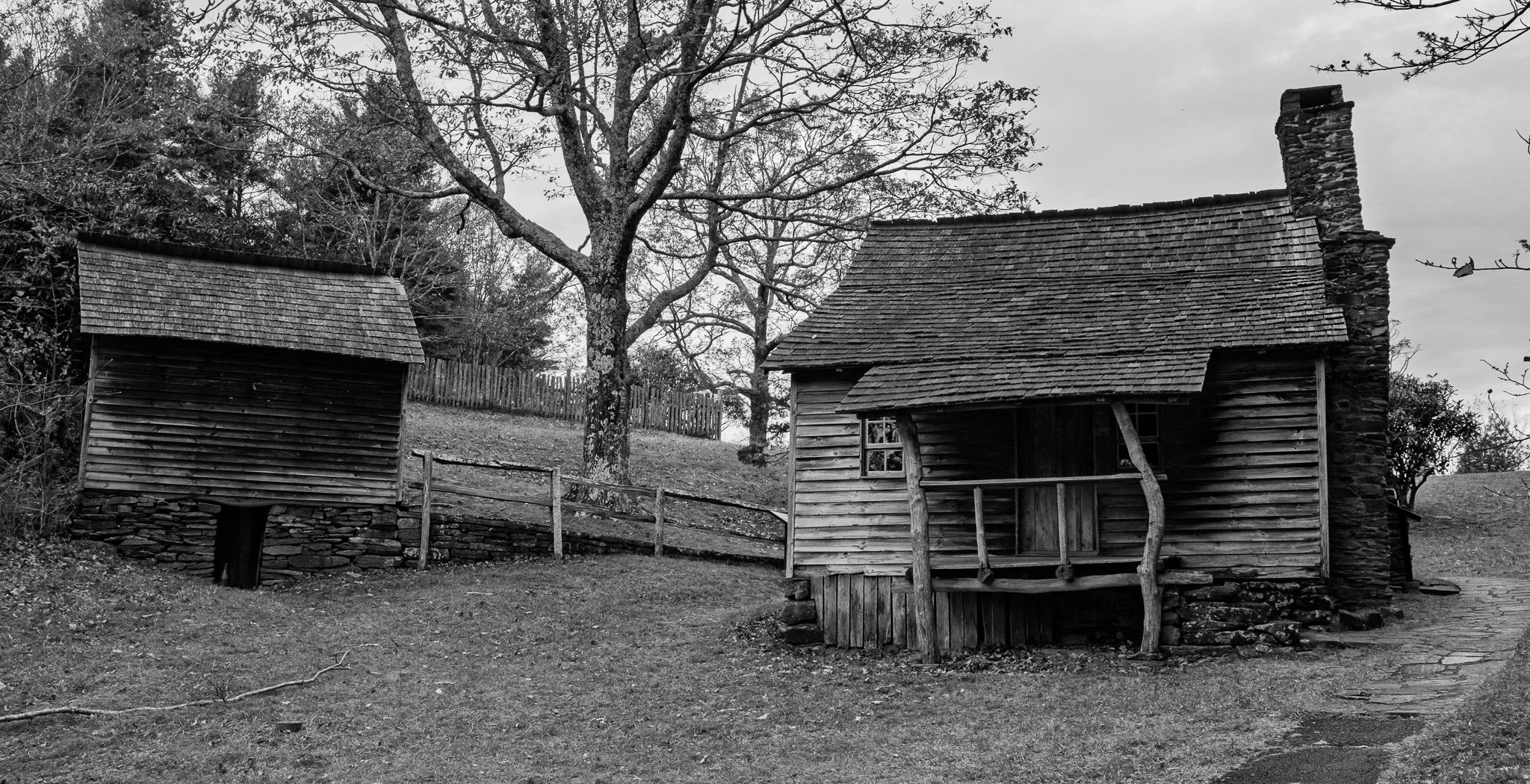
Brinegar Cabin on the Blue Ridge Parkway (Milepost 238.5) is a well-preserved 19th-century Appalachian mountain homestead once owned by Martin and Caroline Brinegar. Built around the 1880s, the original log cabin, granary, and springhouse interpret self-sufficient farm life before the Parkway’s creation, with summer demonstrations of traditional crafts like weaving. Listed on the National Register of Historic Places, it offers a tangible glimpse into rural family life in the Southern Appalachians.
Click on Image for Map.
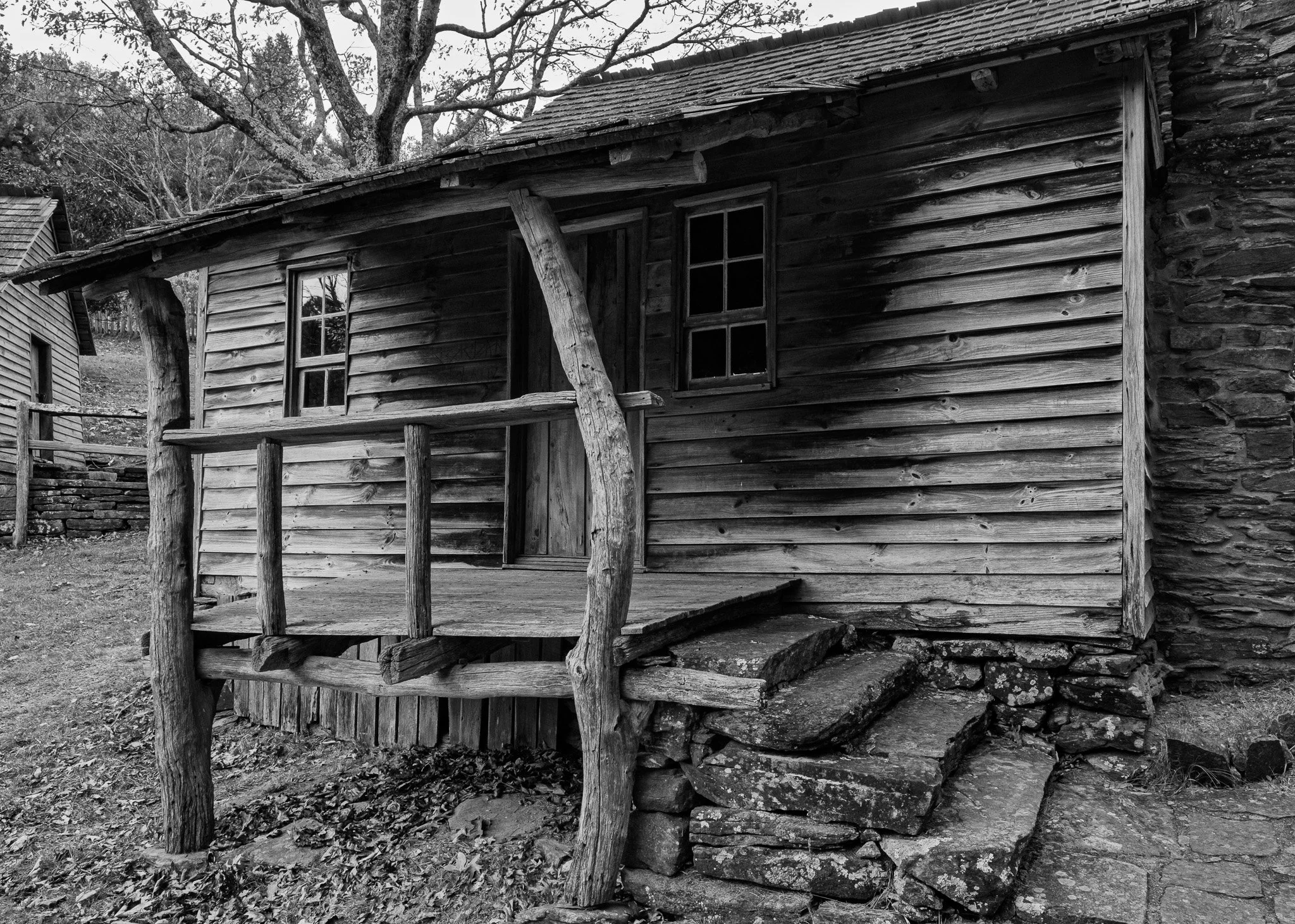
It is incredible to think of living in this beautiful, but harsh, landscape year round in structures like these. Different times indeed!!
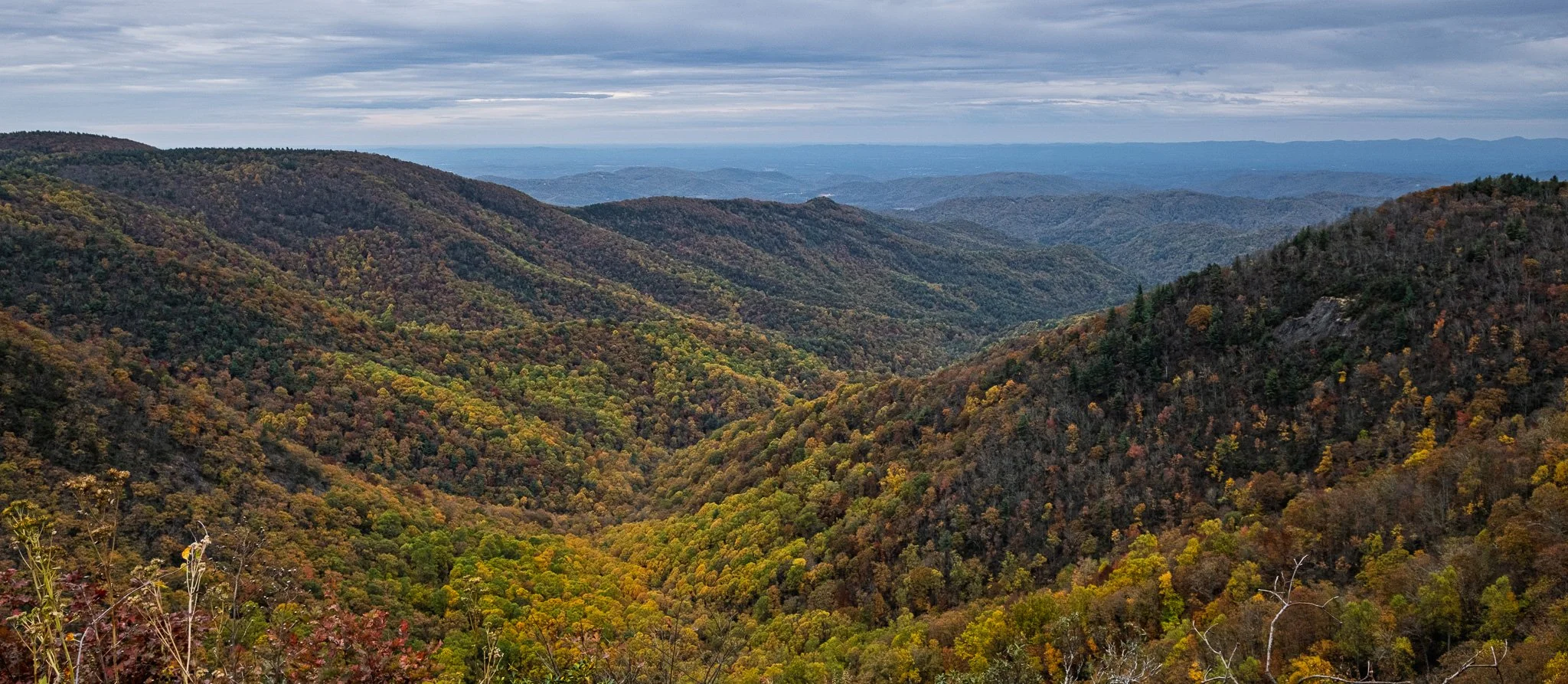
The Bluffs Lodge overlook.
As we progress further south, the colors are a little less vibrant.
Click on Image for Map.
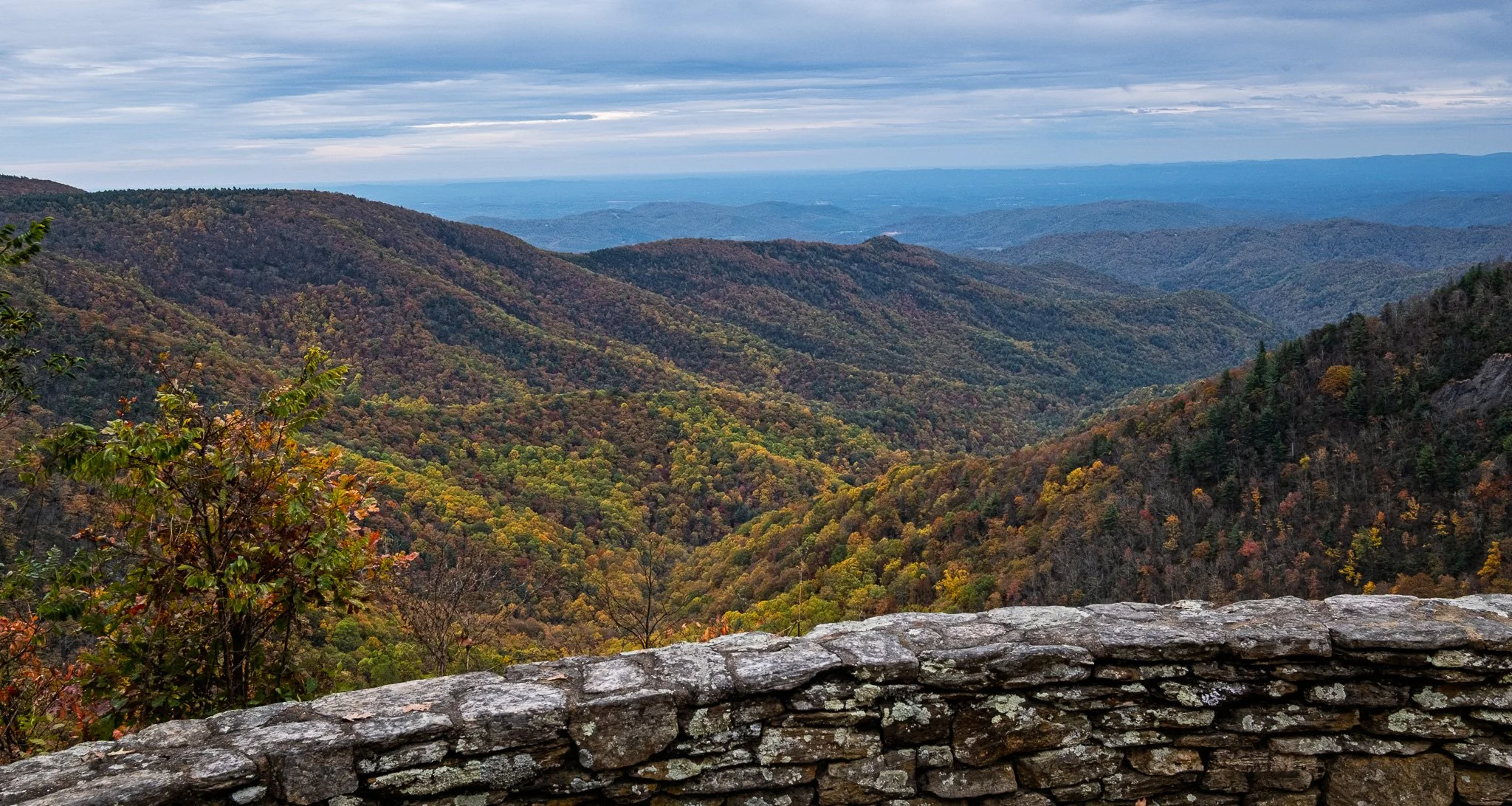
Also from the Bluffs Lodge overlook. While we were here, there was a couple getting their engagement photos taken with this backdrop.
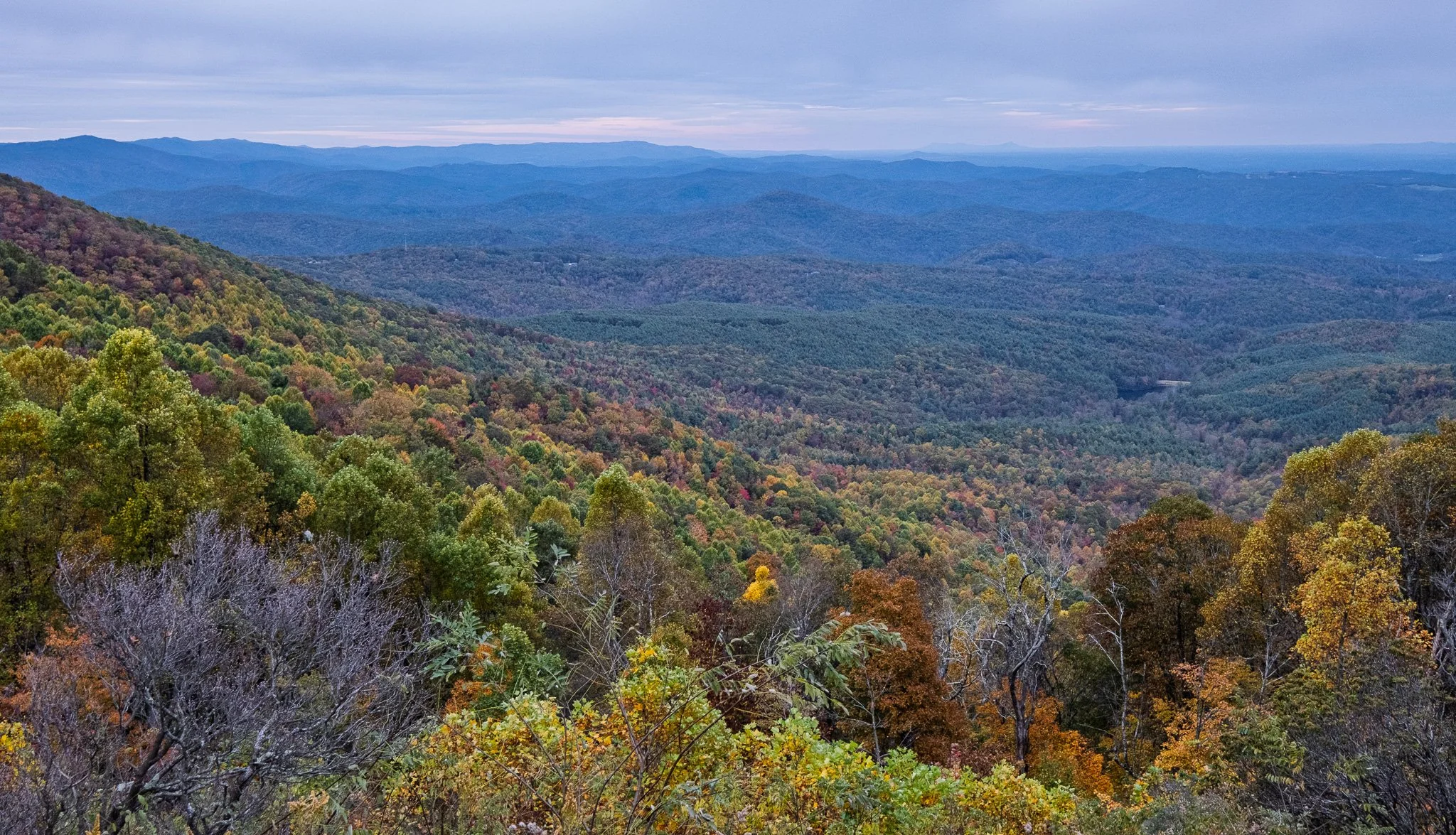
View from the Lump overlook.
These pull-outs for overlook views are numerous along the parkway. Simple two dimensional photos cannot possibly do justice to how amazing the views really are.
Click on Image for Map.
